
 E-Paper



Anatomy of a job scam: seek out the desperate
In November 2021, 34-year-old Manoj Choubey lost ₹2 lakh in a get-rich-quick scheme that promised to double his investment while he worked from home.


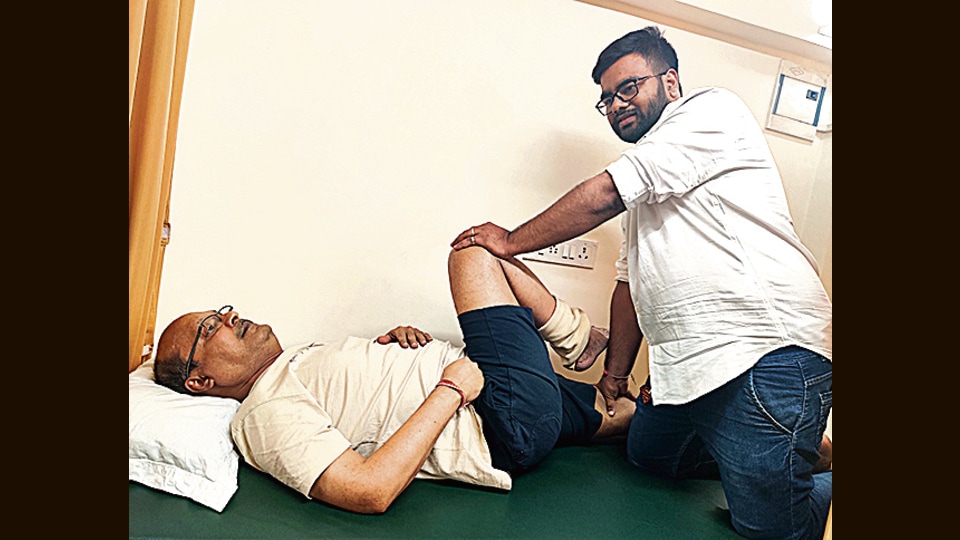
Mumbai: Rajkumar Verma was having dinner at his home in Vile Parle on June 24 when he received a call about a client seeking physiotherapy. The next day, the 24-year-old met the client who introduced himself as Shrikant Verma, an army official posted at the Mumbai Chhatrapati Shivaji Maharaj International airport. Rajkumar met him near gate No 8 of the airport at 3 pm. Within 15 minutes, Rajkumar had lost more than ₹1 lakh to Verma’s scam.
Last August, Swapnil Ambawade, an unemployed 26-year-old lost his life’s savings of ₹2 lakh to someone who promised to employ him in the Indian Railways. Ambawade, who stayed in Vikhroli, even received a letter on a Western Railways letterhead and bearing the stamp of an assistant divisional engineer. The letter, stamp and job offer were fake.
In November 2021, 34-year-old Manoj Choubey lost ₹2 lakh in a get-rich-quick scheme that promised to double his investment while he worked from home. The Powai resident was as a senior manager in an automation firm but was laid off in August 2020 during a pandemic-induced downsizing.
These three instances are among the 69 cases of job fraud filed in the past two years alone in Mumbai. Since 2015, there have been 379 cases filed under sections 420 Indian Penal code and 66 (e) of the Information Technology Act; only 89 cases have been solved till date. In all, people have been defrauded of ₹17.19 crore over the past seven years.
To be sure, not all of these are job-related scams — the police do not keep data pertaining to this specifically — but the fact that there is a problem, and it’s not restricted to the country’s financial capital, is evidenced by the fact that when the Reserve Bank of India brought out a booklet in March to warn people how online frauds are perpetrated, it stated: “Always remember that a genuine company offering a job will never ask for money for offering the job.”
“1 lakh in 4 minutes”
Since the start of the pandemic and the subsequent lockdowns, Rajkumar had seen his client list dry up. So when he met the client posing to be an armyman in June, the young physiotherapist had a lot riding on it.
“Shrikant Verma asked for 100 sessions for 15 colleagues and said that a senior member from the accounts department would get in touch to discuss fees and payment,” said Rajkumar, who earns between ₹500 to 700 a session.
As if on cue, a man introducing himself as Randeep Singh called Rajkumar. “He asked me what my fees were, told me that I would receive it from a credit card payment. He then said that the money would be released from a Jammu bank. But for that to happen, I would need to wire ₹24,000 to get myself verified. He said that the money would be refunded immediately.”
Rajkumar said he sensed something was amiss, but he still went ahead because he was afraid of getting a negative review from the client that would hamper his chances of getting clients through the medical service company he had signed up on.
“After the transaction I got a call saying that I had not wired the money within two minutes, which was required for it to go through. He asked me to pay another ₹74,000, which I did. He told me this transaction had failed too.I deliberately delayed the third transaction,” Rajkumar said.
In fact, Rajkumar left immediately and went to his bank to stop the transactions, but he was told that since it was done over a UPI-based platform (Rajkumar made the payments over Google Pay), it could not be retracted. “I then went to the Vile Parle police and registered a complaint. Within four minutes I lost over ₹1 lakh,” Rajkumar said.
The police have lodged the complaint and are attempting to trace Verma’s and Singh’s numbers. No arrests have been made as yet.
Rajkumar’s plight isn’t his alone. In the gig economy, ratings from clients matter. The threat of a negative review increases Rajkumar’s vulnerability to such scams.
“It looked official, genuine”
Experts pointed out that the modus operandi of fraudsters validates two known trends: One, they don’t operate in isolation, but are part of a well-resourced network. Two, they prey on the vulnerability of the unemployed who don’t think it far-fetched to pay a bribe in order to get a job.
Swapnil Ambawade, who migrated to Mumbai four years ago as a hopeful 22-year-old from Sangli got a taste of this when he came into contact with Janardan Kamble, a Kalyan resident, who bragged about his contacts in the Indian Railways. He promised Ambawade, who was unemployed, to get him a position. He asked Ambawade to pay ₹2 lakh after he received his appointment letter.
“I trusted Kamble as I did not have to pay till I got the job offer in hand,” said Ambawade. Through Kamble, he met Sameer Gore, a resident of Dombivli, and Moin Ahmed Shaikh, a resident of Mumbra, at the Chhatrapati Shivaji Maharaj Termius (CSMT) which houses the headquarters of the Central Railway. “They said I was the number one contender for the job. I was delighted that I would be working for the government which means I would never be unemployed again,” Ambawade said.
On August 5, 2021, Ambawade received an official-looking letter stating that his appointment to a Group C role was confirmed. Kamble told him to pay ₹2 lakh and after 10 days, he would be told where he was posted. But when Ambawade did not get any notification and Kamble stopped answering his calls, he asked an acquaintance named Rajkumar Bharti, who works as a constable with the Railway Protection Force, to verify if his job even existed. “I found out that there were no vacancies,” said Bharti, who alerted the RPF, and began to keep watch near the CSMT waiting room where the accused had met Ambawade. A week later, they were spotted and detained them. A search revealed several stamps and letterheads of the Western and Central Railway and other government departments. The trio are under arrest and the GRP has submitted a charge sheet in court.
“During the course of our investigation, we found that the three accused acted like railway officers when they spoke or met with Ambawade. They even dressed up in safari suits with formal shoes. The meetings were always conducted at CSMT station near the railway officers’ cabins,” said M Inamdar, senior police inspector of CSMT Government Railway Police station.
Former Indian Police Services officer Nandkumar Sarvade, who served as Deputy Inspector General (DIG), Central Bureau of Investigation and retired in 2008 pointed out, “The fraudsters have their own network like IT or tech support, and callers who have revised and perfected their scripts based on the prospective questions that victims pose. The fraudsters give the victim a believable scenario and extract money. Moreover, it is common practise to pay a bribe to get a job, so it is not difficult for a person to fall prey to such scamsters.”
“Just a click online”
Following Covid, India’s urban unemployment rates have fallen below pre-pandemic levels, but the scars remain. Data from the Centre for Monitoring Indian Economy (CMIE) showed India’s urban unemployment rate hit a four-month high in December 2021. The pandemic has occasioned desperation, particularly among large sections of youth, who like Rajkumar Verma, are either part of the gig economy and have unsteady incomes, or like Manoj Chaubey, were laid off during the pandemic.
Choubey’s undoing was that he fell for a get-rich-quick scheme. It was deviously simple.
“I was sent a link to complete a login process and get my name registered and open a wallet on the webpage,” said Choubey. His task was to buy gadgets at a cheaper price, which would be displayed as being available on discount with his name as the seller. If someone bought that gadget within the day, he would earn the discount amount as well as his own investment. “When the product got sold, I earned commission points that were credited into my wallet.” Within a week, his account showed ₹7 lakh — he had spent Rs2.78 lakh. However, he couldn’t transfer this money to his account. Choubey realised that he was getting duped when he asked for this money and the representative switched off his mobile phone. Choubey filed a complaint at the Powai police station on December 1.
The police have registered an FIR and are trying to trace the account holder who opened the account on Facebook.
“Targets of scams or online frauds are not selected by their age. The fraudsters get data containing 1000s of numbers and start calling people out of 1000 even two revert and show trust, they become targets,” said additional director general of police (Maharashtra Cyber Crimes) Madhukar Pandey. “On receiving such calls, people should take a breath and think about the offer given to them. Of course, in many cases, the fraudsters give the victim a small window to accept the offer,” he said.
Stay updated with all the Breaking News and Latest News from Mumbai. Click here for comprehensive coverage of top Cities including Bengaluru, Delhi, Hyderabad, and more across India along with Stay informed on the latest happenings in World News.


