
 E-Paper



Bhujbal, 3 others discharged from decade-old library corruption case
“The prosecution has not been able to demonstrate the necessary nexus between the applicant’s official acts and the alleged criminal object,” the court said

 Prefer HTon Google


MUMBAI: A special court on Thursday discharged Maharashtra food and civil supplies minister Chhagan Bhujbal from a decade-old corruption case involving the development of a library at the University of Mumbai’s Kalina campus, observing that the prosecution had failed to establish a criminal conspiracy or prove his “invisible support” for the firm which executed the project.
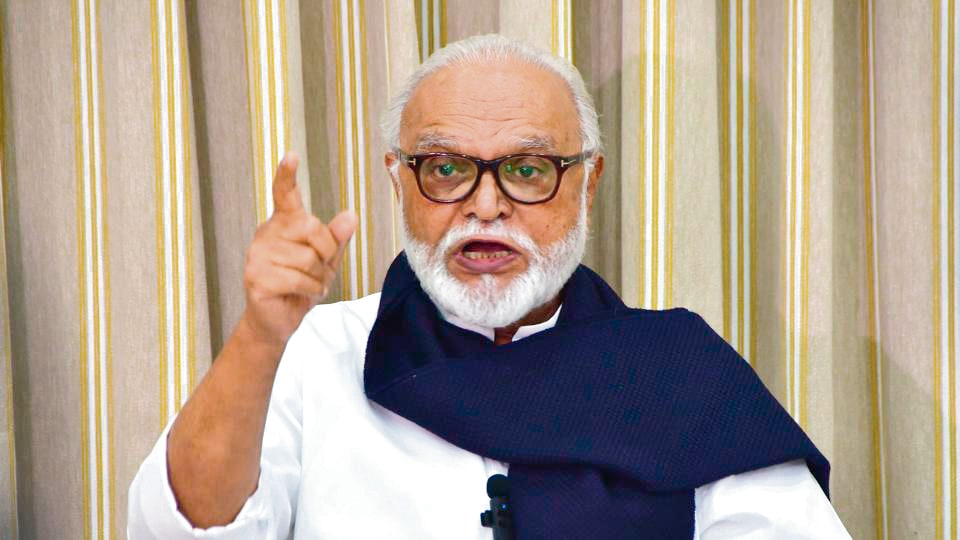
“The prosecution has not been able to demonstrate the necessary nexus between the applicant’s official acts and the alleged criminal object,” the court said while discharging the Nationalist Congress Party (NCP) leader and minister.
Alongside Bhujbal, special Judge Mahesh K Jadhav also discharged then public works department (PWD) divisional deputy engineer Gajanan Anant Sawant, then executive engineer Harish Shravan Patil and chartered accountant Ravindra Manohar Savant from the case registered by the Anti-Corruption Bureau (ACB) in 2015.
The case had originally named seven accused. Among them, then PWD superintendent engineer Anilkumar Baliram Gaikwad and then undersecretary Sanjay Shriram Solanki were discharged in 2021, while proceedings against then PWD secretary (construction) Maniklal Hirachand Shah abated after his death.
According to the ACB, Bhujbal, then PWD minister, colluded with departmental officials to manipulate the proposal-cum-feasibility report and tender process for the library, to favour India Bulls Real Estate Ltd, causing an alleged loss of around ₹79 crore to the state. The chosen firm subsequently donated ₹2.5 crore to the Chhagan Bhujbal Welfare Foundation, headed by Bhujbal, as a quid pro quo for the favour, the ACB claimed.
But the court found that the prosecution had not shown a demand by Bhujbal, any communication linking the sponsorship to the library contract, or a statement from the alleged donor or developer acknowledging a quid pro quo. It also noted that officers of the firm had denied such a connection.
The court rejected the prosecution’s reliance on Bhujbal’s alleged “modus operandi” and “invisible support”, finding these to be inferences unsupported by independent material showing communication, direction or an understanding between him and accused PWD officials. It also noted that the BOT (build-operate-transfer) proposal for the library predated Bhujbal’s alleged involvement, and the decision to proceed with the BOT model was taken in November 2007 at a meeting Bhujbal did not attend. The project subsequently passed through several departmental levels before an open tender was invited.
The findings in the other three orders further weakened the prosecution’s case. In Sawant’s case, the court said the material did not establish dishonest intention, fabrication, personal participation in the alleged manipulation or a meeting of minds with the other accused. It noted that the eventual developer was not even identified when the relevant feasibility exercise and departmental decisions were undertaken.
Patil, who was then an executive engineer, was discharged after the court similarly found insufficient independent material connecting his official role and the departmental process to a deliberate criminal design.
Savant, the private chartered accountant engaged to scrutinise the tenders, was discharged after the court found that his role began only after the tender conditions had been formulated and technical scrutiny completed. He had not determined technical eligibility, selected the developer or participated in the subsequent recommendation, and there was no material showing that he received any gratification or personal pecuniary benefit.
Overall, the court found that the prosecution had not established the connecting circumstances necessary to link the departmental decisions, alleged irregularities and subsequent sponsorship. The alleged chain, it held, did not disclose sufficient material establishing the “common criminal design” on the part of the accused.
The ACB case was part of a wider inquiry into alleged corruption during Bhujbal’s 2004-14 tenure as PWD minister. It was registered after a Bombay High Court-directed inquiry, while Bhujbal was arrested by the Enforcement Directorate on March 14, 2016 in a related money-laundering case. He secured bail in the ACB cases in 2016 itself but remained in custody in the ED case until the Bombay High Court granted him bail on May 4, 2018.
In September 2021, Bhujbal, his son Pankaj and nephew Sameer were discharged in the ACB’s Maharashtra Sadan case. In January this year, a special PMLA court also discharged the trio in the related money-laundering case.

Stay updated with all the Breaking News and Latest News from Mumbai. Click here for comprehensive coverage of top Cities including Bengaluru, Delhi, Hyderabad, and more across India along with Stay informed on the latest happenings in World News.


