
 E-Paper



BMC scales down tree felling from 400 to 50 for alternative water tanks at Malabar Hill
These alternative tanks are crucial components of efforts to prevent disruption in water supply to south Mumbai while the 138-year-old Malabar Hill reservoir is repaired

 Prefer HTon Google


Mumbai: In a major revision of its earlier plans, the Brihanmumbai Municipal Corporation (BMC) has reduced the number of trees to be cut for the construction of three alternative water tanks at Malabar Hill from an initial 400 to 50. These alternative tanks are crucial components of efforts to prevent disruption in water supply to south Mumbai while the 138-year-old Malabar Hill reservoir is repaired.
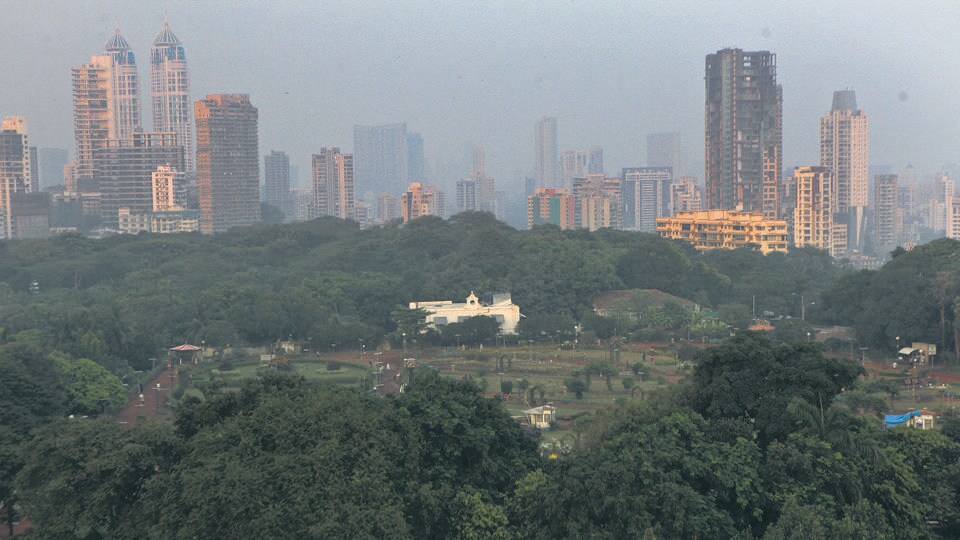
According to officials in the BMC’s waterworks department, the initial plan was to build a single alternative tank with a capacity of 52 million litres per day (MLD)—a key recommendation in a technical report submitted by the Indian Institute of Technology Roorkee. Now, the BMC has proposed to build smaller tanks at three separate locations rather than a single large site. This significantly reduces the environmental impact and preserves much of the green cover in the area compared with the earlier plan to hack down 400 trees, officials said.
The BMC had earlier revised the plan to reduce the number of trees to be cut to 100. This number has now been further brought down to 50. “After local residents raised concerns about the loss of green cover due to the proposed felling of 100 trees at the initial site, we held a meeting and were advised to explore alternate locations,” said a civic official, requesting anonymity.
“A site visit confirmed the feasibility of distributing the tank across three spots for the 52 MLD tank. Earlier, we were looking at cutting 400 trees. That number came down to 100, and now, with careful planning and alternate siting, it will be further reduced to 50. We’re committed to protecting the environment while ensuring an uninterrupted water supply to the city,” added the civic official.
Twenty-five of the 50 trees will be cut at a site behind Hanging Gardens, where the original 52 MLD tank was proposed, to host a valve gallery. Pednekar Consultants is expected to submit the revised proposal to Abhijit Bangar, additional municipal commissioner (projects), later this week for final approval, officials said.
Originally, the BMC had planned to demolish the entire Malabar Hill reservoir. However, the IIT Roorkee report concluded that this was unnecessary. Instead, it recommended constructing an alternative tank to facilitate repairs without disrupting the water supply. This recommendation not only protects the iconic Hanging Gardens, which sit atop the reservoir, but also saves the BMC an estimated ₹1,000 crore in potential reconstruction costs, officials said.
The IIT Roorkee report evaluated two options: constructing an alternative tank or conducting compartmentalised repairs on the existing structure. Although the latter was technically viable, it would require substantial disruption to the Hanging Gardens—an outcome authorities were keen to avoid. The recommendation to proceed with the alternative tank was made with this in mind.
Currently, the reservoir supplies approximately 240 MLD of water in three cycles. It serves south Mumbai’s A and D wards, covering areas like Nariman Point, Cuffe Parade, Churchgate, Colaba, Girgaon, Nepean Sea Road, and Malabar Hill.


Stay updated with all the Breaking News and Latest News from Mumbai. Click here for comprehensive coverage of top Cities including Bengaluru, Delhi, Hyderabad, and more across India along with Stay informed on the latest happenings in World News.


