
 E-Paper



BMC to restore British-era cannons to past glory
While there is no recorded historical evidence of how these guns made its way inside the particular garden, the date mark engraved on these structures clearly establishes that they were built in 1856

 Prefer HTon Google


Mumbai Brihanmumbai Municipal Corporation (BMC) is restoring a pair of British-era cannons, which were lying in a dilapidated condition for several years in a city garden.
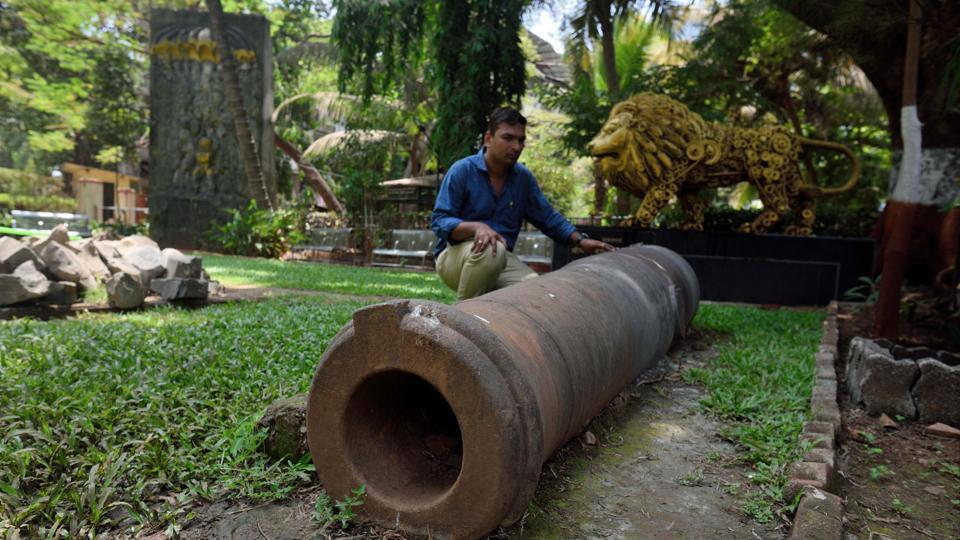
The cast iron structures are currently inside the Lion’s Children Park in Ghatkopar (East). While there is no recorded historical evidence of how these guns made its way inside the particular garden, the date mark engraved on these structures clearly establishes that they were built in 1856.
Both the cannons are 10-feet long and weigh five tonnes each, with a diameter of around two feet.
BMC’s plan
Earlier in August 2021, the civic garden cell asked the BMC Heritage Cell to restore the pair of cannons. A senior official from the garden cell said that this park was constructed back in 1971, however, no one knows if these canons were brought inside from a different location or were they discovered during construction.
“Even though these cannons are 166 years old, they are still sturdy and in a decent condition. Both these structures were built during the British era and after examining them, we decided to refurbish them entirely and restore their original look,” said a senior official from Heritage Cell.
The official also maintained that this is the first time the BMC is going to restore an original cannon and keep it for public display in Mumbai.
“There are many cannons that we see in traffic islands and tourist spots but most of them are either replicas or miniature models. This is going to be the first time that we are going to restore a pair of original cannons and keep them for public display,” the official added.
The process
The BMC has roped in heritage sculptor Deepak Paunikar as a consultant for the restoration works. Paunikar’s previous projects include restoring the Fitzgerald Fountain in Metro Junction and Khada Parsi statue in Byculla.
Paunikar says that the restoration works have been divided into two parts. The first part includes construction of a cannon cart with wheels made of cast iron and the second part will include cleaning and refurbishment.
“We will identify the missing parts and extract a part of its body to identify its metal composition. That metal sample will be sent to a laboratory and after matching its composition, ingots will be prepared. With the help of these ingots, we will create identical parts to replace the missing portions,” Paunikar said. He also added that the construction of the carts on which the canons will be placed is nearing the completion stage.
“In the final phase, we will carry out a scientific process known as shot blasting that will remove the debris and rust from the surface of the cannon and restore its original lustre,” Paunikar added.
Historian’s speak
Meanwhile, city historians and archaeology enthusiasts said that there could be hundred more British-era cannons that are buried under the city.
“Mumbai used to be a castle during the 17th and 18th century and eleven forts guarded the boundaries. These forts were the power batteries and were armed with cannons and shells. Before leaving the country, the Britishers buried these cannons under the ground,” said city historian Chandan Vichare, who has worked with BMC in several restoration projects.
“At present, there are two canbons each under the surface at Parel and Cross Maidan and one cannon each below the surface at Crawford Market and Grant Road,” Vichare said.


