
 E-Paper



Did you know that Mahim and Mahul were Mahimadesa and Mahavali?
These and more nuggets from history will be brought to light in a volume on the ‘Historical Geography of Maharashtra and Goa’ to be released by the state government’s gazetteer department early next year

 Prefer HTon Google


Mumbai: For most residents of Mumbai, names like Mahimadesa, Sristhanaka, Sopara, Dombilavatika and Mahavali are unlikely to ring a bell. But they happen to be closely connected with the city, the ancient names of present-day Mahim, Thane, Nalasopara, Dombivali and Mahul.
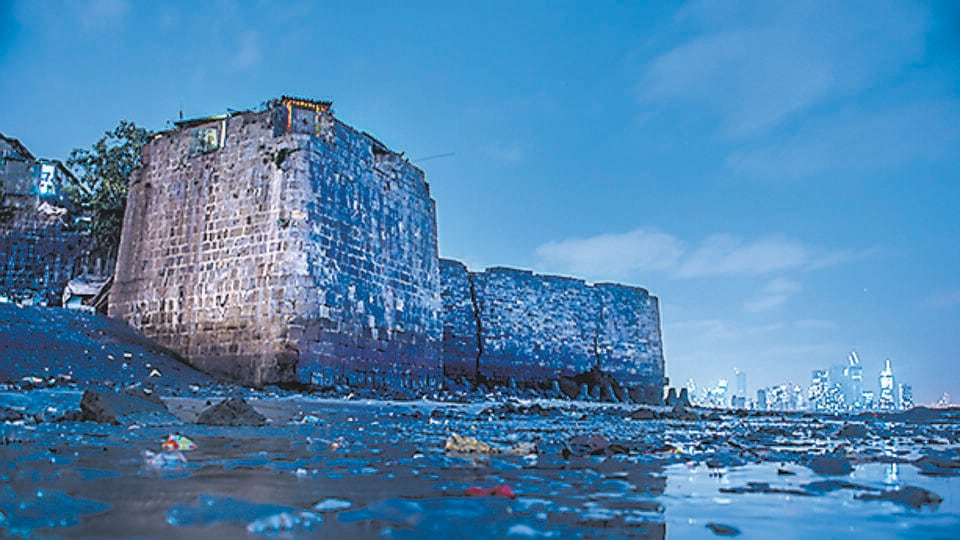
These and more nuggets from history will be brought to light in a volume on the ‘Historical Geography of Maharashtra and Goa’ to be released by the state government’s gazetteer department early next year. The volume is a Marathi translation of a book and post-doctoral dissertation of 1977 by H S Thosar, former head of the department of history at Elphinstone College in Mumbai. It has been translated into Marathi by the archaeologist G B Deglurkar.
“We know what geography is. But historical geography refers to the geography related to the names of villages, rivers and other geographical features that are found in ancient stone inscriptions, stone tablets and copper plates,” explained Dilip Balsekar, executive editor and secretary of the state gazetteer department.
Balsekar added that the volume would help people connect the present-day names of places and geographical features with their ancient or medieval past, show how these sites had evolved over time, and serve as a link between the two eras. Drawing from sources like inscriptions, literary works and sthala-mahatmya (local lore generally associated with pilgrimage sites), the volume is likely to be released in March-April 2023.
Among the riveting facts in the volume is the fact that copperplates found at Purushottamapuri in Beed district refer to ‘Mahimadesa’. ‘Mahima’ is mentioned as a territory conquered by the Yadava king Ramachandra. It is identified with Mahim in Mumbai, which was also said to be the capital of King Bimba who ruled the city.
The inscriptions of the Shilarahas of the central Konkan, who appeared on the scene in the mid-12th century CE, also mention locations in Mumbai, Palghar and Thane. The Ranjali stone inscription of Haripaladeva refers to places like Surparaka, Ranjali and Mahara, which are today’s Sopara or Nallasopara, Rajodi near Vasai and Mahiri in Thane.
Another of Haripaladeva’s inscriptions refers to Turubhamra, which is Turbhe in Navi Mumbai. His inscription at Mahul refers to Mahul and Dombivali as ‘Mahavala’ and ‘Dombilavatika’. The inscriptions of Aparaditya from the same dynasty also refer to Sripuragrama (Gharapuri), Pranitapalla Visaya (Panvel) and Naiva (Nhava). The Kharepatan plates of Anantadeva from the dynasty refer to Puri (Gharapuri or the Elephanta caves), Sristhanaka (Thane) and Nagapura (Naigaon).
The earliest reference to ‘Mahagiri’ is found in an early Brahmi inscription on the Sanchi stupa. It is also mentioned as an administrative division with the suffixes of ‘ahara’ and ‘visaya’ in the inscriptions of the Chalukyas of Badami and as ‘Mahagiri Ahara’ in an inscription of the Silaharas of North Konkan. The place has been identified as Mahiri in Thane, which is located on the western slopes of the Yeoor hills.
Similarly, Kalwar in Bhiwandi is mentioned as ‘Kalavahara’ in an inscription of Yadava Ramachandra dated 1289 CE and ‘Pinukanagara Visaya’, recorded in the Sanjan copperplate grant of the Chalukya Buddhavarsha, is identified with Pen in Raigad district. The ‘Chaulachi Bakhar’ refers to present-day Chaul as Champavati and Revati. The name ‘Revatidwipa’ is mentioned in the inscriptions of the Chalukyas of Badami, which Thosar identifies as Revdanda near Chaul.
The book also mentions a legend—that Gharapuri (the Elephanta island near Mumbai) was the royal seat of the demon king Banasura, whose daughter was married to Aniruddha, the grandson of Lord Krishna. Thosar says this leads him to believe that there was some sort of historical relationship between the island and Aniruddha. It is also possible that Aniruddhapuri, the royal seat of the Traikuta dynasty whose dominions covered North Konkan, was the same as this island.
Box
Ancient Maharashtra existed centuries ago
The earliest reference to Maharashtra in literature is noticed in the Buddhist works ‘Dipavamsa’ and ‘Mahavamsa’ in connection with the third Buddhist council held during the reign of king Asoka at Pataliputra in the latter half of the 3rd century BCE. The antiquity of the term ‘Maharashtra’ can be further pushed back by about a century on the basis of the reference to the Maharashtri Prakrit language by Vararuchi aka Katyayana in his work on grammar.
The second-century CE Eran inscription of Sridharavarman is the earliest epigraphic inscription mentioning the geographical term ‘Maharashtra’. The next is the 635 BCE Aihole inscription of the Chalukya king Pulakesi II of Badami.


