
 E-Paper



Faculty recruitment: Lack of clarity a hurdle in implementing social, economical quota in IITs, say experts
A director of a premier IIT, on the condition of anonymity, said that it will soon ask its board of governors to intervene and issue guidelines on how to apply reservations in a flexi cadre roster


Lack of clarity on how to implement social and economical reservations in a flexible cadre system and disruption to natural career progression path are hurdles that Indian Institutes of Technology (IITs) face in implementing social and economical reservations in their faculty positions.
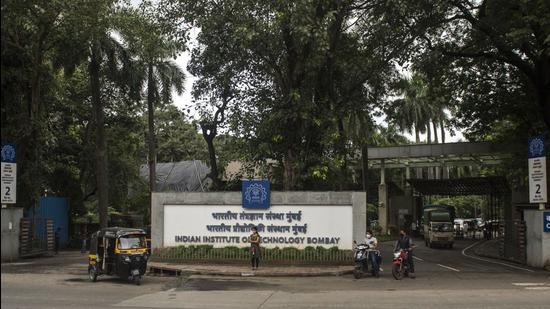
The Government of India mandates a reservation of 10% for candidates belonging to the economically weaker sections (EWS), 27% from other backward classes (OBC) category, 15% for Scheduled Caste (SC) category and 7.5% for Scheduled Tribe (ST) category and 5% for candidates with physical disabilities. However, data accessed under the Right to Information (RTI) Act shows that IITs have fared poorly in implementing these reservation norms in their faculty recruitment.
Until 2019 these reservations were applicable at the entry-level — assistant professor— positions. Thereafter the rules were extended to all other positions— associate and full professor positions.
Despite these policies, HT had earlier reported, 22 of all the 23 IITs don’t have more than six teachers from the ST community. Eighteen of them have 10 or less candidates from the SC category on their faculty rolls and seven IITs had 10 or fewer faculty from the OBC category. Data for IIT Mandi was unavailable.
“It is a difficult task to implement reservations in the flexi cadre system where the total number of positions are not fixed. IITs have the liberty to promote or hire any world-class faculty,” said the director of an IIT, on the condition of anonymity.
IITs follow a flexible cadre system for the appointment of faculty. The sanctioned strength of faculty at different grades such as professor, associate professor and an assistant professor is not fixed. Without a fixed strength, applying reservations is a concern.
“IITs and other Centrally Funded Technical Institutes (CFTIs) are asking the Ministry of Education (MoE) for providing guidelines for making a reservation roster in a flexible cadre structure... The IITs are taking advantage of this flexible cadre for avoiding the faculty reservation,” said Rajesh Paswan, an associate professor and convener, Joint Forum for Academic and Social Justice.
The director of a premier IIT, on the condition of anonymity, said that it will soon ask its board of governors to intervene and issue guidelines on how to apply reservations in a flexi cadre roster.
“Another problem with economic reservations like EWS is that the criteria are that the gross annual family income should not exceed ₹8 lakh. While this can be implemented at the entry-level, for associates and professors the family’s income exceeds ₹8 lakh because the candidates have themselves been working. This is a problem while looking for candidates who fit the criteria,” said a senior official of another IIT.
Another said that without clear guidance from the central government, implementing the reservation policies will deter the natural career progression path.
“If followed to the letter, our current assistant/associate professors in general category will be denied promotion once the roster quota is full, and will have to wait for long periods, as opposed to the current system where promotion is based on merit, post completion of experience requirements,” he said.
In April last year, an eight-member committee formed by the MoE to suggest measures to better implement reservations in admission and faculty selection, recommended that IITs should be exempted from caste reservations for faculty appointments as they are institutes of national importance. V Ramgopal Rao, director of IIT Delhi, who headed the committee, declined to comment.
Apart from this, the committee had also highlighted the need to increase the talent pool in PhD so that they can be hired by IITs. It has recommended a one-year pre-PhD programme where aspirants get to spend a year with a researcher before getting admission to PhD.
Paswan said, “It appears that the instructions issued by MoE to date are insufficient to ensure the effective implementation of faculty reservation in IITs and other CFTIs. Therefore, MoE should either immediately abolish the flexible faculty cadre structure in IITs and other CFTIs or should issue clear cut guidelines for making reservation rosters in the flexible faculty cadre structure. Since the teaching posts being currently filled by IITs are actually those which should be earmarked to SC/ST/OBC according to the Act and law, the ongoing faculty recruitment in IITs should also be stopped till such guidelines for the rosters are issued.”
Stay updated with all the Breaking News and Latest News from Mumbai. Click here for comprehensive coverage of top Cities including Bengaluru, Delhi, Hyderabad, and more across India along with Stay informed on the latest happenings in World News.


