The Bombay High Court has directed the Maharashtra government to identify within six months every person who has died while cleaning sewers or septic tanks and pay ₹30 lakh in compensation to their families.
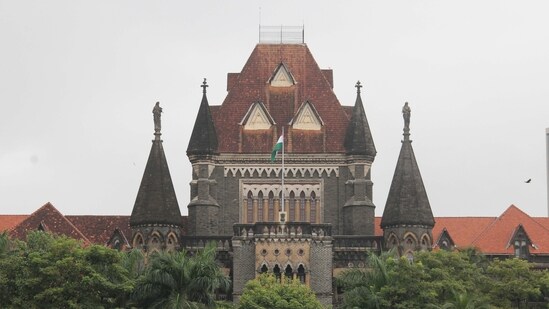
A division bench of justices Bharati Dangre and Manjusha Deshpande said that despite beneficial enactments and various Government Resolutions (GRs) issued to prohibit manual scavenging and protect sewer workers, implementation was “miserably lacking”.
Also read: Workers, activists speak up against manual scavenging at Delhi event
“In the 21st century, we boast about reaching the other side of the moon, yet the hard reality that stares us in the face is that the social evil of the caste system is still followed in our country, which forces some of our citizens to do work that is below human dignity,” the bench said.
“Though the Constitution guarantees all its citizens equality before the law and equal protection of the law, even after 75 years of adopting the Constitution, our country is not free from the social evil that has haunted us for ages,” the bench added.
Petitions challenge compensation rules
{{/usCountry}}“Though the Constitution guarantees all its citizens equality before the law and equal protection of the law, even after 75 years of adopting the Constitution, our country is not free from the social evil that has haunted us for ages,” the bench added.
Petitions challenge compensation rules
{{/usCountry}}The court was hearing a bunch of petitions challenging a provision in GRs issued in 2019 and 2025, which made private individuals liable for payment of compensation for the death of manual scavengers, instead of the state or local authorities.
Senior counsel Gayatri Singh, appearing for the petitioners, had argued that due to the “callous attitude” of the civic authorities, the families of the victims were made to run from pillar to post to obtain succession certificates and incur expenses by engaging lawyers, which is beyond their means.
Also read: Manual scavenging deaths: SC orders higher compensation if not paid before 2023
Safety norms detailed in central SOP
Singh pointed out that, according to the Standard Operating Procedure (SOP) issued by the central government, only registered agencies, contractors, and employers may carry out such work. She added that both the mechanical and manual processes are delineated in great detail, including methods, use of protective gear and safety devices, precautions to be taken and emergency preparedness.
The court noted that these works are often executed by private establishments through private contractors, without the local authorities’ permission and without providing workers with protective gear. In such a situation, the court said, local authorities “shirk their responsibility of compensating the victims”.
Also read: SC issues contempt notices to 15 state chief secretaries
SC ruling sets ₹30 lakh compensation
The bench also referred to a Supreme Court case, Dr Balram Singh vs Union of India, in which the apex court enhanced the compensation amount for victims of sewer deaths from ₹10 lakh to ₹30 lakh and directed the concerned government agency to pay it.
The bench noted that the affidavit recorded the deaths of 81 manual scavengers and a payment of ₹8.1 crore in compensation at ₹10 lakh per deceased worker. However, the information did not cover all persons who had died during the hazardous cleaning of sewer or septic tanks.
“The policy of the state government is clearly violative of the fundamental right of equality guaranteed under the Constitution”, the court said. Accordingly, the court quashed the two GRs, which it said had failed to follow the SOP and had discriminated against the sanitary workers employed at private establishments through private contractors.
Also read: Manual scavenging: HC quashes govt policy shifting sewer death compensation to pvt societies
State to compensate private-sector workers
The court held that sanitation workers in the private sector shall be entitled to compensation from the state government. The state may later recover the compensation amount from the respective employers, it added.
The bench directed the state government to identify, within six months, all persons who have died while engaged in “hazardous cleaning”. “Upon such identification, the state government shall pay compensation of ₹30 lakh to the dependants of each such deceased person”, it said.
The court also ordered the government and local bodies to take steps to rehabilitate the dependents of sanitation workers and manual scavengers.
Stay updated with all the Breaking News and Latest News from Mumbai. Click here for comprehensive coverage of top Cities including Bengaluru, Delhi, Hyderabad, and more across India along with Stay informed on the latest happenings in World News.
Stay updated with all the Breaking News and Latest News from Mumbai. Click here for comprehensive coverage of top Cities including Bengaluru, Delhi, Hyderabad, and more across India along with Stay informed on the latest happenings in World News.