
 E-Paper



In deposition before commission, Pawar blames police failure for Bhima Koregaon violence
Nationalist Congress Party (NCP) chief Sharad Pawar has told a two-member commission that had the police taken timely action, the Bhima Koregaon violence that occurred on January 1, 2018, could have been avoided

 Prefer HTon Google


Nationalist Congress Party (NCP) chief Sharad Pawar has told a two-member commission that had the police taken timely action, the Bhima Koregaon violence that occurred on January 1, 2018, could have been avoided.
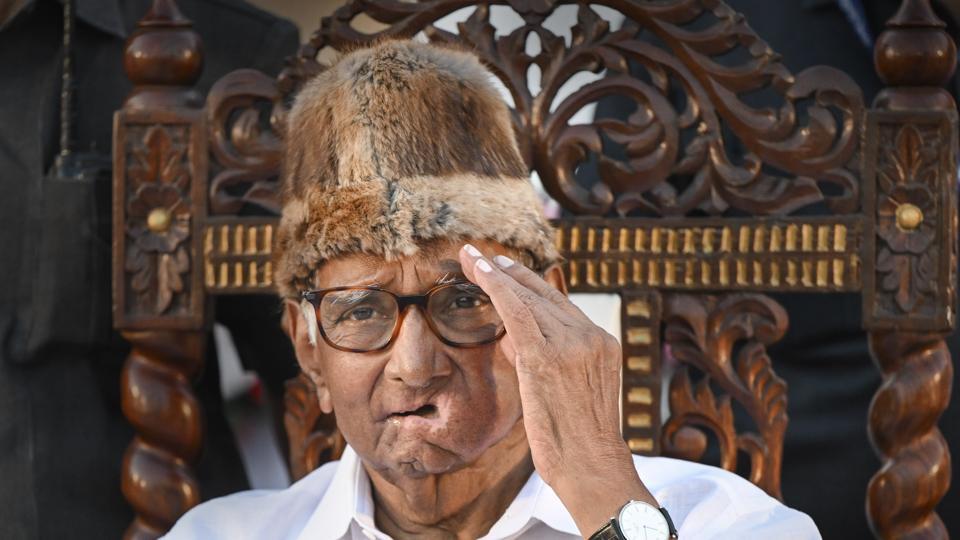
As a law-enforcement agency, the police were responsible for maintaining law and order, he said on Thursday deposing before the commission formed by the state government in February 2018 to investigate the violence.
Pawar, former chief minister, also said the Elgar Parishad and the Bhima Koregaon violence were two different events, and if anybody was expressing their opinion against oppression and injustice, that did not mean they were anti-nationals.
The commission had summoned the NCP chief to depose before it over his statements made in the past and to suggest changes in the existing laws to prevent such a situation in future. The hearing on Thursday was held at Sahyadri Guest House, Malabar Hill.
“The police can’t run away from their responsibility of maintaining law and order and taking action against anti-social elements. They should have taken action in time but chose to ignore it. It was their responsibility to prevent the Bhima Koregaon violence,” Pawar said in his deposition that lasted for five hours.
Replying to a question, he informed the commission that the police manual had clear guidelines for direct action if they got information related to serious offences.
In his first affidavit filed in October 2018, Pawar had said that it was not possible for anti-social elements with a strong political vendetta coming together in such a large number at Bhima Koregaon without the failure of the law-enforcement agency. “Hence, the state has to own up the responsibility for the law-and-order situation on January 1, 2018,” he had said.
“…The police enforcement authority is competent enough to handle riot-like situations at any given circumstances. However, what is required is a strong political/legislative intent to permit the police machinery to work and execute law and order in a free and fair atmosphere…,” he had said.
In the second affidavit filed on April 11, 2020, Pawar suggested scrapping or making amendments to section 124 (A) of the Indian Penal Code, pointing out its misuse by the governments to suppress the voice of dissidents.
On Thursday, he said, “Sedition charges are frequently being used these days, which need to be stopped. Those speaking within the ambit of freedom of speech and parliamentary democracy cannot be called traitors and anti-nationals.”
The sedition law was introduced by the Britishers in 1870 to control the uprising against them and to suppress the freedom movement, he added.
Pawar also said those present in the Elgar Parishad were expressing their thoughts in sharp words against the injustice and oppression meted out to them, but that did not mean they were anti-nationals.
“I have said that those who were not present in the Elgar Parishad have also been booked by the police, which is not fair. I have also written a letter to the chief minister [Uddhav Thackeray] requesting him to set up a special investigation team to probe the cases filed in relation to the Elgar Parishad,” the veteran leader said, adding that he had respect for justice PB Sawant who had been dragged into controversy because the Parishad was held under his leadership.
The former Union minister also said he had no information about the participation of Kabir Kala Manch in the Elgar Parishad.
Members of the Manch are facing charges of links with Maoists.
The two-member commission, headed by retired high court justice JN Patel, was constituted by the erstwhile Devendra Fadnavis-led Bharatiya Janata Party government in 2018 to probe the sequence of events that led to the violence on the 200th anniversary of the battle of Bhima Koregaon on January 1, 2018.


