
 E-Paper



Is kiddie ban on social media feasible?
Last month, the state of South Australia started pushing for a ban on access to social media for children under 14. Teenagers between 14 to 15 will need parental consent

 Prefer HTon Google


Mumbai: Is it time Indian regulators step in to regulate access to social media for young people? This may sound unpalatable, but my answer is Yes.
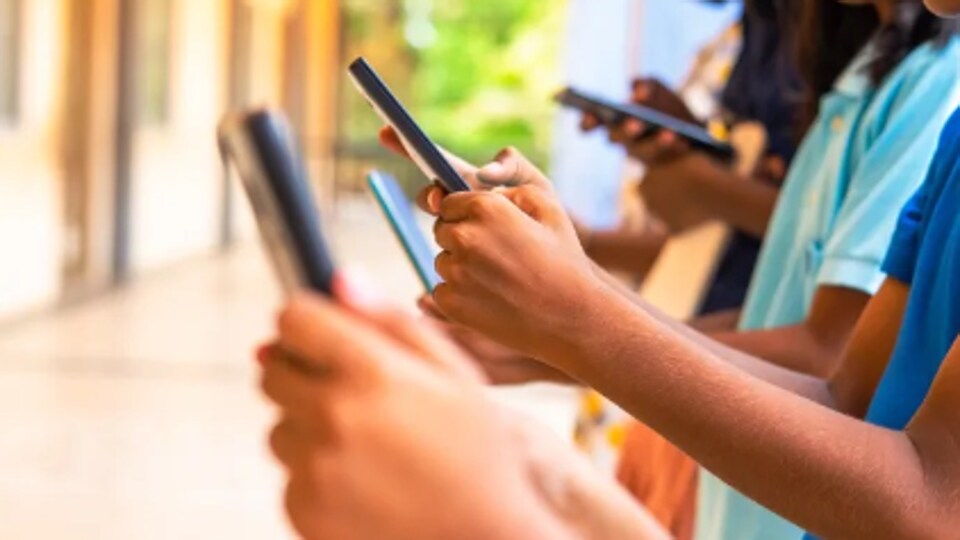
Last month, the state of South Australia started pushing for a ban on access to social media for children under 14. Teenagers between 14 to 15 will need parental consent. A judge has been appointed to look at how to implement such a ban. Opinions across Australia are divided. Anecdotal evidence has it that teachers like the idea. For instance, Sydney-based Pearl Jenifer, who works at a private school, is witness to an increase in mental breakdowns and a decline in attention spans in class. While Jenifer and her colleagues support the ban, the school they work at is unwilling to endorse it officially.
Their sentiment is being echoed in other parts of the world as well. Last month in the US, Florida imposed a ban on platforms that include Instagram, Snapchat and TikTok. The state of Utah wants to follow suit. US Surgeon General Dr Vivek Murthy recently articulated his concerns and pointed out, “I’m still waiting for companies to show data that their platforms are safe.” His concerns extend to other parts of the world, including India, South Korea and Japan, where social media usage has shot through the roof. He is backed by Jonathan Haidt, social psychologist at the Stern School of Business and best-selling author when he says that Gen Z is fighting a mental health issue that impacts them hugely and cannot be wished away
In an interview with the New Yorker, Haidt draws an analogy. Policymakers thought it was apt to step in when cigarettes had to be banned. The ‘freedom to live’ the way they want to argue took a backseat then. There is evidence now that suggests the brains of young people are changing. “The brain is literally rewiring in the sense that neurons are seeking each other out. Neurons are fading away if they are not used. Synapses are forming or fading away. That happens rapidly in the first couple of years of life and then slows down. But in puberty, it speeds up. So puberty is a time of really important rewiring, and traditional societies would give young people some guidance on how you make the transition to adulthood. We don’t do that.”
A researcher in the neurosciences at the Indian Institutes of Science Education and Research who did not want to come on the record said, “I strongly agree with Jonathan Haidt and his advice.” That, she said, is why she monitors her child’s social media consumption as well as her own.
Dr Siddika Panjwani, a neuropsychologist affiliated with Lilavati Hospital and Gleneagles Hospital, is however, unsure if there is “physical rewiring” of the brain happening. The data available right now, she believes, is insufficient to make such a dramatic conclusion. But that said, her clinical experience has it that “the mental health of more young people is sliding downwards after age 12.” This, Dr Panjwani says, “has amplified after the pandemic.” How does she explain this?
The hypothesis she holds right is that during the pandemic, young people who otherwise found happiness in some hobby or outdoor activities were exposed to social media in large numbers. Since then, it has “got them addicted”. Dr Panjwani’s experience also has it that this cuts across all economic strata and isn’t just an urban phenomenon. “Unlike cigarettes or alcohol that was tangible, social media is intangible and you cannot see it creep in and get you hooked.” This is why, she says, she is opposed to a ban. “How do you ban what is intangible?” A “replacement is more viable,” she says. By way of example, nicotine patches are used for smokers to wean them off cigarettes. It is time to think up something for social media addicts.
A Bengaluru-based investor strongly disagrees and argues for a ban. “India banned TikTok, and China couldn’t do a thing about it. With the border issues apart, both countries still trade. India knows what to do and how to, when it chooses to do it. The US and the EU can’t because they are woke. You can’t be woke on such things. It’s time to step in and do what must be done.”


