
 E-Paper



Marathas are backward, concludes backward class commission
The Maharashtra State Commission for Backward Classes has submitted a report stating that Marathas are socially and economically backward

 Prefer HTon Google


MUMBAI
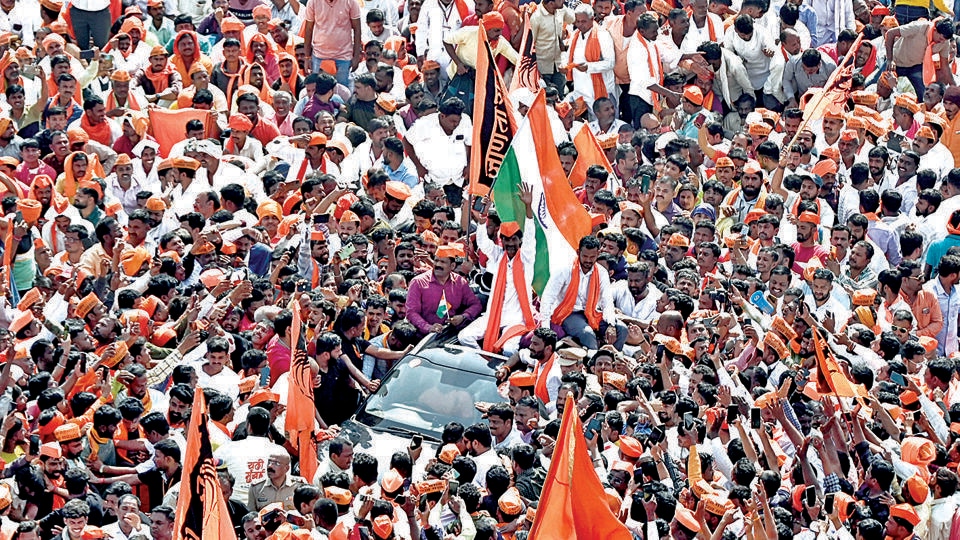
The Maharashtra State Commission for Backward Classes (MSCBC) submitted its report on the survey of ‘real’ Marathas to chief minister Eknath Shinde on Friday. It underscored that Marathas are socially and economically backward, and hence eligible for reservation in government jobs and education. A decision on providing a separate quota to the community will be taken at a special session of the state legislature, scheduled on February 20.
Meanwhile, Maratha reservation activist Manoj Jarange-Patil who led the agitation from Antarwarli Sarathi village, Jalna, from September, 2023, demanding the inclusion of Marathas in the Other Backward Classes (OBC) to obtain the benefit, continued to be on hunger strike for the sixth day.
As Jarange-Patil’s agitation gained momentum in central Maharashtra, the ruling alliance government asked the commission, headed by justice (retired) Sunil Shukre, to conduct a survey to determine if Marathas were indeed socially and economically backward, on December 12. In 2021, when Supreme Court scrapped the special quota for the community, it had mentioned that if the community’s backwardness was proven in the future, the government could consider a reservation for them.
“I submitted my report to the chief minister at 9 am today,” Shukre said on Friday.
Speaking about the commission’s work, which started from December 27, Shukre emphasised the team completed the task in seven weeks. “We worked through the night, till early morning on several days. I am relieved now. Had we gone on a normal speed, we would have required another month-and-a-half to complete the task,” he said.
Acknowledging the commission’s speedy work, Shinde said, “Nearly four lakh people worked on the survey. It will be placed before cabinet and subsequently discussed in a special session of the legislature on February 20. More than 2.25 crore families have been surveyed. Marathas deserve reservation which will withstand the courts.” He added, in granting the Marathas reservation, the existing quota for OBCs will not be compromised.
After making this statement, the CM and state industries minister Uday Samant urged Jarange-Patil to end his hunger strike. The activist, whose health is deteriorating, took a few sips of water but refused medical aid saying he will call off the strike only after the on-ground implementation of the reservation.
Meanwhile, state Congress chief Nana Patole questioned the “haste” with which the report was tabled. “How could the government complete the extensive survey of 26 lakh people in just six days,” asked Patole, while former chief minister Prithviraj Chavan demanded the report be made public.
This is the third time that the state government has made an attempt to provide separate quota for Marathas. It first created a quota of 16 per cent for Marathas and 5 per cent for Muslims in 2014, which was struck down by the Bombay high court. Later, the Devendra Fadnavis-led BJP government enacted a law to provide 16 per cent quota to Marathas which was upheld by the high court but set aside by the supreme court in 2021. Jarange-Patil’s agitation led to the reintroduction of the quota.
Commission member removed
In a move that may kick up a row, MSCBC removed one of its members -- retired judge Chandralal Meshram – two days before the report was submitted. Meshram, who had just three months left to complete his three-year term, had reportedly objected to the newly constituted MSBCC’s change in criteria on the definition of “backward class” and also the changes in the questionnaire used to conduct the door-to-door survey.


