
 E-Paper



Traffic wardens: The ‘almost cops’ that not many commuters take seriously
Though commuters rage against them and ignore them, the men in blue and white have been fighting the odds while assisting traffic police in easing traffic woes on city roads


Mumbai: The city’s mega infrastructure push and the ever-increasing number of vehicles on the roads, is adding to the burden of the short-staffed traffic police. However, traffic wardens are sharing a big chunk of this load and that too without the power and the authority that the police enjoy.
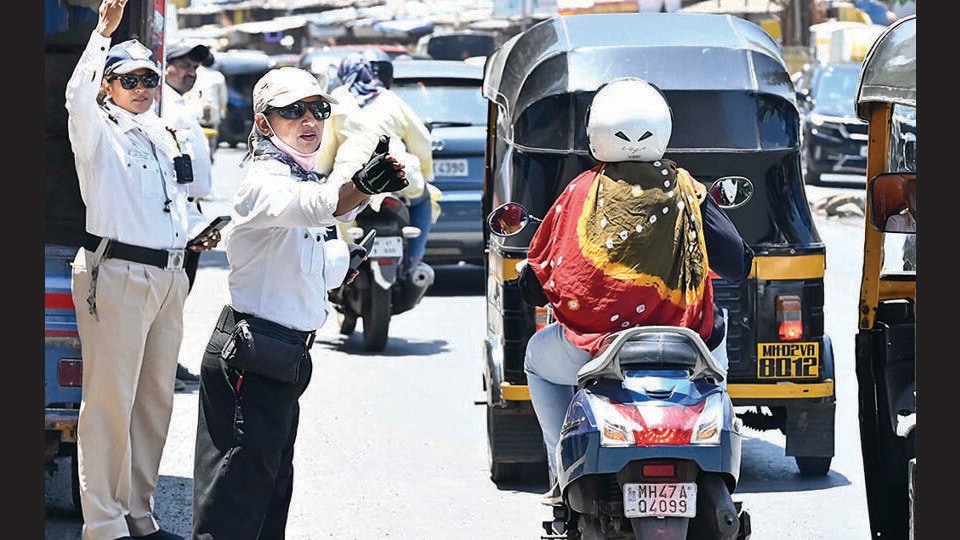
These wardens regularly face the ire of the commuters and do not have any health plan given that they are exposed to pollutants in the air all day.
The city, which has 1,990 kilometers of roads and approximately 41.5 lakh vehicles registered, has only 3,515 traffic constables to both manage the traffic and enforce the traffic law. Hence, the department has to rely on additional forces. Be it the citizens or the traffic wardens. As per the data provided by the Mumbai Traffic Police (MTP), the city has 1,300 traffic wardens.
According to the traffic police officials, contractors provide wardens to manage traffic in the areas around specific infrastructure projects. Till 2019, the BMC had provided 500 traffic wardens, which increased to 1,300 by 2022.
The traffic police also depend on wardens and private citizens to assist during events such as Ganesh Visarjan, other festivals, and on occasions when large crowd and traffic is involved.
The dependence on these wardens increased after the MTP issued a directive asking the constables, above 55 years of age and with comorbidities, to avoid on-field duty because of the heatwave situation.
“We are short-staffed and often constables fall sick and remain absent as they work in severe conditions. This is when the traffic wardens come to our assistance,” said Sanjay Lad, senior police inspector of Dahisar traffic police chowkie, who has a staff of 45 constables and 30 wardens.
However, what are severe work conditions for the traffic police, is severe work conditions for the wardens as well. Exposed to the vagaries of air pollution and heat, these wardens do not have any health plan. Their training is basic at best.
Chetan Kothari, an RTI activist, who has been working as a senior traffic warden on voluntary basis, said, “As the wardens are paid a salary, there is no health plan for them,” said Kothari adding that even volunteers do not have any health plan provided by their employers.
The wardens work in two shifts — 7am to 5pm and 5pm to 11pm. And they are paid ₹10,000 to ₹11,000 per month. However, many wardens work double shifts — 7am to 11pm — as this will earn them a double salary — ₹22,000 per month
The other major concern for the wardens remains that even though they stand on duty just like the traffic constables, they are not taken seriously, and their directions are ignored, often resulting in road rage cases.
Recently in Kherwadi, a drunk truck driver assaulted a traffic warden who tried to stop him from travelling on the wrong side of the road.
Kothari said that the wardens have been asking the government to provide them with an identity card. “I have faced it many times, the commuters do not listen to us. For instance, if we tell them to move their car from a no-parking zone, they question our authority,” said Kothari.
A spokesperson of popular twitter page @roadsofmumbai said, “Wardens are as good as security guards managing traffic. Most citizens don’t take them seriously as they do not have any power to take action on any offenders.
“People do follow wardens but only if they see a traffic constable or someone from the traffic branch in uniform standing next to them.”
“Smart people understand but over smart people don’t,” said Anup Pandey, 22, who supervises 40 wardens on duty at the Gokhale bridge.
Pandey, a commerce (banking and accounts) graduate, said that he was a student when financial problems forced him to work as a warden. “After graduation, when I did not get a job, I was offered to be the supervisor. I had the knowledge and training, so took up this job,” said Pandey.
However, not all wardens think of their job as a burden. Traffic warden Jyoti Upadhyay (52), who stands on duty at Rajendra Nagar in Borivali East, said she has been a warden since 1992. “This is like social work to me and despite health problems, I have loved every minute of it,” said Upadhyay.
“There are times when arrogant drivers argue with me. In such situations, my motto is “muuh mein shakkar aur sir pe baraf” (speak sweetly and keep a cool head). However, when the situation escalates, there are traffic constables, who come to my rescue,” said Upadhyay.

Stay updated with all the Breaking News and Latest News from Mumbai. Click here for comprehensive coverage of top Cities including Bengaluru, Delhi, Hyderabad, and more across India along with Stay informed on the latest happenings in World News.


