
 E-Paper



M-Ward grassroots workers make a film on their lives
A group of 10 women from Mumbai’s M-East ward came together to turn their everyday lives into a powerful story on screen

 Prefer HTon Google


MUMBAI: Kavita Khomne, a 45-year-old grassroots worker, is one of the co-directors of the film. Until recently, she used her mobile phone only to make and receive calls. In 2024, she began learning filmmaking through a workshop organised in Shell Colony, Chembur by CORO India’s Right to Pee Campaign. It was designed and facilitated by Shilpi Gulati, a national award-winning filmmaker who is also a faculty member at the School of Media and Cultural Studies, Tata Institute of Social Sciences. The film, titled Mast Mahila Mandali, will be released on April 28 at Regal cinema house in South Mumbai.
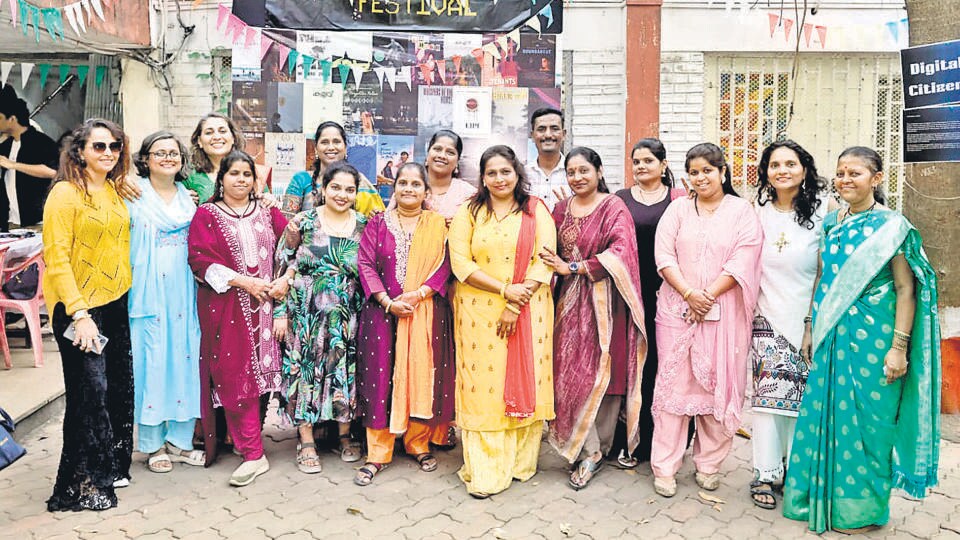
Today Khomne has taken on multiple roles in the film’s creation. “I feel very proud today that I am one of the co-directors of the film. At the age of 45, I want to show that we can do anything if we are willing to learn. I feel confident enough to give basic knowledge of movie-making to anyone,” she says.
The newly minted filmmaker is one of a group of 10 women from Mumbai’s M-East ward who came together to turn their everyday lives into a powerful story on screen. Her co-directors are Anjum Shaikh, Darshana Mayekar, Gauri Rane, Kavita Khomne, Nazneen Siddiqui, Rohini Kadam, Rehana Shaikh, Sheetal Navle, Kavita Ghuge, and Vaishali Mane from the working-class neighbourhoods of Deonar, Govandi, and Chembur. Shilpi Gulati is the co-director and editor of the film, while Supriya Jan is the executive producer.
The idea for the film emerged from their involvement with the Right to Pee Campaign. Supriya Jan, who leads Grassroots Knowledge Building at CORO India said, “We wanted to documented 15 years of the campaign. In the past, our work has been written about by other filmmakers, journalists and researchers. This time we wanted to tell our own story. We wanted to pause, reflect and consolidate our learnings and felt films would be the most meaningful medium to tell our story.”
Gulati was approached by Supriya to co-direct the film. “I told her, if they genuinely want to make a film together, we will first have to formally train the women in filmmaking. I drew from the philosophy of co-creation and developed a workshop plan for smartphones filmmaking, we identified the participants and committed to meet every Saturday.” Technical equipment for production and post production of the film was given by the School of Media and Cultural Studies, TISS, and the Independent Voices Color & Picture Finishing Grant was awarded to us by Mahak Gupta Company.
For nearly two years, the women balanced work, household responsibilities and caregiving to learn cinematography, sound recording and editing. They began documenting their homes, neighbourhoods and daily lives, slowly shaping the narrative through collective discussions.
“Every weekend, we would learn something and complete the task given to us,” said Gauri Rane. “We used to shoot public toilets, markets and our neighbourhoods. Some people tried to stop us, while others helped us during shooting. In this process, we also got support from our family members as we had to shoot at home too. This process was challenges but very joyful.”
The film challenges common perceptions about M-East ward. “M-East is always seen as a place inhabited by poor people with a poor lifestyle, but thanks to the sanitation work done by grassroots workers, there are areas with zero child deaths, no pregnancy deaths, and such good public toilets that you can take a selfie there,” said Sheetal Navle. “We needed to show this side of our ward.”
The narrative of the film focuses on dignity and resilience rather than hardship. Nazneen Siddiqui explained, “In one of the early meetings, we were asked what kind of a film we want to make. I was clear, I didn’t want us to be seen as poor helpless women. Hardships are everywhere, we wanted to show how we overcome them.” Gulati said this idea shaped the final narrative. “I held on to what Nazneen said in that meeting. It became the cornerstone of our film. There is a certain gaze with which marginalised women are shown on screen. Here they were asking to be represented in their own terms. The name of the film translates to ‘Cool Ladies Club’, this is how they want to be seen.”
Gulati said this idea shaped the final narrative. “Even the film’s title shows the positive side, how these women enjoy their lives despite challenges,” she said.
The group was involved in post-production as well. “We collected 62 hours of video content created by five teams,” said Rohini Kadam. “Then had split ourselves into five teams and took on the tast of shooting each other’s story. Each team sat with the editor and decided what to include from what they had shot. We did a sound design workshop with Anita Kushwaha and colour workshops with Mahak Gupta. In some parts, where the audio was not clear, we had to go back to the same locations and re-record the ambiences. We put in all these efforts beyond cinematography and it is evident in the final product.”
Stay updated with all the Breaking News and Latest News from Mumbai. Click here for comprehensive coverage of top Cities including Bengaluru, Delhi, Hyderabad, and more across India along with Stay informed on the latest happenings in World News.


