
 E-Paper



Post-Diwali air pollution levels highest in eight years: SAFAR
The data is collected through a network of 10 Continuous Ambient Air Quality Monitoring Stations (CAAQMS) across Greater Mumbai region.


Mumbai: Post-Diwali air quality on Tuesday was the worst in eight years, data from the Indian Institute of Tropical Meteorology’s (IITM) System of Air Quality Forecasting and Research (SAFAR) revealed.
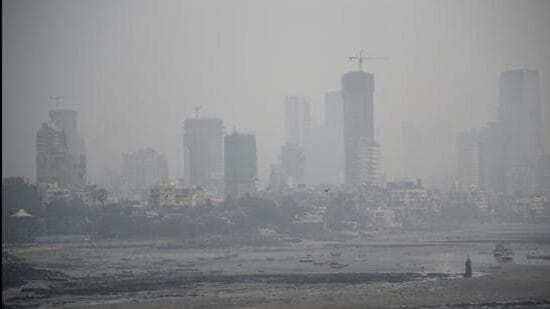
At 8.30pm on Tuesday, the Air Quality Index (AQI) was 305, placing air quality in the ‘very poor’ category, after peaking at 320 in the hours before sunrise. On Monday night, the AQI was 149 (moderate category), indicating that the rapid deterioration was brought on by widespread use of firecrackers during Diwali festivities.
The data is collected through a network of 10 Continuous Ambient Air Quality Monitoring Stations (CAAQMS) across Greater Mumbai region.
An AQI of 100 to 199 is considered ‘moderate’, while 50 to 99 is considered ‘satisfactory’ and below 50 is considered ‘good’. AQI in excess of 200 is considered ‘poor’, above 300 ‘very poor’, above 400 ‘severe’ and above 500 is considered ‘severe+’.
Prolonged exposure to such poor air can lead to a range of respiratory and cardiovascular problems.
In comparison, Delhi’s AQI on Tuesday night, as per SAFAR, was 349. This is the first time in four years that post-Diwali pollution levels in both cities have been in the ‘very poor’ or higher categories, said Gufran Beig, project director, SAFAR.
Delhi, affected by festivities, stubble burning and farm fires, is usually more polluted.
“In Mumbai, there was continuous rain in 2020 and 2021 around Diwali days, which helped keep the air cleaner than it is today. This year, Diwali coincided with a complete withdrawal of the monsoon from over Maharashtra, and the wind conditions became suddenly stagnant and cool, and the mixing height, or boundary layer, of airborne pollutants settled much closer to the earth’s surface, causing intense hazy conditions over Mumbai Metropolitan Region. Air quality will remain ‘very poor’ on Wednesday as well, and may reach the moderate category, which is typical for Mumbai, only by the weekend,” Beig said.
In 2018, Mumbai’s post-Diwali AQI stood at 305 (very poor). In 2017 it stood at 319 (very poor). In 2016, an AQI of 315 (very poor) was recorded a day after Diwali, and in 2015, the city recorded an AQI of 313 (very poor) the day after.
In 2019, Mumbai had recorded its cleanest post-Diwali air in five years (AQI 75) owing to high wind speed under the influence of Cyclone Kyarr in the Arabian Sea. The year 2020 was the second cleanest post-Diwali air since 2015, with an AQI of 107. In 2021, as pandemic restrictions started getting more lenient, the city’s post-Diwali AQI touched 215, per SAFAR data.
Beig added that this was the first time since the onset of the pandemic in March 2020 that Diwali is being celebrated so extensively. “So not only are weather conditions unfavourable, the extent to which firecrackers are being burst is also likely higher than in the last two years. There has been significant accumulation of pollutants with no natural dispersal,” he said.
Stay updated with all the Breaking News and Latest News from Mumbai. Click here for comprehensive coverage of top Cities including Bengaluru, Delhi, Hyderabad, and more across India along with Stay informed on the latest happenings in World News.


