
 E-Paper



Protesters turn streets into makeshift homes as Maratha agitation enters day two
Azad Maidan and CSMT became the epicentres of the sit-in, with adjoining roads clogged by parked vehicles and groups camping overnight. While some slept on station floors, others returned to tempos parked as far away as Vashi, where parking space had been designated

 Prefer HTon Google


MUMBAI: The city’s busiest precincts turned into dormitories and kitchens on Saturday, as more than 25,000 Maratha protesters who had poured into the city for the quota agitation settled into an indefinite stay. With activist Manoj Jarange-Patil’s hunger strike at Azad Maidan entering its second day, demonstrators spread across roads and railway stations—urinating, bathing, cooking, and sleeping in public spaces—transforming south Mumbai into a site of both protest and daily life.
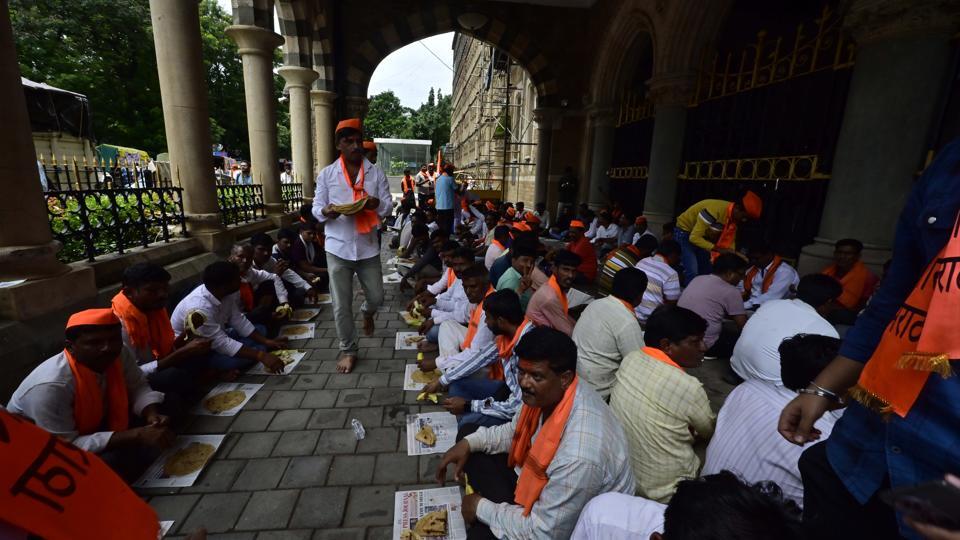
By morning, groups were seen cutting onions, roasting chapatis, and stirring khichdi on portable stoves connected to gas cylinders. “We made poha this morning,” said Vijay Pawar, 24, who had travelled from Beed with 100 others. “Lunch was arranged by fellow protestors. Toilets are too few, but the BMC cannot be blamed—our crowd is simply too large.”
Azad Maidan and CSMT became the epicentres of the sit-in, with adjoining roads clogged by parked vehicles and groups camping overnight. While some slept on station floors, others returned to tempos parked as far away as Vashi, where parking space had been designated. By day, however, many took to the city—visiting Marine Drive, the Gateway of India, Ganpati mandals and even indulging in some window shopping at Westside. “This is the first time we have come to Mumbai, so we’re sightseeing while we can,” said 22-year-old Rohit Ban, who came from Vashi by train.
Open-air bathing became a routine. Protesters filled water from municipal tankers or railway taps and washed in full public view—some even dancing under running water at Cooperage Bandstand near Mantralaya. Wet clothes were hung out to dry on cars, gates and railings. As the day wore on, chants of “Patil, Patil” echoed inside CSMT, accompanied by drums, hooting and sloganeering. When afternoon showers broke, groups danced in the rain, turning thoroughfares into impromptu stages. In the evening, many of the protesters also entered the Jehangir Art Gallery to camp there.
The city, meanwhile, struggled with the fallout. South Mumbai’s traffic eased somewhat by Saturday evening—the JJ flyover reopened and Crawford Market saw movement return to normal—but 40 BEST bus routes were hit during the day. Roads outside Azad Maidan were littered with leftovers, banana peels and garbage, leaving the air rank. The CSMT subway turned into a sweat-filled corridor.
Despite deploying 500 sanitation workers round the clock, the BMC’s clean-up operations could not match the scale of the crowds. Civic officials said they had added gravel to the protest grounds, installed extra lamps, stationed ambulances and a medical room, pressed over a dozen water tankers into service, and made more than 300 toilets available.
Amid the festival-like scenes, the underlying grievance remained sharp. Many young protesters spoke of the crushing cost of higher education without quota benefits. “My pharmacy diploma cost me over a lakh, while others with reservation paid around ₹40,000,” Ban said. “Our parents’ farmland is shrinking between siblings, so education is the only way forward. Without equal opportunities, our future is bleak.”
For now, the demonstrations remained peaceful, but protesters warned that their patience had limits. “As long as our leader asks for calm, we will stay calm,” Pawar said. “But if this drags on, make no mistake—we can bring Mumbai to its knees.”

Stay updated with all the Breaking News and Latest News from Mumbai. Click here for comprehensive coverage of top Cities including Bengaluru, Delhi, Hyderabad, and more across India along with Stay informed on the latest happenings in World News.


