
 E-Paper



Name of man behind Komagata Maru incident removed from Vancouver building
This action was officially taken during a function that was attended by Canada’s minister of national defence Harjit Sajjan, minister of public services and procurement and accessibility Carla Qualtrough, local MPs among others.


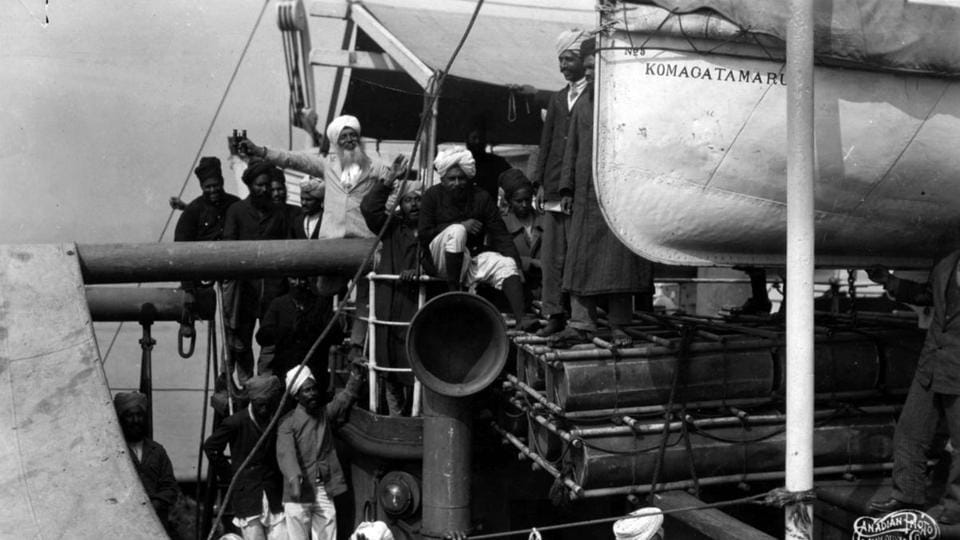
The Canadian government has removed from a Federal public building in Vancouver the name of a racist politician who played a central role in preventing Komagata Maru, a ship carrying 376 passengers from India, mainly Sikhs, from docking in the city in 1914.
What was till Friday morning known as the Harry Stevens building, now displays a mural paying tribute to the victims of that episode.
This action was officially taken during a function that was attended by Canada’s minister of national defence Harjit Sajjan, minister of public services and procurement and accessibility Carla Qualtrough, local MPs among others.
Henry Herbert Stevens, better known as Harry, was then an MP from Vancouver (and later a federal cabinet minister), and played a major part in having the Japanese steamship escorted away from the Vancouver harbour after a discriminatory law was cited to disallow the prospective migrants from disembarking in the country.
The mural created by Keerat Kaur, Alicia Point, Sandeep Johal and Cyler Sparrow-Point depicts the 1914 incident.
In a statement released to mark the event, Sajjan said: “The Komagata Maru incident was a tragedy in the truest sense of the word. Canada is a different nation today, but we can never forget what happened here, so we can learn from it and ensure it never happens again. Removing the name from this federal building and installing the important mural here will serve as that constant reminder.”
His colleague, Qualtrough, also an MP from the area, said the Canadian government wanted to “use this as an opportunity to honour and pay respect to the victims of the Komagata Maru incident, and to the Indigenous Peoples who supported them during their stay in the Vancouver harbour.”
The move was also welcomed by those descendants of the passengers of the ship. Raj Singh Toor, vice-president of the Descendants of the Komagata Maru Society, said the stripping of Harry Stevens’ name from the edifice “will help educate the community and remind us of how unique Canada’s diverse makeup is.”
On May 23, 1914, the Komagata Maru arrived close to Vancouver harbour with its passengers from India, many among them seeking to immigrate to Canada. It was also a political act of defiance against British colonialism, as some among them participated in the Independence struggle after returning to India.
Immigration authorities refused to allow the majority to come ashore, citing the discriminatory Continuous Passage Regulation, a law that mandated that immigrants arrive in Canada directly from the home country. For those from India, that was logistically impossible. The legislation has been considered racist and meant to be exclusionary. The passengers had a standoff with the authorities at times. Two months later, the resistance was overcome and it was escorted away. On its arrival in India, British police boarded the vessel and attempted to arrest the leaders of the passengers who they considered to be insurgents. In the resultant riot, 19 passengers were killed and over 200 arrested.
Caption
Harry Stevens played a central role in preventing Komagata Maru, carrying 376 passengers from India, mainly Sikhs, from docking in Vancouver in 1914. (City of Vancouver Archives)


