
 E-Paper



Ghaziabad agencies gear up to revive water bodies ahead of monsoon
The 2022 groundwater assessment report, released by the Uttar Pradesh Groundwater department, categorises the four blocks of Loni, Razapur, Bhojpur and Ghaziabad City as “over exploited”, and the Muradnagar block as “semi critical”. “Over-exploited” units indicate areas where ground water extraction exceeds the annual replenishable groundwater recharge. In these areas, ground water extraction is more than 100%


Different district agencies have geared up to revive ponds and water bodies to achieve maximum ground water recharge during the upcoming monsoon season. While the district administration has increased its target of reviving 75 ponds to 101 ponds, the corporation aims to revive 35 ponds, in addition to the now dried-up Pakka Talab.
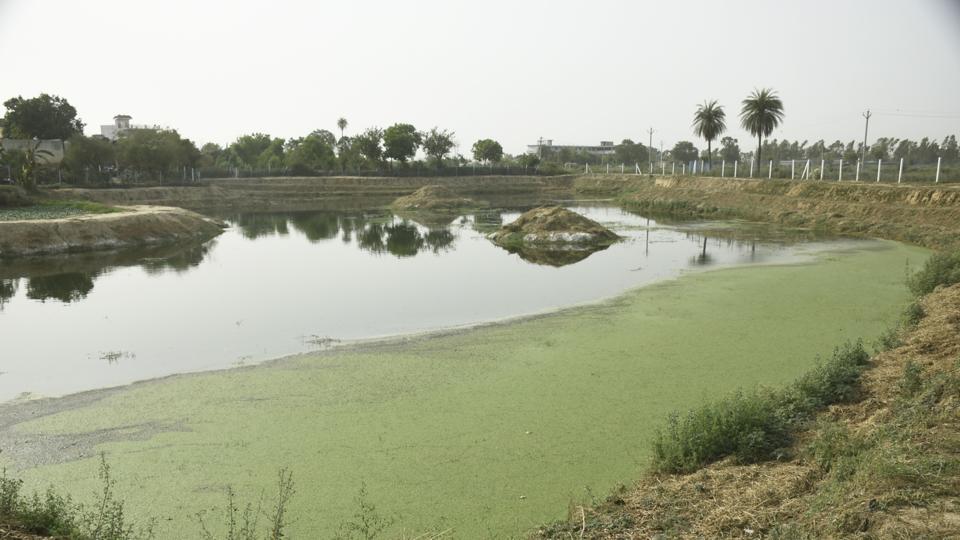
The 2022 groundwater assessment report, released by the Uttar Pradesh Groundwater department, categorises the four blocks of Loni, Razapur, Bhojpur and Ghaziabad City as “over exploited”, and the Muradnagar block as “semi critical”.
“Over-exploited” units indicate areas where ground water extraction exceeds the annual replenishable groundwater recharge. In these areas, ground water extraction is more than 100%. The “semi-critical” units are those where the ground water extraction is between 70% and 90%. The status of the five blocks has not changed since the previous assessment conducted in 2017.
Further, the ground water level in 27 localities in Ghaziabad city, a majority of which are situated in the trans-Hindon area, has witnessed an alarming decline of 5.3 metres below ground level (mbgl) over the past four years.
The water level in these localities declined sharply from an average of 24.79mbgl during the post-monsoon period in 2017 to an average of 30.08mbgl during the post-monsoon period in 2021. The maximum dips in ground water levels were recorded in Vijay Nagar (7.9mbgl), Pratap Vihar (7.32mbgl), Vaishali (6.43mbgl), Arthala (6.01mbgl), Lajpat Nagar (5.93mbgl) and Sahibabad (5.72mbgl).
“To address the situation, we have started work to revive ponds and water bodies. There are about 897 water bodies in the district. We were assigned a target of reviving 75 ponds under the Centre’s Amrit Sarovar Yojna. We have now increased the target and will revive 101 ponds. We expect to complete digging work before the monsoon season so that rainwater is collected for ground water recharge,” said Hari Om, executive engineer, minor irrigation department, Uttar Pradesh.
According to officials, each pond can hold about 10000 cubic metres of water on an average. “We are trying to get 600 rain water harvesting (RWH) units, installed at government offices and parks across the district, operational. The work is likely to be completed before the monsoon season,” the engineer added.
On the other hand, the corporation will revive 35 out of 46 ponds under its jurisdiction. “Of the 35, 20 ponds have been revived, while work to revive the other 15 is undergoing. We will also revive the Pakka Talab, spread across an area of about 15,000 square metres. The work will likely begin in a week,” said Mahendra Singh Tanwar, municipal commissioner.
The Pakka Talab, near Kalka Garhi, dried up after a project to revive it was initiated about six years ago at a cost of ₹4 crore.
Environmentalists said that they have raised the issue of defunct RWH units in the city during the District Ground Water Council meetings.
“According to data provided during the meetings, the city has only 22 RHW units installed at individual households, and 64 in residential high-rises. The figures are low, and agencies have not been able to keep them operational. In addition, there are only 50 RWH units installed in different parks across the city. The Uttar Pradesh Ground Water (Management and Regulation) Act, 2019 mandates every bulk user extracting ground water with borewells to install RWH systems,” said Akash Vashishtha, city-based environmentalist, and member, District Ground Water Council.
“In a 2021 petition to the National Green Tribunal, we indicated that several ponds have been encroached. Agencies have simply rejuvenated empty parts of the water bodies, and not restored them to their original state, according to the area mentioned in revenue records,” said Sushil Raghav, another city-based environmentalist.

Stay updated with all the Breaking News and Latest News from Mumbai. Click here for comprehensive coverage of top Cities including Bengaluru, Delhi, Hyderabad, and more across India along with Stay informed on the latest happenings in World News.


