
 E-Paper



Ghaziabad experiences rare ‘satisfactory’ air day in December since 2017
The air quality index (AQI) reading of Ghaziabad city was 98 on Wednesday, in the “satisfactory” category, according to CPCB; neighbouring cities of Greater Noida and Noida also saw improved air quality better AQI under “moderate” category at 146 and 110, respectively


The Ghaziabad city on Wednesday experienced a “satisfactory” air quality day, a rare occurrence in the month of December in Ghaziabad, where the pollution levels remain high as a norm during the winter months. According to the Uttar Pradesh Pollution Control Board (UPPCB), the city never experienced a “satisfactory” air day in December since 2017.
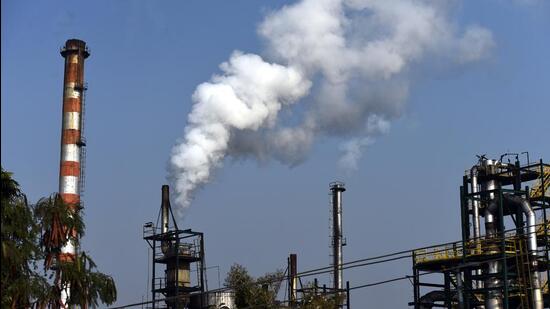
The air quality index (AQI) reading of Ghaziabad city was 98 on Wednesday, in the “satisfactory” category, according to the daily 4pm AQI bulletin released by the Central Pollution Control Board (CPCB).
The AQI figures for the four air-quality monitoring stations in Indirapuram, Loni, Sanjay Nagar and Vasundhara were 107, 112, 79 and 96 (past 24-hours), respectively, on Wednesday.
The neighbouring cities of Greater Noida and Noida also saw improved air quality better AQI under “moderate” category at 146 and 110, respectively.
Ghaziabad city last experienced a “satisfactory” AQI for four consecutive days on September 26, 27, 28 and 29 during the monsoon this year.
According to AQI scale, the AQI between zero and 50 is considered “good”, 51 and 100 “satisfactory”, 101 and 200 “moderate”, 201 and 300 “poor”, 301 and 400 “very poor”, 401 and 450 “severe” and above 450 “severe plus.”
The figures compiled by the UPPCB indicate that Ghaziabad since 2017 never experienced “satisfactory” AQI in the month of December. The AQI usually ranged from “poor” to “severe” in December since 2017.
Vikas Mishra, the regional officer of UPPCB, Ghaziabad did not respond to calls for comment.
Utsav Sharma, the regional officer of UPPCB, Noida, said that the AQI during the month of December has improved considerably in the Ghaziabad/Noida region this year.
“This is largely due to the impact of favourable meteorological conditions and prevalent wind speeds which have driven pollutants away time and again. A recent spell of light rain has also helped improve the AQI in the region,” Sharma said.
UPPCB officials said instances of stubble burning in neighbouring states have also considerably reduced. The system for air quality early warning in Delhi indicated that contribution of stubble burning to Delhi’s PM2.5 mass concentration was 26.17% on November 22 and it reduced to 1.27% by December 6, the last date for which figures are available in the system.
Residents were thrilled by the better air quality but were apprehensive that conditions may deteriorate once meteorological conditions become unfavourable.
“The Ghaziabad city has always had bad air quality during winter. The improved ait quality is largely due to favourable meteorological conditions. But we do not know for how long such conditions may prevail. The local agencies are hardly doing enough to control road dust, traffic congestion and instances of garbage burning,” said Vikrant Sharma, a city-based environmentalist.

Stay updated with all the Breaking News and Latest News from Mumbai. Click here for comprehensive coverage of top Cities including Bengaluru, Delhi, Hyderabad, and more across India along with Stay informed on the latest happenings in World News.


