
 E-Paper



‘STPs in Hindon to build 1,236 MLD capacity by 2027’: UP Govt tells NGT
The affidavit was filed in connection with a petition filed by environmentalist Abhist Kusum Gupta, who had raised concerns in a petition about the pollution marring the river and its tributaries

 Prefer HTon Google


Ghaziabad: The Uttar Pradesh government in an affidavit has told the National Green Tribunal (NGT) on Wednesday that the sewage treatment plants (STPs) in the Hindon basin will have a capacity of 1236.5 million litres per day (MLD) by 2027.
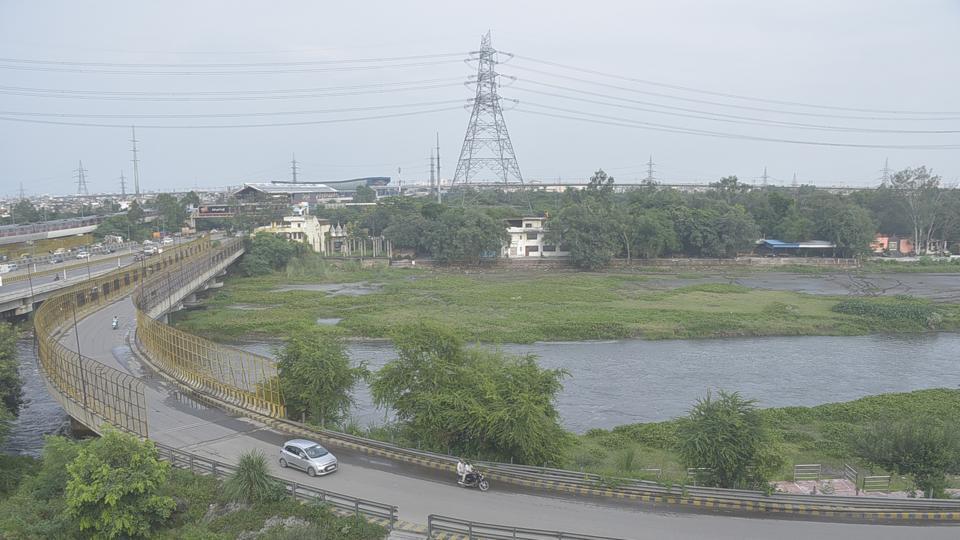
The tribunal was informed this while apprising that there is a gap of 285.43 MLD in the installed and utilised capacity of the 20 STPs in seven districts, including Meerut, Muzaffarnagar, Shamli, Ghaziabad, Baghpat, Saharanpur, and Gautam Budh Nagar, for which STPs are proposed and work is on for laying sewer lines and household connections.
“To bridge the gap of 285.43 MLD, seven STPs of total capacity of 283 MLD are proposed, and also works related to the laying of sewer lines and household connections are in progress. After completion of the projects, a total capacity of 1236.5 MLD will be available by March 2027,” said the acting UP chief secretary Deepak Kumar in the affidavit.
The UP officials also apprised the NGT that the total sewage generation in the river Hindon basin is about 943.63 MLD while 20 STPs with an installed capacity of 953.5 MLD have been installed, but these are currently utilising the capacity of 658.2 MLD.
The affidavit was filed in connection with a petition filed by environmentalist Abhist Kusum Gupta, who had raised concerns in a petition about the pollution marring the river and its tributaries.
During a hearing on January 24, the counsels of the state of UP had submitted that a fresh affidavit will be filed by the UP chief secretary while keeping in view the tribunal’s observations and time-bound schedule for completing the action in pursuance to the action plan submitted by the Central Pollution Control Board (CPCB).
The CPCB, along with its report dated July 9, 2024, filed in a connected petition related to the dumping of waste in the river Hindon, had enclosed an action plan “Pollution Source Mapping of River Hindon and its Tributaries and Restoration Plan for Polluted Stretches”.
The plan was prepared in August 2023.
The latest affidavit disclosed that the total length of sewer lines was about 3401.42kms and connected to 492,348 households in municipal corporations of Ghaziabad, Meerut, and Saharanpur, besides in the Nagar Palikas of Loni, Muzaffar Nagar, and Shamli.
As regards the action against 391 non-complying industrial units in the river Hindon basin, the officials submitted that 21 units were dismantled, another 84 units were either closed or non-operational, while 273 units were complying and 13 units were non-complying, for which show-cause notices were issued by the state pollution board.
The CPCB plan has also identified that solid waste is choking various drains falling in the river and its two tributaries—Kali (west) and Krishni.
“It is submitted that urban local bodies have informed that identified drains are being cleaned periodically and on a quarterly basis by removing the solid waste in their respective jurisdictions,” the affidavit added.
The affidavit also highlighted that the irrigation and water resources department said that the environmental-flow (e-flow) in the river is not possible as it is not a perennial river.
“However, the flow of the river may be restored through a long-term strategy of rejuvenation of water bodies along it and extensive plantation in the catchment of the river,” it added further.
As regards the plantation, it said that 1,140,913 plants were planted along a 5km stretch during the period 2021-22 and 2025-26 with 1,075,693 plants surviving at a survival rate of 94.28%.
As regards the implementation of the points of the CPCB plan, officials submitted that directions were issued to the respective district magistrates on October 24, 2024.


Stay updated with all the Breaking News and Latest News from Mumbai. Click here for comprehensive coverage of top Cities including Bengaluru, Delhi, Hyderabad, and more across India along with Stay informed on the latest happenings in World News.


