E-Paper



Ancient, painstaking recipe of Naga sadhus’ sacred ash
The method of preparation used is an ancient one, said Swami Hari Giri, the secretary of Akhil Bhartiya Akhada Parishad (Hari Giri faction) and a patron of Shri Panch Dasnaam Juna Akhada

 Prefer HTon Google


Before the Amrit Snans, every Naga ascetic takes great care in beautifying himself for the ritual and the key ingredient of this is the sacred ‘Bhaboot’ or ash.
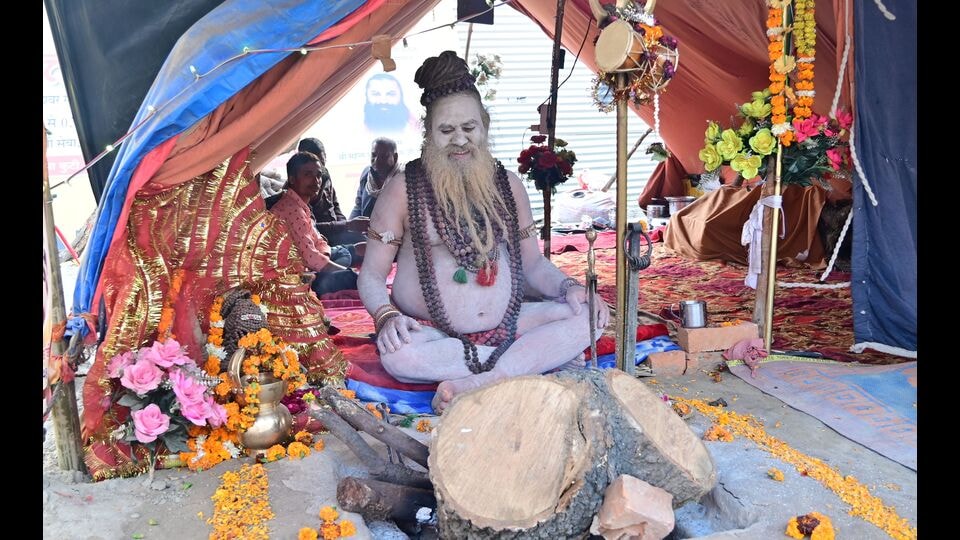
While most may believe that the ash is directly applied on the body from the various sacred mini-bonfires or dhuni that these sadhus have before their abodes, it is not so.
The ash that the Naga sadhus smear on their bodies before all important ceremonies, including the amrit snans during Mahakumbh, is prepared painstakingly. The method used is an ancient one, said Swami Hari Giri, the secretary of Akhil Bhartiya Akhada Parishad (Hari Giri faction) and a patron of Shri Panch Dasnaam Juna Akhada.
He said that the best of sandalwood paste, good quality wood and cleanest of the wood ash is used in the process.
He said that the ash from the dhuni (a sacred site represented as a cleft in the ground with burning fire) is carefully mixed with the best quality sandalwood paste and formed into small balls which are then slowly baked in a cow dung fire.
“This results in the small balls getting properly baked and cracking. These balls are then taken, allowed to cool, grinded and filtered through a fine sieve before being ready for use. The beautiful fragrance and the distinct whiteness of the ash is now on full display,” he explained.
However, the ash is still not ready. “This semi-prepared ash is now taken and mixed with unboiled cow milk and sandalwood paste again and the entire process is repeated and only then the filtered ash is used,” he shared.
Swami Nirmal Bharti, a Naga sadhu from Ujjain belonging to Shri Panch Dashnam Juna Akhada, said that the ash once ready is divided into two parts.
“One part is mixed with sacred Ganga water dubbed ‘Ganga Bhabooti’ and kept aside for religious rituals while the other part dubbed ‘Dev Bhaboot’ is actually used by Naga sadhus to smear on their wet bodies with raw cow milk after bathing,” he added.
On the day of the Amrit Snans, the Naga sadhus spend hours in prayers and meditation before taking a dip in the sacred Sangam water in wee hours, smearing their wet bodies with the specially prepared ash standing close to bonfires and then pay obeisance to their respective Akhada deity in the makeshift temple put up at the centre of their chavni (camp) in mela area under the ‘dharm dwaja’ (religious flag) and only then do they proceed for the Amrit Snan in a procession.