E-Paper



Assam: Doctors treat rare dialysis-induced skin ailment with kidney transplant
The skin condition called Pseudoporphyria in which multiple lesions that look like burnt and peeling skin occur all over the body of a patient with kidney failure when they start hemodialysis


A team of doctors at the government-run Guwahati Medical College Hospital (GMCH) in Assam successfully treated a rare dialysis-induced skin ailment by performing kidney transplant on the patient.
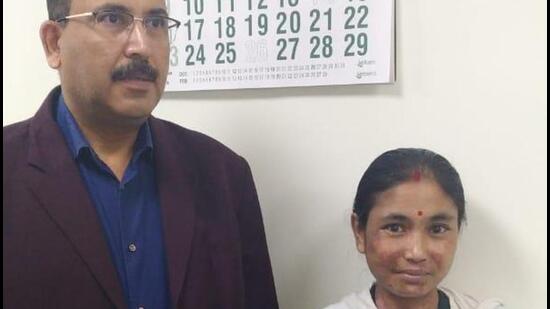
A report on the operation conducted on a 30-year-old woman patient in December last year by a team of doctors from the super-speciality unit of GMCH led by Dr Sasanka Kumar Barua recently appeared in Cureus, a US-based medical journal.
The skin condition called Pseudoporphyria in which multiple lesions that look like burnt and peeling skin occur all over the body of a patient with kidney failure when they start hemodialysis, a process to filter waste and water from blood when the kidneys stop functioning normally.
Also Read: Pediatric kidney transplant patients fare better when organ is from live donor
“Pseuporphyria has been seen in patients with end stage renal (kidney) disease on hemodialysis. No treatment has proved efficacious in the treatment of pseudoporphyria. The patient was treated with all available medication in (medical) literature, but wasn’t relieved,” the article in Cureus mentioned.
“However, all skin lesions completely healed within 22 days post renal transplantation. Renal transplantation proved to be the cure for dialysis-induced pseudoporphyria resistant to conventional drug therapy. It is likely the first case of pseudoporphyria caused by dialysis that has been successfully treated with kidney transplantation,” it added.
The article mentioned the 30-year-old resident of Dhemaji in Assam was diagnosed with Stage 5 of chronic kidney disease and both her kidneys had almost failed. She was put on hemodialysis, but after 50 such procedures in eight months, she developed skin lesions that were identified as pseudoporphyria.
“The skin lesions and kidney failure were affecting the patient a lot. We tried several medications to treat the lesions, but they didn’t work,” said Dr Sasanka Kumar Barua, head of urology at GMCH.
“The patient’s mother agreed to donate one of her kidneys and the doctors at GMCH conducted the difficult surgery. It was a success and the patient’s lesions healed within two weeks. She doesn’t have any kidney problem as of now and is fully recovered,” he said.
Dr Barua informed that doctors at GMCH have been performing 3-4 kidney transplants every month. As most patients from the northeast usually go to other states for the complicated and costly procedure, he urged public the avail the services offered in Guwahati by the government-run hospital.