
 E-Paper



Bandra station’s stunning makeover hides an ugly truth
There’s a reason behind this incongruity -- elite Bandra-ites no longer visit this area as they do not travel by train.

 Prefer HTon Google


Mumbai: The suburban Bandra station, after its recent restoration, stands out like a newly bloomed lotus within a swampy pond. Shiny pictures of the station shared on social media only tell half the story of what used to be once called the Queen of Suburbs – they gloss over the squalor around the precinct.
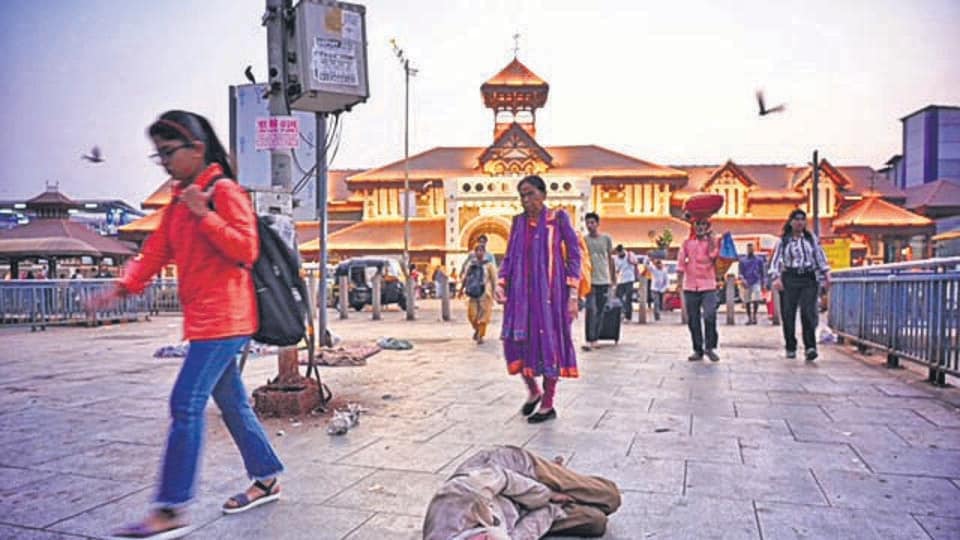
There’s a reason behind this incongruity -- elite Bandra-ites no longer visit this area as they do not travel by train.
This raises serious questions about our whole approach to aesthetics and cleanliness. We must remember that modern London emerged from the era of the stink of the Thames, with sanitary reforms led by the likes of Charles Dickens. John Ruskin, the Victorian thinker of art who influenced Mahatma Gandhi, famously said that a clean sewer is far nobler than the most beautiful painting of Madonna.
This is relevant for Bandra today, as the dirty sewer flows right behind the station on the east side, and alongside people stand in a queue for the buses that take them to the fancy corporate district of Bandra Kurla Complex (BKC). No area around a suburban station in Mumbai suffers from so much squalor, stink and noise from endless honking by hordes of auto rickshaw drivers shouting at the top of their voices to fetch customers.
Officers of the Mumbai Metropolitan Regional Development Authority (MMRDA), the planning body for the whole area, live in absolute splendour a little distance away. They have cleaned a part of the Mithi river in front of their residential building and enjoy exclusive access to a public garden spread over a couple of acres to which the public is now denied entry.
Speaking about aesthetics, MMRDA’s own building should raise serious questions -- a glass box type of a structure which violates basics civic norms, the ramp for cars completely disrupts the footpath; it is so stark and visible.
Despite its strategic location and proximity to MMRDA, bus connectivity is very poor on the eastern side. So thousands of men and women trudge through the squalor for almost a kilometre between the bus and railway stations. The Bandra Terminus for long distance trains is also worth a study for its environment unfriendly glass structure, its bleak surroundings and inaccessibility.
The beautification and restoration of Bandra station was accompanied by a plan to redesign the area. Unfortunately, the exercise has resulted in utter confusion, what with incessant honking, noise, frequent traffic congestion and labyrinthine barricades – the situation is now much worse than before.
Nowhere do people sleep in the middle of the road as they do here, the barricades provide them with a very safe space. While I am not against the impoverished sleeping out in the open, my point is that the whole renovation exercise has proved to be counter-productive.
Heritage conservation has not embraced refurbishing basic amenities for commuters. A perfectly working toilet for men and women on platform number 1 was destroyed three years ago, leaving people of both sexes with just a single seat to use. Similarly, the building housing the ticket counter was pulled down a few months ago for no reason -- without adequate alternate arrangements people now stand in long queues in the open under the summer sun.
The beautification means so little to such victims of the system. So we need much more than optics and photo opportunities in a heritage structure.
Along with the heritage movement to preserve the beauty of the past, we need a body which will stop the ‘uglification’ of the city, which is taking place with remarkable speed. Nowhere is this more evident than in Bandra.
Though the suburb still has some lovely bungalows with gardens, what meets the eye are ugly facades, blank and high compound walls and car parking blocks. All one sees now are cement and concrete. Life has become mechanical and machine dominated.


