
 E-Paper



‘Becoming institution of local relevance, global recognition’
Despite Covid-19, we had more than 1000 offers this time.Within six to eight months of graduation, everybody gets placed, said the IIT-M director professor .

 Prefer HTon Google


Retaining No. 1 rank in the ‘Overall’ category for the fourth consecutive year, Indian Institute of Technology-Madras has cemented its position in the National Institutional Ranking Framework (NIRF) – India Rankings 2022, the results for which were announced on Friday. The institute has bagged the top spot in the ‘Engineering’ category also for the seventh consecutive year.
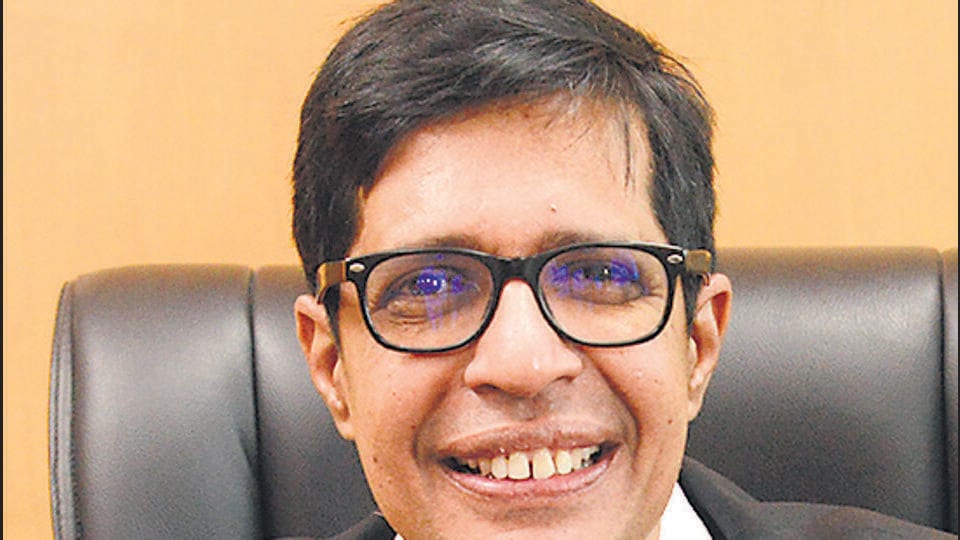
IIT-M director professor V Kamakoti, who is in Delhi for the award shared details on how the institute aims to offer its expertise in the market and society to become locally relevant while being globally recognised. Edited excerpts
How do you think IIT-M has been able to retain the top position?
There are three important reasons. First is our dedicated set of faculty and students. They have been supportive, especially during the Covid-19 period so we have been able to perform. Secondly, since our research has been transitioning, we have started addressing local problems. Now, we are becoming an institution which is of local relevance and is globally recognised. For the past 20 years, we have been driving this change, moving from research to research and to product. It’s an entrepreneurship driven research and adds value. Recently, we made a robot for cleaning septic tanks to end manual scavenging. Thirdly, we are good at outreach. Our rural outreach programmes have helped in keeping our perception high not only among the elites but in rural places also. We have launched several programmes in accordance to National Education Policy (NEP) 2020. An important one is the Online Data Science programme. We have performed under multiple parameters, including entrepreneurship, innovation, research grants, citations, scholarship and social relevance.
According to the education department, entrepreneurship and innovation parameters will be included in next year’s ranking . How will IIT-M improve in these aspects?
Entrepreneurship and innovation is like skin and flesh. We have set up a clear process of how an idea can be converted into a product. We have an organisation supported by our alumnus where a person can submit their idea to an artificial intelligence (AI)-based tool — which is an indigenous tool made by a Chandigarh-based company— and find out how good it is. They can get inputs in connection with patenting, market among other competing ideas. The idea to design is handled by our campus organisation called Nirmaan.From design to the prototype stage, we have an innovation centre funded by our alumnus. We have five incubators dedicated toward medical technology devices, cyber-physical systems, rural technology and bio-incubators. These incubators evaluate the prototype. Our Gopalakrishnan Deshpande Centre guides and provides mentorship to start-ups.
IIT-M being primarily an engineering institution, how have you improved your position in the ‘Management’ category from number 13 last year to 10 this year?
Management studies have become multi-disciplinary. Today, the management industry demands what you call techno-managerial positions. So there is enough technology that needs to go into it. Several courses in management are refined and targeted towards employment. That type of exposure even at a project and education stage is what I believe will take IITs closer to the IIMs. We recorded 100%placement this year in the management school. In addition, there are also executive MBA programmes and they also have a good tie up with the industry. We are also getting projects from the government and public sector. We are also going to launch an interdisciplinary MA programme on Quantitative Finance which will start in July 2023. In some time, we will reach the top position in management, above number 10.
How has your placement been overall?
Despite Covid-19, we had more than 1000 offers this time.Within six to eight months of graduation, everybody gets placed. The average salary has also increased significantly by at least 12-15%.
How will you strengthen your foreign faculty and draw in more foreign students?
We have introduced 10 interdisciplinary MA programmes on a highly advanced-level of technology, including additive manufacturing, robotics, cyber security fields. Hopefully, this year we will have at least 50-60 foreign post graduate students. We have received applications from 80 countries. We are also going to offer joint degree programmes with foreign universities. Like Nepal has a big need for energy systems. We are planning to launch a joint M Tech degree in energy systems in Kathmandu University in August, where students from Nepal, India and other countries can enrol. We have more requests (for joint degree programmes) than what we can serve. We are also trying to get young international faculty who can spend a minimum of three years with us.Teaching our kids is quite challenging. These are the cream of the cream who are coming into IITs after a lot of filtration. So the faculty who come here will have a rich teaching experience. We are open to any country.
What steps are you taking to improve IIT-M’s global ranking?
For the global ranking, there is a perception that we need to handle. Thanks to NIRF, today itself I got over 40 congratulatory messages from across the world – this is a perception improvement about us. NIRF rankings give us good feedback to leverage our strengths and address our weaknesses. We are also working towards adding an international diverse community.
What is IIT-M’s weakness?
We are number two in research, we will work to be number one. To reach 80-90 out of a score of 100 is easy but to jump after 90 is difficult. When you get 40 out of 100, you get a macro picture. When you reach 90-95, you get a micro picture where you see if you could have gone higher. We will aspire to go towards 100. But we are not looking at the mark, we are looking at the implication of the mark. No institute can be perfect. But we will aim towards that.
You have been mentioning perception. What do you think is the perception of IIT-M and what do you want to change?
As of now, we have a good perception in terms of outreach. We are becoming an accessible institution. However, in comparison to the Western universities, we need to become more demonstrative. We need to demonstrate our relevance to the world. For example, this year, one of the most important perception we got right was about 5G. We made a complete 5G testbed. There are a lot of research papers that go into the 5G testbed which is completely up to international standards. We are good at (meeting) those standards. Now, we have put it all together and demonstrated it. The moment you have this demonstrative goal, everything will fall into place. It’s a constant journey.


