
 E-Paper



Reimagining Raksha Bandhan: Trans voices reshape Raksha Bandhan traditions
A cohort of queer individuals in the city has orchestrated a remarkable shift in perspective. They’ve embraced the festival’s core spirit while shedding the confines of antiquated norms and rituals.


LUCKNOW While Raksha Bandhan is a cherished festival that venerates the bond between brothers and sisters for all straight individuals, it inadvertently caused discomfort to several trans folks due to the dissonance between their gender identities and societal expectations.
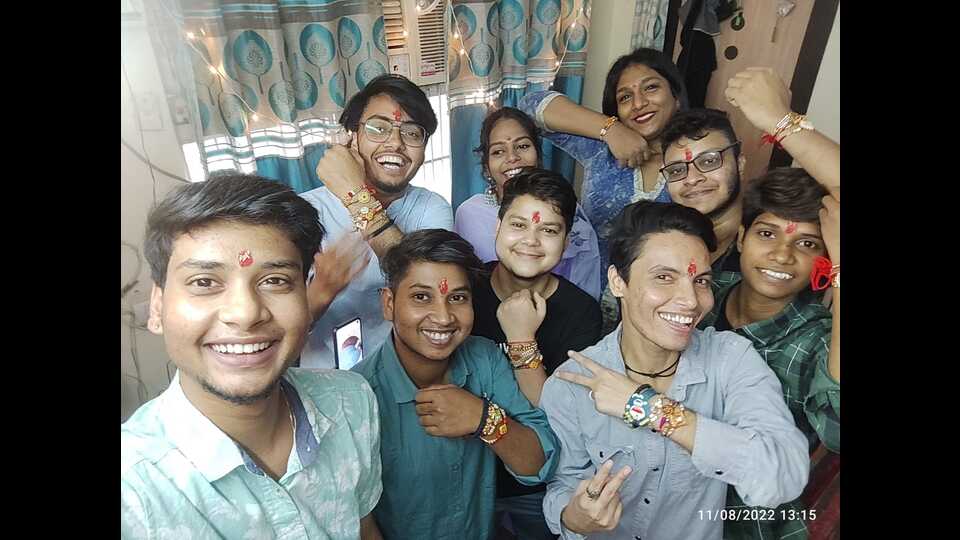
Against this backdrop, a cohort of queer individuals in the city has orchestrated a remarkable shift in perspective. They’ve embraced the festival’s core spirit while shedding the confines of antiquated norms and rituals.
“Be it brothers or sisters, in our community, we bind ourselves with rakhis regardless of gender. It’s about protection and solidarity,” said Gautam Ramchandra, 25, hailing from Unnao.
Born in Unnao, Ramchandra migrated to Delhi in 2020 and now engages in social work. “Not just Raksha Bandhan, most Indian festivals left me grappling with dysphoria. I was compelled by my mother to tie rakhis to my male cousins, reinforcing a false image of my identity. I yearned for my sisters to tie me rakhis,” he reminisced.
Ramchandra found solace in Aasra, a shelter home for trans-masculine individuals under the Tweet Foundation. Becoming a member and later the co-chair offered him a haven to celebrate festivals without the constraints of gender norms. “Festivals are more liberating than I thought,” he chuckled.
Ritwik Das, a 26-year-old scholar and non-binary trans-feminine individual, shared a similar trajectory. Das recounted the challenges of Raksha Bandhan during their upbringing. “As a ‘brother,’ sisters tied me rakhis. In adulthood, I avoided taking a leave from work on Raksha Bandhan to avoid partaking in these traditions,” they disclosed.
However, Das now perceives the festival through a distinct lens, recognising its essence as a celebration of protective bonds transcending gender. “Young trans men look up to me as their protector in times of trouble. They affectionately address me as ‘Didi.’ Young queer children even call me ‘Amma’!”
The festival inundates Das with heartfelt messages. Despite this, they renounce the notion that brothers are inherently protectors of sisters. “Our fixation on gender roles distracts from the genuine relationship essence -- which is something I am comfortable celebrating,” they emphasised.
In a society steeped in traditions, these narratives echo a resounding sentiment – that the spirit of Raksha Bandhan thrives in the realm of unconditioned relationships. As these individuals lead a reimagined celebration, they illuminate a path towards a more inclusive and empathetic future.


