
 E-Paper



CAQM to “strictly” monitor winter action plans prepared by states
The commission said governments have been directed to implement these individual plans based on framework, prohibition of stubble burning, effective monitoring and enforcement and plans to reduce the generation of paddy straw


To control the pollution levels caused by crop stubble burning this winter season, the Commission for Air Quality Management (CAQM) in Delhi-NCR and the adjoining areas will monitor “strict implementation” of action plans prepared by Punjab, Haryana and other agrarian states.
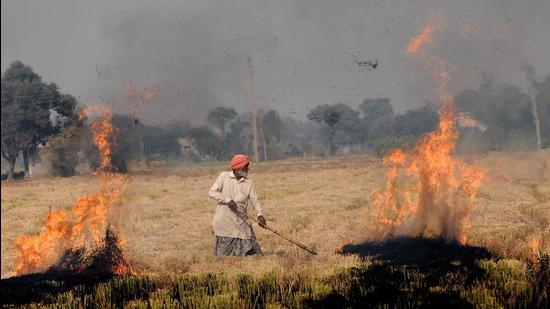
In a statement released on Wednesday, the CAQM said Punjab, Haryana and Uttar Pradesh among other states have prepared detailed action plans for controlling stubble burning this year, based on the framework made by the commission.
The commission said governments have been directed to implement these individual plans based on framework, such as in-situ and ex-situ crop residue management, prohibition of stubble burning, effective monitoring and enforcement and plans to reduce the generation of paddy straw.
“Directions have been issued for adopting a standard protocol developed by ISRO (Indian Space Research Organisation) for recording and monitoring fire counts owing to stubble burning. With regard to promotion of the use of bio-decomposer technology developed by IARI (Indian Agricultural Research Institute), as part of in-situ crop residue management, the commission has been informed that the Pusa bio-decomposer has been planned for application of 6 lakh acres in U.P, 1 Lakh acres in Haryana, 7,413 acres in Punjab and 4,000 acres in Delhi respectively,” the statement released by the CAQM said.
The statement also said the state governments have also been informed to take measures for the abatement of road dust through a “dust control and management cell’’.
“Activities identified for effective road dust management include optimum utilisation of mechanized sweeping of roads, scientific disposal of dust collected in designated sites or landfills, sprinkling of dust suppressants and water on roads and open areas, proper maintenance of roads, paving and greening of non-paved roadsides, greening of central verges, preference to cemented roads over bituminous roads, especially in industrial areas, monitoring and compliance of dust control measures and plantation of trees/greening on a large scale,” said the statement.


