
 E-Paper



Chhattisgarh: Tribal women move Women’s Commission over Durg incident
The three tribal women on Wednesday appeared before the State Women’s Commission along with their families, alleging harassment and humiliation during the Durg railway station episode

 Prefer HTon Google


RAIPUR: In the Durg railway station case that led to the arrest of two nuns and a tribal man, the three young women from Abujhmad approached the Chhattisgarh State Women’s Commission and on Wednesday, the women appeared before the Commission along with their families, alleging harassment and humiliation during the episode.
The petition was filed with commission by Advocate Phool Singh Kachlam on August 5.
On July 25, Sisters Preethi Merry and Vandana Francis from Kerala, and Sukaman Mandavi from Narayanpur, were arrested by the Government Railway Police (GRP) at Durg station following a complaint filed by a Bajrang Dal member.
The complaint alleged that they were involved in forcibly converting three young tribal women from Narayanpur and trafficking them.
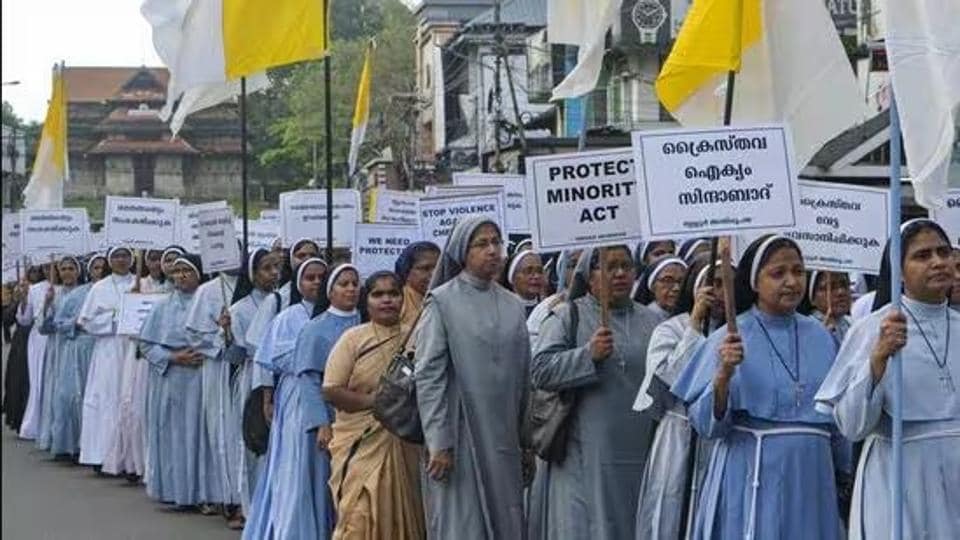
The incident triggered a major political row, with opposition parties including the Congress and the CPI(M) condemning the arrests as religious targeting. Chief minister Vishnu Deo Sai, however, defended the action, saying, “It was a legal procedure and bail has been granted in it.”
The controversy began when Vishwa Hindu Parishad (VHP) and Bajrang Dal workers intercepted the two nuns and three girls at the station, alleging trafficking and religious conversion.
The GRP detained the nuns while the matter escalated into a wider dispute. A police inquiry later found no concrete evidence, and a court subsequently granted bail to the arrested women.
“Appearing before the Women’s Commission on Wednesday, the three girls (all between the age group of 19-24 years) said they were travelling voluntarily in search of jobs outside the state. They said that the nuns were only assisting them in finding employment, but they were suddenly surrounded and maligned. The entire episode has damaged our social reputation and caused us mental distress,” Phool Singh Kachlaam said.
He further said in a statement that the Commission held its first substantive hearing in the case and had issued notices to both the activists involved and the girls’ families.
“Among those called were Jyoti Sharma, Ratan Yadav, and Ravi Nigam. While Sharma appeared briefly in the morning, she left before proceedings began and was absent during the formal hearing. Taking a stern view, the Commission directed that Sharma and all other parties must be present in the next round. A fresh notice will be issued to ensure mandatory attendance,” said Kachlaam.
The case has sparked wider debate and VHP and Bajrang Dal maintain they acted on suspicions of trafficking and conversion, while the girls and their families allege defamation and religious pressure.
Human rights groups have called it an issue of tribal dignity and freedom, arguing that seeking employment outside the state is not a crime and that religious groups overstepped their role.
-kW0H-U20214218012MgB-250x250%40HT-Web.jpg)


