
 E-Paper



Delhi-Gurugram Expressway’s deadliest stretches get safety overhaul amid spike in crashes
The Delhi-Gurugram Expressway has witnessed a significant number of road accidents over a six-year period. From 2017 to 2024, the expressway recorded a total of 2,238 deaths and thousands of injuries. Over the years, fatal accidents have increased on the stretch highlighting a persistent safety issue for commuters

 Prefer HTon Google


Gurugram: The National Highways Authority of India (NHAI) has initiated a massive safety upgrade along the Delhi-Gurugram Expressway, especially targeting the treacherous stretch near Narsinghpur and the Jaipur Highway, which are known for frequent car crashes and fatalities.
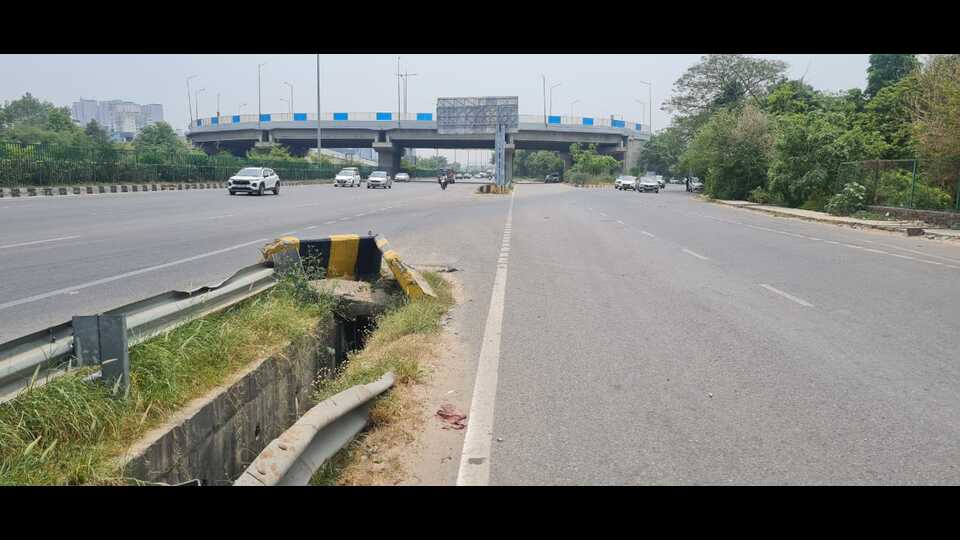
The Delhi-Gurugram Expressway has witnessed a significant number of road accidents over a six-year period. From 2017 to 2024, the expressway recorded a total of 2,238 deaths and thousands of injuries. Over the years, fatal accidents have increased on the stretch highlighting a persistent safety issue for commuters.
Once dotted with weak iron railings and crumbling edges, these stretches are now undergoing a structural revamp. The old iron barriers— criticized for bending or splintering upon high-speed impact—are being replaced with crash-resistant reinforced concrete fencing that promises stronger containment and safety for vehicles. These upgrades come in response to a concerning pattern: over 400 people die annually on NCR expressways, with the National Highway 48 emerging as one of the most accident-prone corridors.
The safety drive includes the rebuilding of central verges and roadside barriers with modern, crash-absorbent materials. Officials say this will prevent vehicles from breaching medians and crossing into oncoming traffic or veering off into adjacent service lanes and structures. The revamp also extends to better road signages, speed regulation measures, and reflective lane markings—particularly critical for preventing night-time accidents.
“The central barrier replacement from the Delhi border to Manesar will be a continuous safety wall—aimed to protect lives, not just vehicles,” an NHAI official, requesting anonymity, said noting that teams have already begun work on key black spots flagged by joint inspections with Gurugram Traffic Police.
Black spots under scrutiny
The section near Narsinghpur has been a particular focus. The NH-48 stretch, which connects Delhi, Gurugram, and Jaipur, sees high-speed traffic, including heavy commercial vehicles.
DCP (traffic) Rajesh Kumar Mohan said that the Union Ministry of Road Transport and Highways had issued directions more than a month ago to restrict the movement of low-speed vehicles—like two-wheelers and three-wheelers—on the main carriageway of the Delhi-Jaipur Expressway up to Kherki Daula.
“After the directive, we surveyed the corridor and found that service lanes were in poor shape in many areas, riddled with potholes and unsafe for small vehicles,” said Mohan. “We wrote to NHAI, requesting urgent repairs of service lanes before beginning enforcement of vehicle restrictions.”
Crossovers and illegal openings
The survey also revealed a dangerous trend—multiple unauthorized slip points from the service lane to the main carriageway and illegal pedestrian crossings over the central barriers, which frequently result in fatal and non-fatal crashes.
“We asked NHAI to devise a fool proof mechanism to prevent people from crossing over the expressway illegally. Jumping over metal guardrails is a common cause of deadly accidents,” Mohan added.
He confirmed that NHAI has now floated a tender to replace the metal guard rails with concrete fencing—an internal decision likely based on field studies and recommendations from traffic authorities.
“This structural overhaul—along with planned enforcement and public awareness—marks a long overdue and welcome shift. Safety cannot be optional on one of India’s busiest expressways,” he said.
The NHAI has committed to completing the upgrades within the next few months, signalling a new phase of highway safety reforms that aim to make Delhi-Gurugram commuting safer for lakhs of daily travellers.


