E-Paper



Delhi Jal Board approves ₹17,969 crore sewer overhaul plan, to divide network into 8 zones
The 10 year model will assign private operators to manage sewer lines, manholes and pumping stations, with payments linked to performance.

 Prefer HTon Google


The Delhi Jal Board (DJB) on Wednesday approved a ₹17,969-crore plan to overhaul the Capital’s sewer network by dividing the city into eight zones and placing the entire network in each zone under a single private operator, officials aware of the plan said.
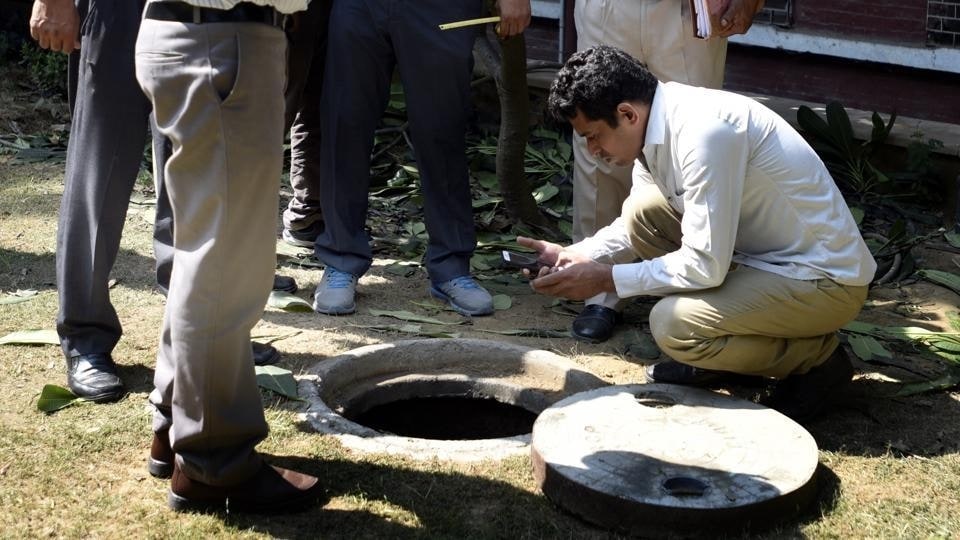
Under the 10-year “One Zone, One Operator” model, each operator will be responsible for the repair, maintenance and management of all sewer infrastructure in its zone, including sewer lines, manholes, pumping stations and consumer complaints. The model, senior DJB officials aware of the matter said, is similar to the power distribution system, under which four providers operate in four zones of Delhi.
DJB currently maintains 11,212km of sewer lines, 668,000 manholes and 145 pumping stations across the Capital.
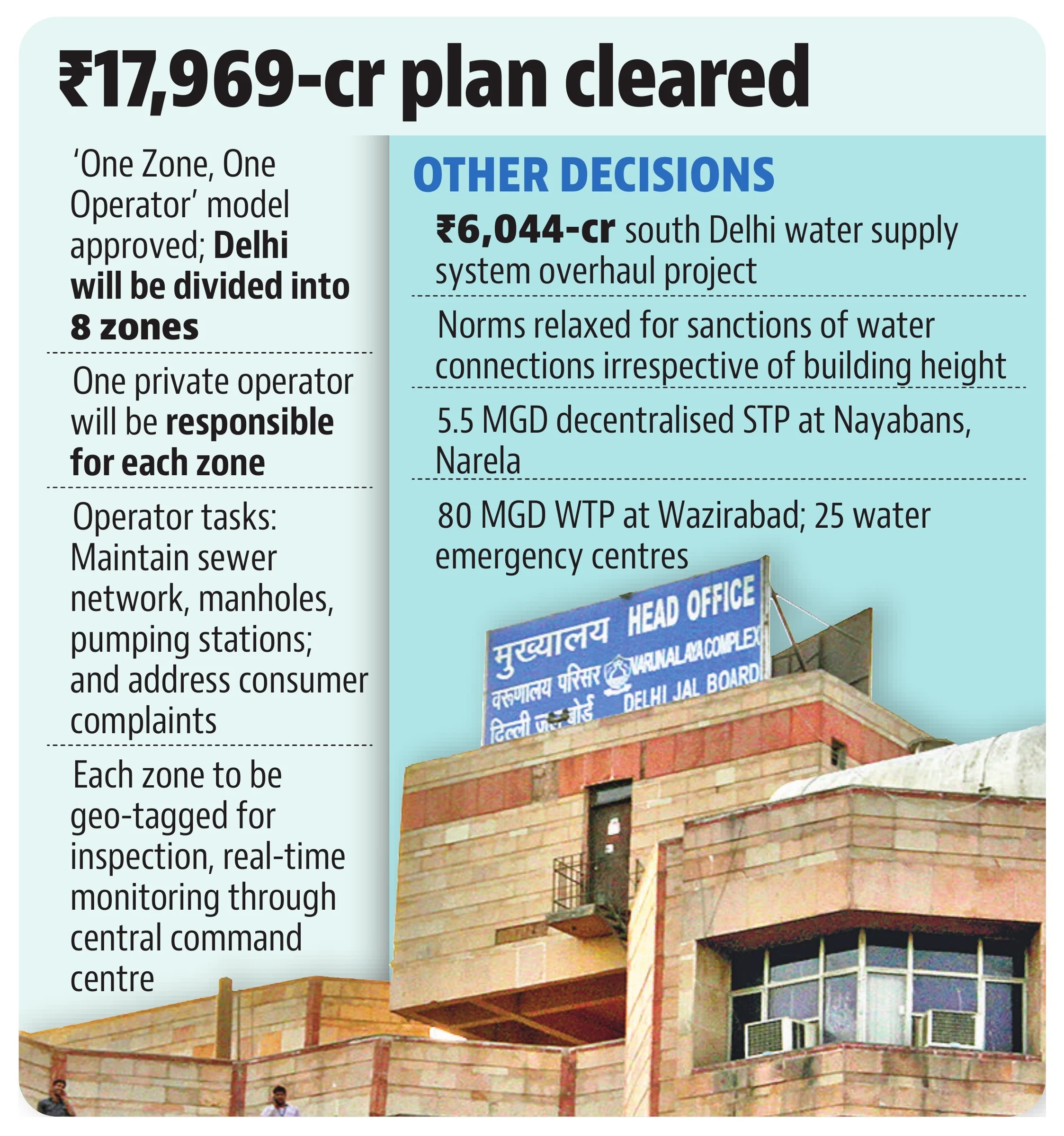
Officials, who sought not to be identified, explained that the new system is intended to shift the agency from reactive, complaint-based repairs to planned preventive maintenance. It will include geo-tagged inspections, real-time monitoring through a central command centre and 100% mechanical and robotic cleaning of sewers. Payments to operators will also be linked to performance, with the stated objective of speeding up complaint resolution and reducing sewer overflows.
Delhi water minister Parvesh Verma said the model was primarily aimed at fixing responsibility for sewer-related problems. “If there is a problem, the system should know about it, someone should be responsible for fixing it, and the work should be tracked till it is completed. That is the change we want to introduce,” he said.
HT had reported on July 15 that the DJB was considering a “One Zone, One Operator” policy on the lines of the power discom model to improve sewer service delivery. A separate plan is also being worked on to streamline the city’s water distribution network along similar lines.
Also Read: DJB conclave maps road ahead for 24x7 supply, wastewater reuse, Yamuna cleanup
For water supply planning, the Chandrawal and Wazirabad water treatment plant command areas have already received sanction for projects. The remaining parts of Delhi have been divided into six zones — South, South-West, West, North-West, East and North-East.
Administrative approvals have already been given for the West and South-West zones, involving an estimated ₹11,427 crore investment for comprehensive transformation of their water supply infrastructure, including 15 years of operation and maintenance. “A consultant has been engaged for the remaining three zones as well,” a DJB official said.
Also on Wednesday, the DJB board also approved a ₹6,044.05-crore project for a comprehensive overhaul of the water supply infrastructure in south Delhi. It will introduce smart meters, bulk flow meters, and chlorine and pressure sensors to enable real-time monitoring, more accurate metering and water auditing.
Also Read: 4 in 10 Delhi households still without sewage connections: Jal Board
The board also approved the invitation of tenders for 13 new sewage treatment plants (STPs) with a combined capacity of 328 million gallons a day (MGD), at an estimated cost of ₹7,373 crore under funding from the Centre’s National Mission for Clean Ganga. An Asian Development Bank top-up loan of ₹3,505 crore was also approved for a further 60 MGD sewage treatment plant, transmission upgrades, SCADA systems and distribution improvements. The DJB also approved the Delhi Water & Sewer (Tariff and Metering) Regulations, 2026, replacing the 2012 regulations. According to officials, the new framework simplifies water and sewer connections, rationalises charges, provides clearer billing provisions and digital services.