
 E-Paper



Efforts to include in UNESCO Heritage Sites ongoing: Salkhan Fossils Park may rewrite history of life on earth
Salkhan Fossils Park and Yellowstone National Park are among the rare sites that provided evidence of life existing earlier, making them critical for scientific study.

 Prefer HTon Google


Situated near Salkhan village in Sonbhadra district of Uttar Pradesh, Salkhan Fossils Park contains fossils older than 650 million years, making it one of the rarest places on the globe. The area, preserved and protected, has been developed into a park.
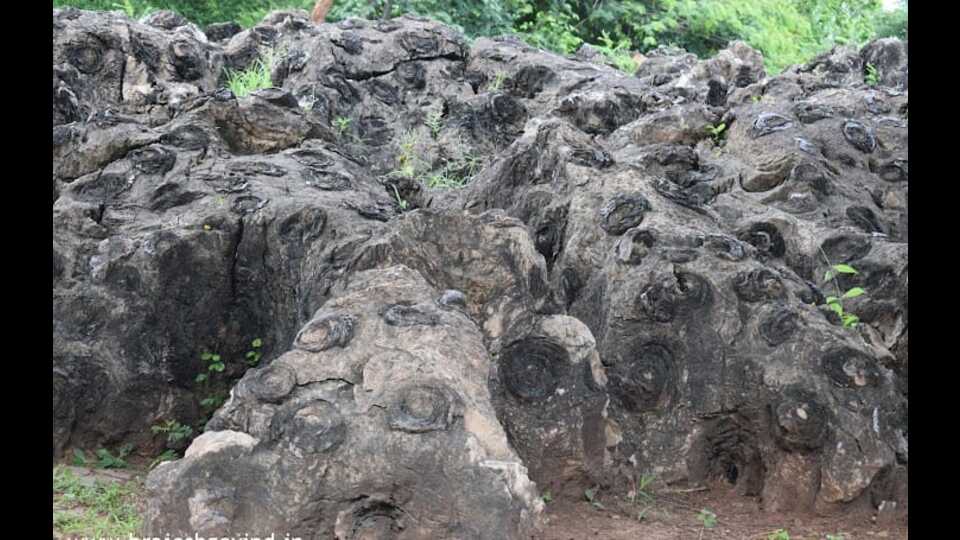
Recently, the department of tourism has initiated efforts to include Salkhan Fossils Park in UNESCO’s World Heritage Sites by 2026. UP tourism minister Jaiveer Singh and additional director of UP eco-tourism development board, Prakhar Mishra, visited the park and stated that a detailed report is being prepared to be submitted to the government of India for inclusion in the tentative list of heritage sites. The final dossier, to be sent to UNESCO in Paris, is expected to be ready by 2025.
The Salkhan Fossils Park is currently managed by the Kaimur forest range in Mirzapur, according to a senior official from the department of tourism. These fossils are distinct from other rocks and hold significant value for geologists, potentially providing crucial insights into the origin of life on earth.
Prof Vaibhav Srivastava from the department of geology at Banaras Hindu University (BHU) who visited the Salkhan Fossils Park over 50 times, said, “For geologists like us, these fossils are very important because thorough research on them may help determine the exact time of the origin of life on earth.”
Prof Srivastava explained that previously it was believed life did not exist before 570 million years ago. However, later studies suggested the presence of life in the ocean in the form of blue-green algae. Salkhan Fossils Park and Yellowstone National Park are among the rare sites that provided evidence of life existing earlier, making them critical for scientific study.
These fossils, known as stromatolites, are estimated to be between 600 million and 1.5 billion years old, dating back to when the Vindhyan Sea existed in this region. Over time, this sea transformed into what is now known as the Vindhyachal Mountains.
Prof Srivastava emphasised the importance of preserving these fossils for future generations due to their academic significance and potential for geotourism. In October 2022, he, along with a team of geologists from India, the USA, Bangladesh, and Nepal, visited the park and expressed their excitement about showcasing the site to their students.
In 1996, Prof RN Tiwari identified that the rock material, fawn limestone exposed in small hillocks in Salkhan village, contains a stromatolite colony belonging to taxa Conophyton garganicus and Colonella columnaris.


