
 E-Paper



Pradhan gone, Congress shifts focus to Amit Shah; memes put Nitin Gadkari in spotlight, anti-E20 group plans protest
With Parliament set to reconvene on Monday, Rahul Gandhi sought to take the debate towards accountability for police action against the CJP march of July 20.

 Prefer HTon Google


Dharmendra Pradhan's resignation from the post of Union education minister may have met the principal demand of the student-led agitation, but pressure on the Narendra Modi government is likely to continue, as was clear from Leader of Opposition Rahul Gandhi's plan of action hereon.
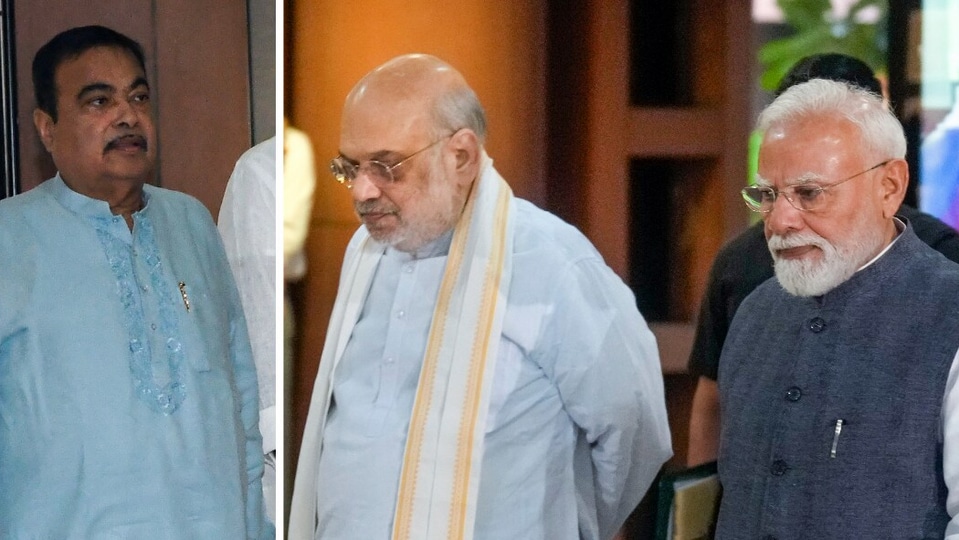
With Parliament set to take up an amendment bill for significantly stricter punishments for paper leaks, the Congress has sought to shift the debate to accountability for the police action against the Cockroach Janta Party march in Delhi on July 20.
The flood of memes that emerged around the CJP protest, meanwhile, has engulfed Union road transport minister Nitin Gadkari, who is increasingly becoming the subject of criticism over the E20 ethanol-blended petrol policy.
What Rahul is demanding
At a press conference after Pradhan resigned on Saturday, Congress MP Rahul Gandhi called the resignation “a very significant victory” for students but argued that the issue was far from over.
Referring to the July 20 protest march towards Parliament, Gandhi alleged that students had suffered grievous injuries during the police crackdown and held Union home minister Amit Shah directly responsible as Delhi Police is under the Centre.
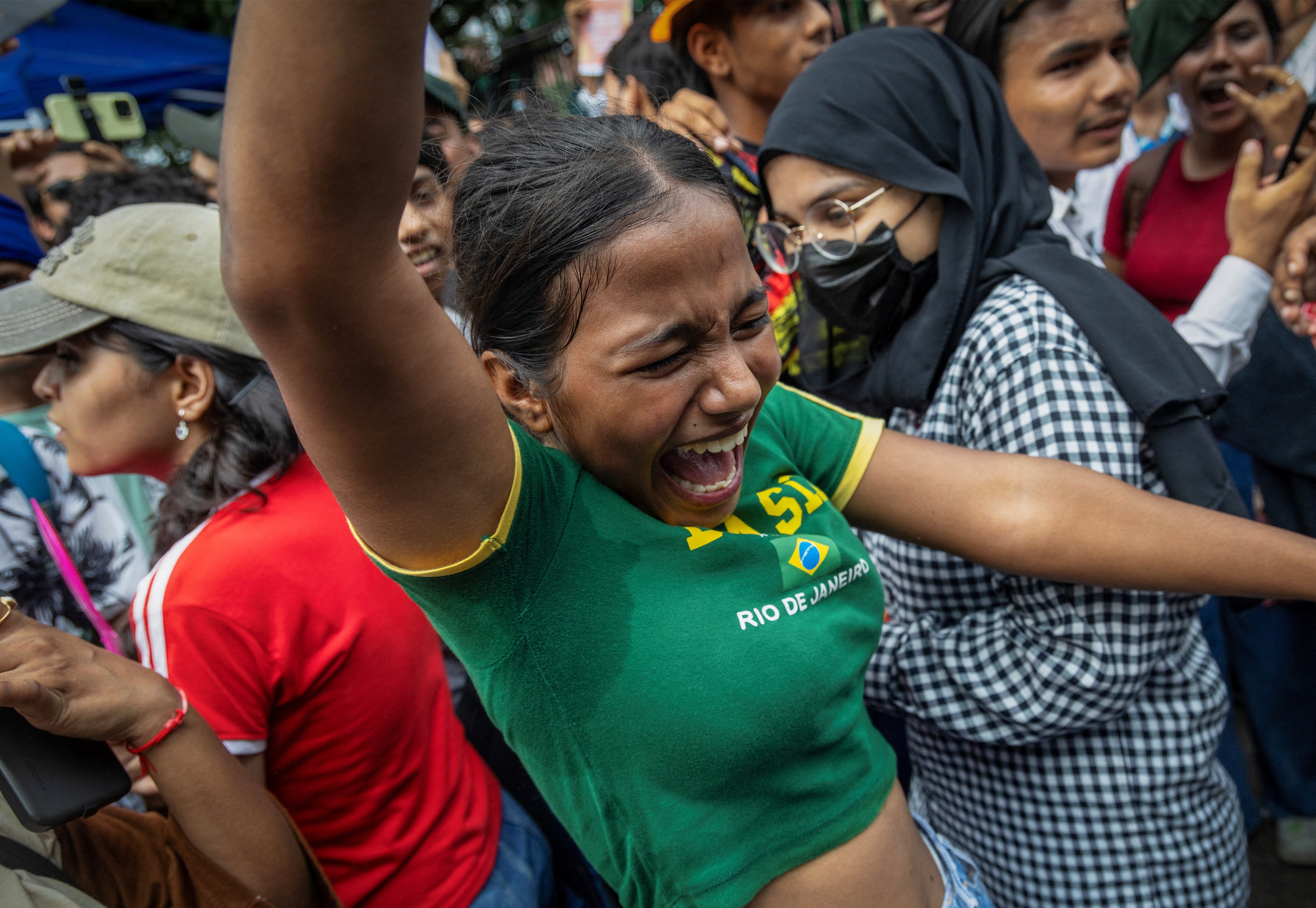
“Someone's hand was broken, someone's leg, someone's rib. Pellet guns-like deadly weapons were used, and many were injured so severely that they became critical. These are all directly the responsibility of home minister Amit Shah,” said Gandhi, who ran a parallel protest-cum-awareness drive on paper leaks for months.
“The demand is clear. From the organisers of this attack to the implementers, accountability must be fixed for everyone... Mr Amit Shah, you will have to answer for this,” he said in a post on X too.
Meanwhile, the Cockroach Janta Party announced the withdrawal of its nationwide agitation, claiming that all its demands had been accepted by the government. Besides Pradhan's resignation, it said the Centre had agreed to provide maximum possible compensation to families of students who died by suicide in connection with the NEET paper leak, withdraw FIRs filed by the Centre and NDA-ruled states against protesters, refrain from future action against participants, and discuss the group's five-point examination reform charter.
Gadkari in crosshairs
Yet, even before the protests concluded, the movement had begun expanding beyond education.
The largely Gen-Z online campaign that accompanied the demonstrations increasingly turned its attention to Gadkari and the controversy surrounding E20 petrol, besides directly targeting PM Narendra Modi.
At protest sites and across Instagram and X, a widely shared post said: “Unlike petrol blended with E20, the tear gas used during the protest was 100 per cent authentic and without adulteration.” Another quipped that if tear gas contributed to Delhi's pollution, protesters might next demand the environment minister's resignation.
Humour targeting Gadkari continued even after Pradhan stepped down. A widely circulated post by X user Shantanu shared a 2015 video in senior minister which Rajnath Singh had said the Modi regime would not see resignations. “Now the time of Gadkari, Nirmala and all the competent ministers starts and then Modi finally in 2029,” read the post.
The online chatter comes against the backdrop of sustained criticism of the government's ethanol blending programme over the past few weeks.
Gadkari has repeatedly defended the E20 policy while distancing himself from decisions relating to fuel marketing. After concerns were raised over possible damage to vehicles and consumer choice, he maintained that fuel pricing, blending norms and retail supply fall under the Ministry of Petroleum and Natural Gas headed by Hardeep Singh Puri.
He has also maintained that ethanol blending helps reduce India's dependence on imported crude oil, lowers emissions, and supports farmers by creating demand for agricultural produce used in ethanol production.
E20 protest planned
The Centre has issued a series of clarifications seeking to counter criticism of the programme. It has said there is no verified evidence of widespread engine damage among the more than 23 crore vehicles running on E20 fuel. It has also cited testing by the Automotive Research Association of India (ARAI) to say no significant adverse impact attributable to E20 has been found in legacy vehicles. Officials have acknowledged that some older vehicles may witness a marginal decline in fuel efficiency of around 3-5 per cent but have maintained that there is no evidence of widespread mechanical failures.
The government has also clarified that there is currently no proposal to raise ethanol blending beyond 20 per cent and that premium petrol sold in the country does not contain ethanol.
Gadkari, however, has praised the ideas for even E50, E85 or whole ethanol or flex fuel.
Criticism, thus, has continued and is now being channelled into a fresh campaign.
Political commentator Tehseen Poonawalla, a prominent face of the anti-E20 movement that held a smaller protest at Jantar Mantar too, has announced a march in Delhi on July 31, targeting both Gadkari and Hardeep Singh Puri over the E20 policy.
He has called for the restoration of E10 petrol for compatible vehicles, lower prices for ethanol-free petrol, and solutions for owners of vehicles manufactured before 2023.


