E-Paper



‘No idea how he is, where he is’: Family of Odisha train accident loco pilot
Gunanidhi Mohanty, 49-year-old loco pilot of Chennai-bound Coromandel Express was piloting the train along with 36-year-old assistant loco pilot Hajari Kumar Behera when the train first hit an iron ore-laden goods train that was stationed on a loop line of Bahanaga Bazar station

 Prefer HTon Google


More than two weeks after the Balasore train tragedy in Odisha that killed 291 people and left over 900 injured, the family of the seriously-injured loco pilot of Coromandel Express that hit a stationary goods train before derailing and hitting another passenger, said they have no idea about his condition as they have not yet been allowed to meet him.
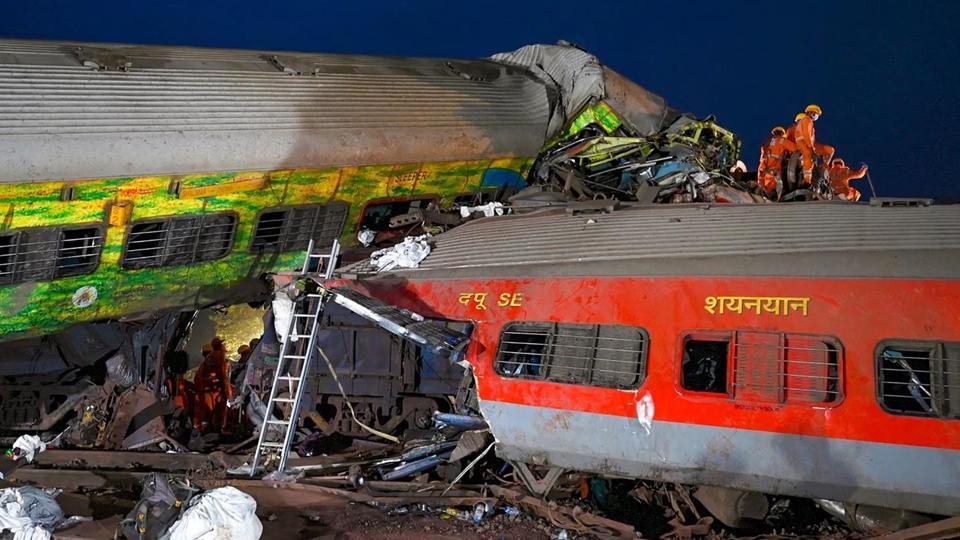
Gunanidhi Mohanty, 49-year-old loco pilot of Chennai-bound Coromandel Express was piloting the train along with 36-year-old assistant loco pilot Hajari Kumar Behera when the train first hit an iron ore-laden goods train that was stationed on a loop line of Bahanaga Bazar station of Balasore district on June 2 evening.
Gunanidhi, who along with Behera, were in the loco pilot cabin of Coromandel Express suffered grievous injuries on their heads, chest and back as the train rammed into the goods train at a speed of 128 km per hour after a suspected interference in the signal system led it on the loop line instead of the main line.
Also Read: After the Odisha tragedy, family says still not allowed to meet train driver
Initially admitted to a private hospital in Bhubaneswar with three broken bones and multiple head injuries, Gunanidhi and co-pilot Behera were under strict surveillance of state police and railway protection force officials for the first 10 days till he was reportedly discharged from there four days ago.
Behera suffered more injuries with a fracture in his left leg and multiple abrasions, including a spinal injury. His wife Golap Behera is also an assistant loco pilot in the East Coast Railways.
In Cuttack district’s Naharapada village, where Gunanidhi’s ex-serviceman father Bishnu Charan Mohanty and elder brother Sanjay Mohanty reside, there is deep anxiety over his health condition as they alleged that they have no information about him.
“I had gone to see him just a couple of days after the mishap. He was badly injured and could not talk. He was in ICU then. After that we have not been allowed to meet him,” said Sanjay, Gunanidhi’s elder brother. He however could not confirm if Gunanidhi’s wife was allowed to see him.
“We are in a precarious condition. Everyone thinks the accident happened due to my brother’s mistake while the truth is that a loco pilot has no control on which track the train would run. It’s the duty of the on-duty station master who allows a particular train to travel on that line. In any case, Coromandel Express was permitted to travel at 130 km per hour on that section while the actual speed was 128 km per hour. After joining as a goods train driver in 1996, he had started piloting passenger trains a few years ago. He never had any accident so far,” said his elder brother, who practises law at a local court.
Also Read: Adani to soon sell online train tickets after acquiring this firm; may challenge IRCTC’s monopoly
East Coast Railway officials said Gunanidhi and Behera had taken charge from loco pilot Ranajit Kumar Mondal at Kharagpur station at around 5pm on June 2. However, no senior officials were ready to come on record about divulging any information about Gunanidhi and Behera saying they could not give any information as twin probes by the Central Bureau of Investigation (CBI) and Commissioner of Rail Safety were underway.
A day after the train tragedy, Jaya Varma Sinha, Railway Board member of Operation and Business Development, told reporters that she had spoken to the driver and he confirmed that the signal was green.
“Green signal means that in every way the driver knows that his path ahead is clear and he can go forward with his permitted maximum speed. The permitted speed at this section was 130 kmph and he was running his train at 128 kmph which we have confirmed from loco logs. He neither had passed when the signal was red nor was he overspeeding,” Sinha said.