
 E-Paper



Flamboyant, freeing & fantastic: Why does everyone love to dance?
Psychologists say that moving our bodies or tapping our feet to a song is a form of self-expression when words don’t encapsulate our emotions

 Prefer HTon Google


Seen any recent viral videos of anonymous “non-dancers” lately?
How about the one where an elderly woman is grooving to ‘Dhol Jageero Da’ at a wedding reception? Or the one in which a middle-aged man gives an incredible performance on ‘Titliaan’? Did you miss the video of the Nepalese boy shaking a leg on ‘Sharara, Sharara’? Wait, have you not seen the Zomato delivery executive dancing his heart out to ‘Sapne Mein Milti Hai’?
Garnering millions of likes, these dance videos have one thing in common -- unchoreographed and free-spirited moves with child-like enthusiasm. According to Anugrah Edmonds, a Bareilly-based counseling psychologist, these amateur dance videos blow up on social media platforms within hours because unorganised and free-movement dancing brings maximum cathartic experience.
But what is so appealing about dancing -- is it a projection of one’s self-image? Is it an exercise to get in shape? Is it a tactic to connect socially? Or is it something more rudimentary -- a way to unwind?
Why do we dance?
As we all know, dancing serves multiple purposes — improves our fitness, gives us a dopamine (happy hormone) hit, improves relationships, and what not. However, there are other means to achieve these ends. So, why dance?
Psychologists say that moving our bodies or tapping our feet to a song is a form of self-expression when words don’t encapsulate our emotions. Explaining the Science behind self-expression and dancing, Edmonds said, “Dancing helps people communicate in a very beautiful non-verbal manner. Since this form transcends words, it connects with the subconscious and provides a sense of emotional expression. That’s why it is great for mental calm and a positive emotional state.”
Echoing Edmonds, Dr Syed Sajid Husain Kazmi, clinical psychologist and assistant professor at Lucknow-based Indian Mental Health and Research Centre, said, “Synchronised bodily movements facilitate the strengthening of neuronal connections. Studies show that dancing enables a person to express themselves and let loose through the release of happy hormones like dopamine. This hormone enhances a person’s mood and helps alleviate the symptoms of stress, anxiety, and depression.”
From the horse’s mouth
Several professional dancers and dance enthusiasts find dancing to be a “liberating” experience. “Dancing has improved my fitness and made me more confident but primarily, I dance because it makes me feel free and happy. Gradually, as I became a better dancer, I started participating in reality shows and state-level competitions. I even went to Kings United in Mumbai to study dancing. My cousin Shashank Gupta is also a great dancer. We are the happiest when we dance,” said Ishikka Srivastava, a Class 8th student at Lucknow’s GD Goenka Public School who has been performing professionally since 2016.
Similarly, Deoria-resident Ayush, who has performed in Bharatendu Natya Academy and Sangeet Natak Akademi several times, said, “As a teenager, every time I felt angry or upset about something, I would dance it out. Krumping, which is a type of street dance, is very helpful when it comes to venting out uncomfortable emotions, and is thus a great stress-buster. Even now as an adult, I ‘dance’ myself out of the most stressful situations in life.”
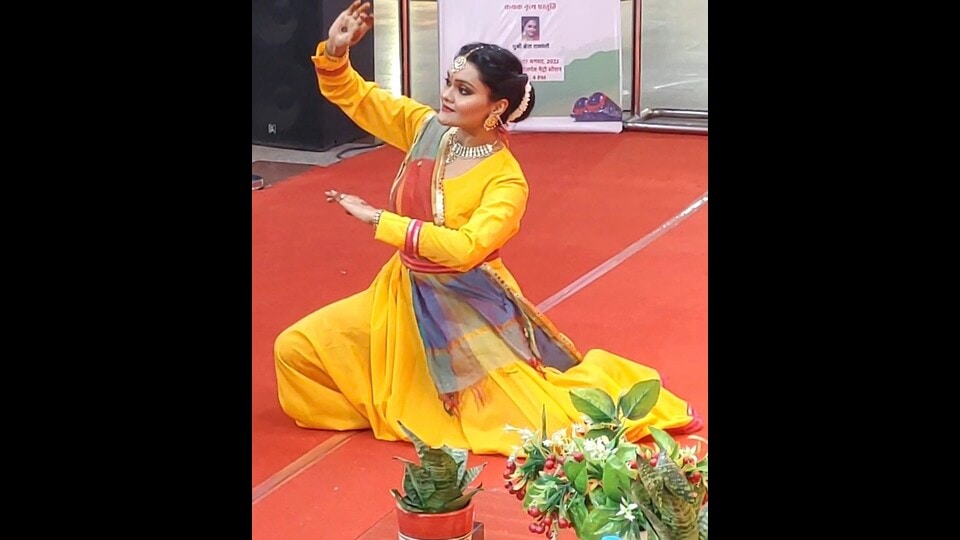
Meanwhile, professional Kathak dancer Shweta Rajvanshi, who received her training from the Lucknow Gharana of Kathak at Bhatkhande Sanskriti Vishwavidyalaya, sees her dance practice as meditative sessions. “For me, dancing is a meditative state, a shift of consciousness where the body moves rhythmically and experiences spiritual grace. As per Vedic texts, our ancestors found dance therapeutic like yoga. The Arala mudra (dance posture) in Kathak is the same as the Dhyan mudra (meditative posture) in Yoga. Dancing was even recommended as a treatment in cases of mental and physical disorders (vikaar). In particular, some dance forms have been hailed in our ancient literature for helping humans reach a transcendental state.”
Dance your way into 2023
Deep down, we all want to be understood but very few of us find the right words to describe our true feelings. Perhaps a tango, a jive or a freestyle dance are easier ways to communicate heightened emotions than using actual words. Even if for a few minutes, when we dance with our heart, we do feel the butterflies in our stomachs.
As societies have become more open, people are feeling more comfortable engaging in activities such as dancing that they may have previously been hesitant to participate in. This reflects in the burgeoning number of food/liquor joints with dance floors and DJs. This New Year, Lucknow is hosting double the number of parties thrown last year and regardless of the winter chill, the josh of the revellers is high. So, dance your way into 2023, for it is the best way to live (or relive) the days of youth, the simplest way to spread joy, and probably the most accurate way to express.


