E-Paper



Goa Police write to govt seeking NSA powers for DMs amid increasing gang violence
The law allows for the preventive detention of persons considered to be “acting in any manner prejudicial to the defence of India, the relations of India with foreign powers, or the security of India”.

 Prefer HTon Google


The Goa Police has written to the state government requesting that district magistrates be empowered to exercise powers under the National Security Act (NSA) to tackle a series of violent incidents believed to stem from organised crime.
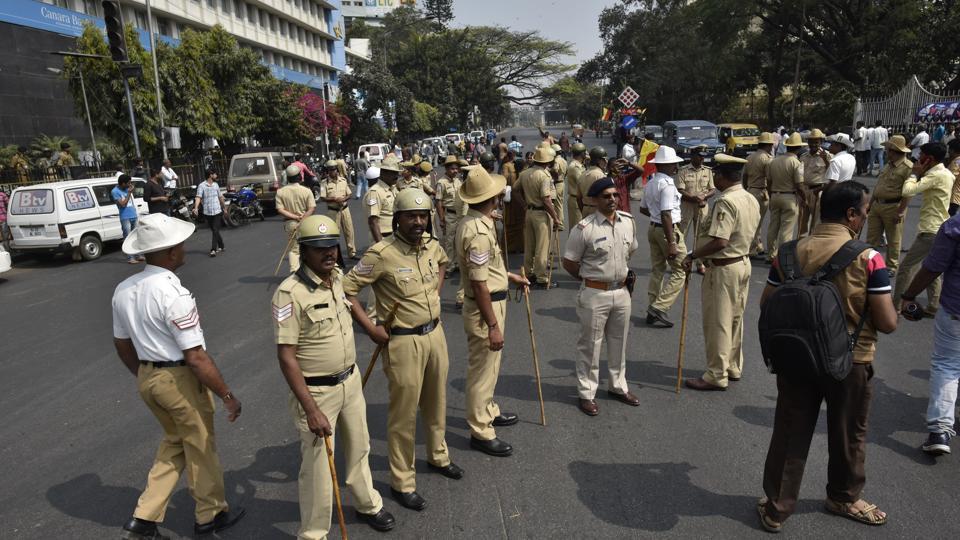
The law allows for the preventive detention of persons considered to be “acting in any manner prejudicial to the defence of India, the relations of India with foreign powers, or the security of India”.
In a letter sent to the government on Friday, the police said current measures, including detentions under preventive arrest sections, were proving inadequate to deal with repeat offenders. “Since 1 August 2025, many offenders have been taken into custody under preventive arrest sections and produced before the Sub-Divisional Magistrate, but these measures are proving insufficient to neutralise repeat offenders and organised elements who are likely to act in a manner prejudicial to the maintenance of public order,” the letter stated.
The police further argued that “in these prevailing circumstances, it is felt necessary that the District Magistrate be authorised to exercise powers under Section 3(2) of the NSA for a specified period, in order to prevent activities prejudicial to the maintenance of public order”.
The demand comes after the assault on activist Rama Kankonkar on September 18, which sparked protests where opposition leaders called for the NSA to be invoked against the attackers. Eight people have since been arrested, seven of whom are “history-sheeters” or repeat offenders allegedly part of a gang involved in organised crime.
Opposition MLA advocate Carlos Ferreira welcomed the move, but stressed that strict adherence to legal safeguards would be critical. “The request made by the Goa Police is perfectly legitimate and such delegation is permissible under Section 3(4) of the National Security Act, 1980, to also empower the District Magistrates to exercise the powers under Section 3(2) of the NSA,” Ferreira said.
He explained that granting such powers to district magistrates would reduce delays that often weaken the “live link” required to justify detention orders. “The DM will be in a better position to consider material placed, seek clarification if needed, and pass orders with greater speed than when forwarding proposals to the government, which pass through various layers and consume time, which can prove fatal,” Ferreira noted.
At the same time, he cautioned that detention powers must be exercised carefully. “Since detention orders have a draconic effect on the rights of an individual, the order needs to clearly spell out the justification for detention, and the constitutional and statutory safeguards must be scrupulously followed. One lapse will render the entire exercise invalid and the detention order liable to be quashed,” he said. Preventive detention, he emphasised, is not for punishing an individual but to prevent them from repeating such acts.
The demand for NSA powers follows a spate of violent incidents, including a gang clash in mid-August when around 20 people attacked two individuals with swords, sticks, soda bottles and koitas (billhooks), and fired bullets at their car before fleeing.