E-Paper



Jangam sadhus enchant as ‘wandering shrines of Lord Shiva’
A visit by ‘Jangam’ sudhus to a household is considered equivalent to a visit from Lord Shiva himself, and they are regarded as superior to fixed lingas (stone idols installed in temples).

 Prefer HTon Google


A group of sudhus, revered as ‘human shrines’ of Lord Shiva, is captivating international visitors and domestic pilgrims alike at the Mahakumbh Mela. Known for their unique singing style, they glorify the akhadas (monastic orders) and Dashnam sadhus, embodying the rich heritage of Shaiva traditions.
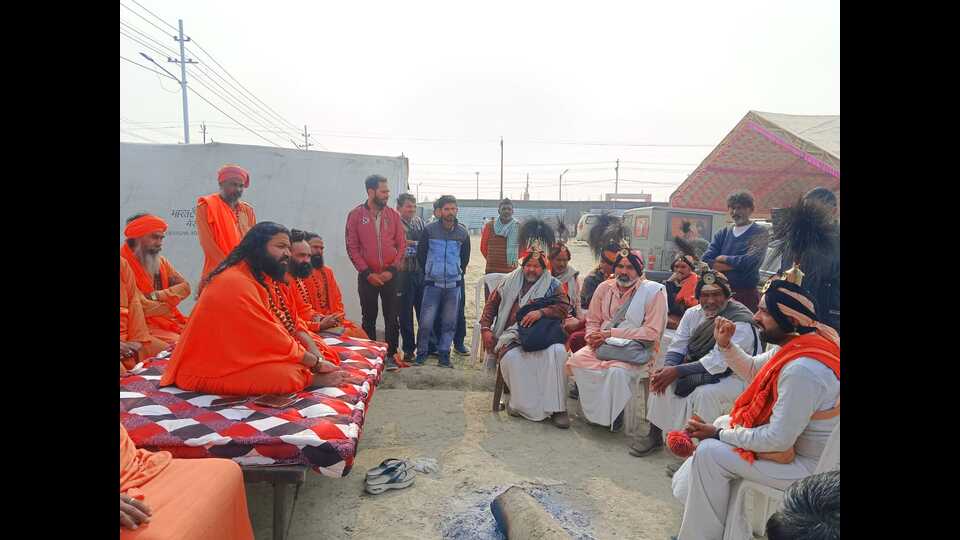
Over 250 wandering sudhus, called Jangam sadhus, have arrived from Haryana, Punjab, and Rajasthan, where their ashrams are located. They narrate the tale of Lord Shiva’s wedding with Goddess Parvati and celebrate the glory of Dashnam sadhus through their distinctive performances.
The Jangam is a Shaiva order of wandering religious sudhus, often referred to as the gurus of ‘Lingayat.’ According to the Puranas, Jangamas are considered disciples of Lord Shiva, preserving and propagating the sacred traditions associated with the deity.
A visit by ‘Jangam’ sudhus to a household is considered equivalent to a visit from Lord Shiva himself, and they are regarded as superior to fixed lingas (stone idols installed in temples).
sudhu Kala Deru Jangam, who prefers to call himself ‘Dashnam Ke Purohit’ or the high priest of Dashnam, said: “We carry the name Jangam because it means a moving temple dedicated to Lord Shiva. Our unique attire represents Lord Shiva, Goddess Parvati, and Nandi bull, the gate-guardian deity of Kailash Parvat, the abode of Lord Shiva.”
He said the image of a snake on their turbans represents the ‘Sheshnag’ of Lord Shiva, and the three ‘karnphool’ (a traditional Indian jewelry) on their forehead and left and right ears represent Goddess Parvati.
“The bell which Jangam sadhus carry represents Nandi bull,” he added.
Sharing the mythological story of their origin, sudhu Karanvir Jangam said they were believed to be born out of Lord Shiva’s thigh.
“After marrying Parvati, Lord Shiva wanted to give something to Lord Brahma and Lord Vishnu, but when they refused to accept anything, Lord Shiva got so angry that he created Jangam sadhus to give in donation,” he added.
“We have maintained our distinct identity as we are blessed by Lord Shiva. We come to Prayagraj only during Kumbh and Mahakumbh. We mainly visit akhadas from 8 a.m. to 12 noon and then from 3 p.m. to 6 p.m. for alms. We accept donations by akhadas only by turning upside down the brass bells which we carry. We are the only ones who get alms from akhada sadhus, including the Naga sanyasis. Devotees offer water, milk, and other holy items while worshipping the Shivling,” he explained.
“We also travel to other parts of the country where Kumbh Mela is held and cities where akhadas are located. We know the stories of Shiv Puran and the rich history of akhadas and highlight it by singing in our unique style,” he added.
Jagadguru Gargacharya Muchkund Peethadheeshwar Swami Mahendranand Giri from Junagadh, camping in the mela area for Mahakumbh-2025, says that the role of Jangam is important in Sanatan Dharma. He goes to camps in Ardh Kumbh, Kumbh Mela, and Mahakumbh and propagates Sanatan Dharma by singing praises of Lord Shiva and Goddess Parvati.