
 E-Paper



Kejriwal’s judicial custody in CBI case extended till August 27
Delhi court extends Arvind Kejriwal's judicial custody till August 27 in a CBI case on Delhi excise policy irregularities. Fourth charge sheet listed for hearing.

 Prefer HTon Google


A Delhi court on Tuesday extended the judicial custody of Delhi chief minister Arvind Kejriwal till August 27 in the case registered by the Central Bureau of Investigation (CBI) regarding the alleged irregularities related to the now-scrapped Delhi excise policy 2021-22.
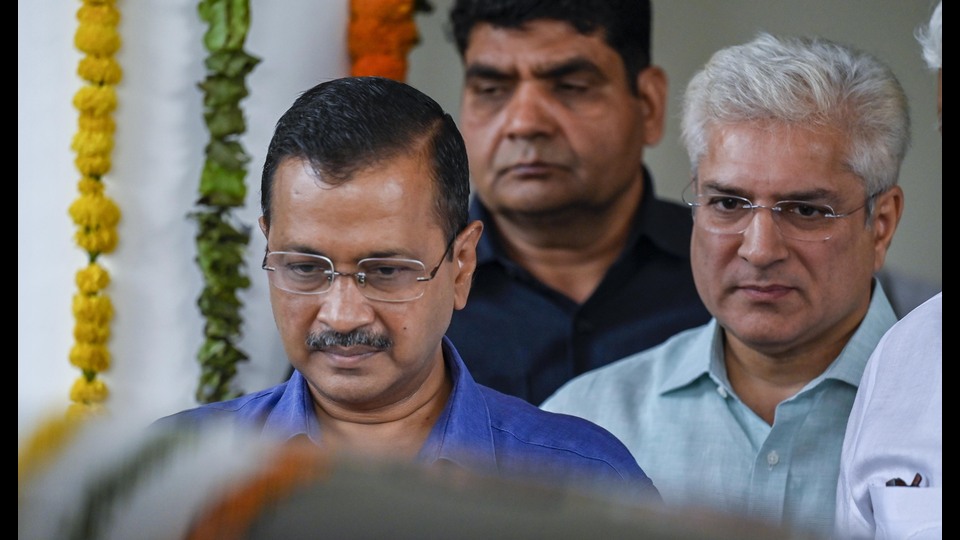
Special judge Kaveri Baweja extended Kejriwal’s judicial custody by a period of seven days after he was produced before the court through virtual conference from Tihar jail.
Incidentally, on the same day the court has also listed the fourth supplementary charge sheet filed by CBI naming him as an accused for hearing arguments on the consideration of the charge sheet.
The Aam Aadmi Party (AAP) chief was initially apprehended by the Enforcement Directorate (ED) on March 21, hours after the Delhi high court denied his request for interim protection from arrest — a stunning turn of events that left the Capital’s politics in turmoil and pushed to new heights the ongoing conflict between the Union government and the AAP.
Kejriwal was later taken into custody by the CBI on June 26 from Delhi Rouse Avenue court and was later sent to judicial custody on June 29.
CBI had on July 30 filed its fourth supplementary charge sheet naming Kejriwal as an accused in the case alleging that he was “one of the key conspirators” in the case.
The Supreme Court granted interim bail to Kejriwal in the ED case on July 12, however he is still lodged in Tihar jail in the CBI case.
He was earlier granted bail by the trial court in the case registered by ED on June 20, which was stayed by the Delhi high court on June 25. He was also granted interim bail by the Supreme Court on May 10 to campaign for the Lok Sabha elections. He later surrendered before the Tihar officials on June 2.
Kejriwal had also approached the Delhi high court seeking bail in the CBI case and had also challenged his arrest by the agency. The high court however dismissed both his petition on August 5.
The case stems from Delhi government’s 2021-22 excise policy aimed to revitalise the city’s flagging liquor business. It aimed to replace a sales volume-based regime with a license fee one for traders, and promised swankier stores, free of the infamous metal grilles, ultimately giving customers a better buying experience. The policy also introduced discounts and offers on the purchase of liquor, a first for Delhi.
The plan, however, ended abruptly, with Lieutenant Governor VK Saxena recommending a probe into alleged irregularities. This ultimately resulted in the policy being scrapped prematurely and being replaced by the 2020-21 regime, with the AAP alleging that Saxena’s predecessor sabotaged the move with a few last-minute changes that resulted in lower-than-expected revenues.


