E-Paper



NGT asks committee to probe setting up of industries inside Assam sanctuary
The principal bench of NGT directed officials from the union enviroment ministry, forest and climate change, central, Assam pollution control boards and the state forest department to submit the report

 Prefer HTon Google


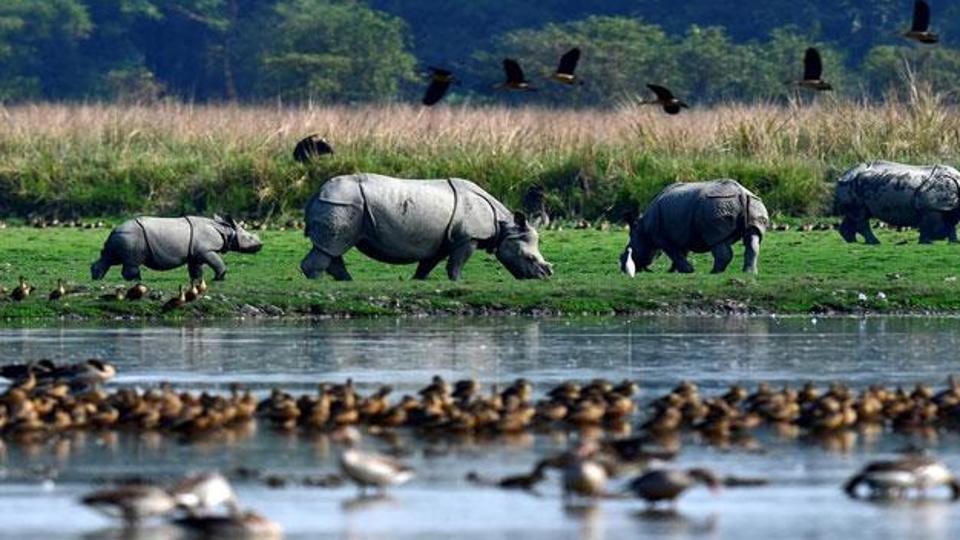
The National Green Tribunal (NGT) has directed a committee to submit a report on industries being set up in the vicinity of the Pobitora Wildlife Sanctuary (PWS) in the northeastern state which is a key habitat of the endangered one-horned rhino.
The principal bench of NGT in the national Capital New Delhi directed officials from the union ministry of environment, forest and climate change, central, Assam pollution control boards and the state forest department to submit the report before November 5, the next date of hearing.
The joint committee constituted in August this year comprised secretary Ministry of Environment, Forest and Climate Change (MOEFCC), member secretary of Assam State Pollution Control Board, representative of Central Pollution Control Board (CPCB) and the principal chief conservator of forest (wildlife) Assam.
Also Read: First evidence of tiger breeding in Assam sanctuary brings cheer
The CPCB was made the nodal agency for the committee for coordination and compliance.
“However, no report has been submitted. In the circumstances, we direct the joint committee to submit report within one month, failing which, all the members of the joint committee shall appear before the tribunal,” stated the order by judicial member Justice Sudhir Agarwal and expert member Afroz Ahmed on October 4.
The present case deals with a complaint filed by several people in October 2023 alleging the setting up of an industrial zone inside two blocks of the PWS.
It was alleged that attempts were also being made to set up cement factories and stone quarries in the area.
The complaint appended a report by a forest range officer which mentioned about the existence of a brick kiln at Sativeti area which was surrounded by paddy fields of nearby villagers and was located about 500 metres from the boundary of Rajamayong hill point of PWS and falls within proposed eco-sensitive zone of the protected forest.
The joint committee was formed “to collect relevant information after visiting the site and submit a factual report within a month” but the committee failed to comply with the order.
Declared a wildlife sanctuary in March 1998, PWS, which comprises around 3,880 hectares is rich in biodiversity. Located 55 east of Guwahati, it is home to over 100 hundred one-horned rhinos, around 300 wild buffaloes, leopards, deer, pangolins, wild boars and a variety of migratory birds.