
 E-Paper



NTPC team visits Bandhwari landfill, to set up waste-to-charcoal plant soon
The Municipal Corporation of Gurugram had earlier initiated discussions with NTPC Vidyut Vyapar Nigam Ltd (NVVNL) regarding the utilisation of refuse-derived fuel (RDF) and solid waste for producing green coal, which is essential for thermal plants, in March and their team had visited in April

 Prefer HTon Google


Gurugram: A three-member team from the National Thermal Power Corporation (NTPC), Delhi, visited the Bandhwari landfill on Saturday to inspect the site and assess requirements as work on the facility is set to begin on July 10, officials aware of the matter said.
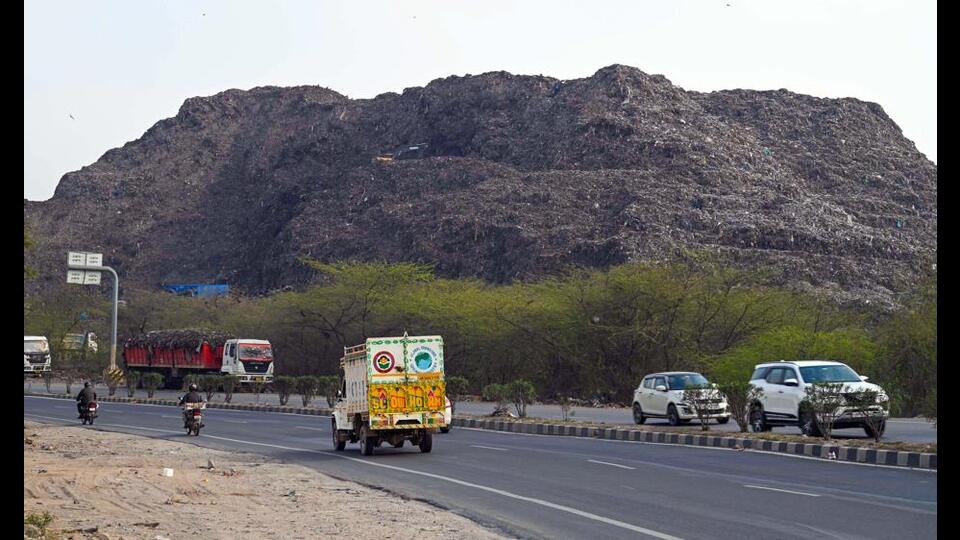
The Municipal Corporation of Gurugram (MCG) team took them around the 30-acre landfill site on Saturday evening. The site will be handed over to the NTPC on July 10 for setting up a plant for green coal, they said.
MCG commissioner Narhari Singh Bangar said the project aims to transform waste management practices and contribute to environmental sustainability in the region.
The corporation had earlier initiated discussions with NTPC Vidyut Vyapar Nigam Ltd (NVVNL) regarding the utilisation of refuse-derived fuel (RDF) and solid waste for producing green coal, which is essential for thermal plants, in March and their team had visited in April, officials said.
Green coal, known for its environmental benefits as an alternative to fossil fuel, is manufactured from a blend of waste materials, including agricultural residue and municipal solid waste.
Bangar said solid waste and RDF can be effectively converted into green coal, which is used in thermal power plants. NVVNL has implemented similar projects in locations such as Varanasi. “The teams were taken to different sites at Kherki Majra and Daulatabad since the required land of 10 acres was not vacant at Bandhwari. The landfill will be cleared in at least six months and once their plant is set up, the daily waste will directly go to them instead for processing,” he said.
The contract of three private agencies processing waste at Bandhwari will either be terminated or dissolved amicably to resolve any conflict, said officials.
MCG officials said the alternate site in Daulatabad which is 10 acres did not qualify for the plant since it is waterlogged and not suitable for setting up a plant. “The nine-acre site in Kherki Majra is opposite a hospital so the waste treatment plant cannot be set up there either. A decision will be taken on the setting up of the plant within a week,” said Bangar.
On the other hand, social activists and people leading groups in the city had mixed views of the issue.
Gauri Sarin, founder of Making Model Gurugram, a citizens’ initiative, said the upcoming NTPC-led Waste-to-Energy (WTE) plant, replacing Ecogreen, marks a pivotal moment in Gurugram’s waste management. Expected to utilise non-polluting RDF/green coal technology, its success post-Varanasi will hinge on effective handling of segregated dry waste inputs and ongoing efforts to compost wet waste onsite in line with SWM 2016 guidelines. The government’s commitment to separate and manage dry and wet waste effectively poses challenges, highlighting the complexity of waste management issues. Interestingly, former Haryana CM Khattar, previously a supporter of Ecogreen, has endorsed this transition,” she said.
Ruchika Sethi Takkar, founder member of Why Waste Your Waste, emphasised the importance of managing waste in a manner that minimises harm to the environment and public health. She stressed the need for processes that are least polluting, reduce emissions, and prioritize segregated disposal, crucial for sustainable waste management. She also highlighted the process of ‘Bio Methanisation’ as a proven environmentally safe method approved by DST since the 1980s, and its role in capturing methane gas and producing biofuel.
“The Haryana government’s adoption of eco-friendly waste management practices, including single-stream collection, decentralized composting, and CBG production, to minimize environmental impact and promote a circular economy is commendable. The question is about the origin of samples used to test ‘Green Coal’ and urge comprehensive waste mapping, capacity planning, and exploration of innovative composting methods to ensure effective waste segregation and management,” she said.
Dr Sanjay Mehta, a city-based radiologist and a keen advocate of sustainable waste management and clean air said segregation at source, mandated under SWM 2016, remains inadequately implemented in Haryana, hindering the adoption of bio methanisation for energy and fertilizer recovery, as seen in other states. “Concerns arise regarding the conversion of landfill waste into coal, potentially releasing microplastics and nanoparticles into the environment and food chain, posing serious health risks due to chemical additives like phthalates and Bisphenol A. Waste burning also emits carcinogens like dioxins, furans, and black carbon, contributing to climate change and various health disorders, highlighting the urgent need for sustainable waste management practices,” he said.


