E-Paper



Odisha gets India’s first 3D glass chip packaging plant
The facility set up by US-based 3D Glass Solutions Inc. (3DGS) at Info Valley in Bhubaneswar is worth ₹1,943 crore

 Prefer HTon Google


Odisha chief minister Mohan Charan Majhi on Sunday laid the foundation stone for India’s first glass substrate chip packaging unit in Bhubaneswar to boost the country’s semiconductor packaging capabilities.
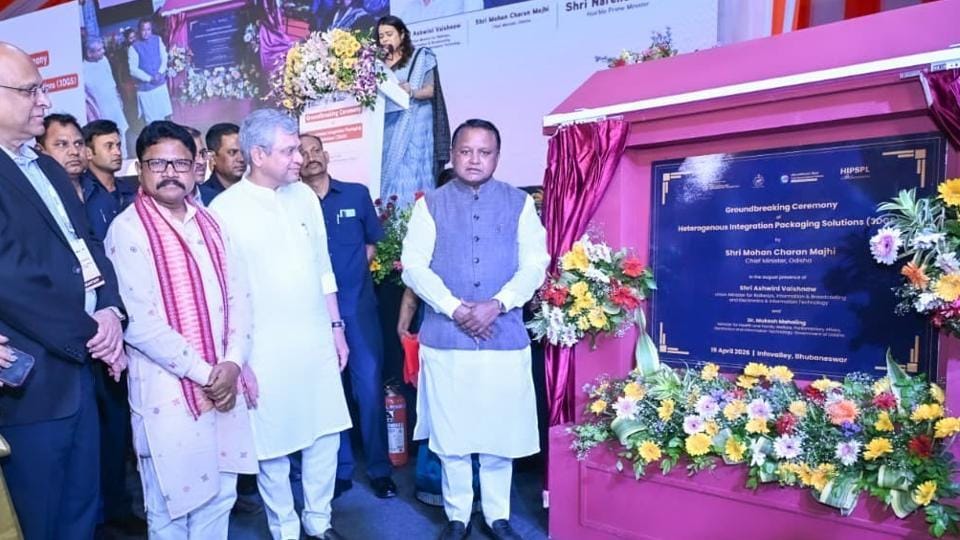
The facility set up by US-based 3D Glass Solutions Inc. (3DGS) at Info Valley in Bhubaneswar is worth ₹1,943 crore and will deploy advanced 3D heterogeneous integration (3DHI) packaging technology which India previously relied on imports to access.
Union electronics and IT minister Ashwini Vaishnaw said, “The state is diversifying from metals and minerals to many new industrial bases.”
“A high-tech industry coming to Odisha is a matter of pride. This is an advanced technology. Normally, a silicon substrate is used in chip manufacturing, and now the technology of advanced 3D Glass substrate will be used... We will also work to double the plant’s capacity after the completion of the first phase…” said Vaishnaw.
The vertically integrated unit will package semiconductor chips for high-stakes applications including artificial intelligence, 5G networks, defence systems, data centres, and high-performance computing.
Also Read: Odisha, Singapore sign 8 MoUs in semiconductors, green hydrogen and fintech
The facility will annually produce 69,600 glass panel substrates, 50 million assembled units, and 13,200 3D Heterogeneous Integration (3DHI) modules. It is expected to generate over 2,500 direct and indirect jobs.
The technology stack centred on glass interposers and embedded glass substrates represents a shift from conventional organic packaging, offering better thermal performance and higher integration density critical for AI-grade chips.
The 3DGS plant is the second semiconductor facility in Odisha within months. SiCSem Private Limited, in collaboration with UK-based Clas-SiC Wafer Fab Ltd., is already building India’s first commercial silicon carbide (SiC) fabrication unit in the Info Valley campus, targeting an annual output of 60,000 wafers and 96 million packaged units for electric vehicles, railways, defence, and renewable energy.
The Union cabinet approved both Odisha projects in 2025 as part of a broader push that has greenlit 10 semiconductor projects nationwide, with cumulative investments exceeding ₹1.6 lakh crore.
The 3DGS and SiCSem approvals are part of India’s larger ambition to build a self-reliant semiconductor ecosystem and reduce dependence on chip imports.