E-Paper



Odisha tops the list of states with highest malaria cases across India
Odisha contributed around 18.7% of the country’s malaria tally, followed by Chhattisgarh (31,713), Jharkhand (31,140), West Bengal (26,493), Tripura (22,412), Maharashtra (16,164) and Uttar Pradesh (13,585)

 Prefer HTon Google


Odisha has topped the list of states for malaria cases in 2023 with nearly 42,000 occurrences, according to the National Centre for Vector Borne Diseases Control (NCVBDC), marking a comeback in the state despite the government keeping it under control through a host of measures.
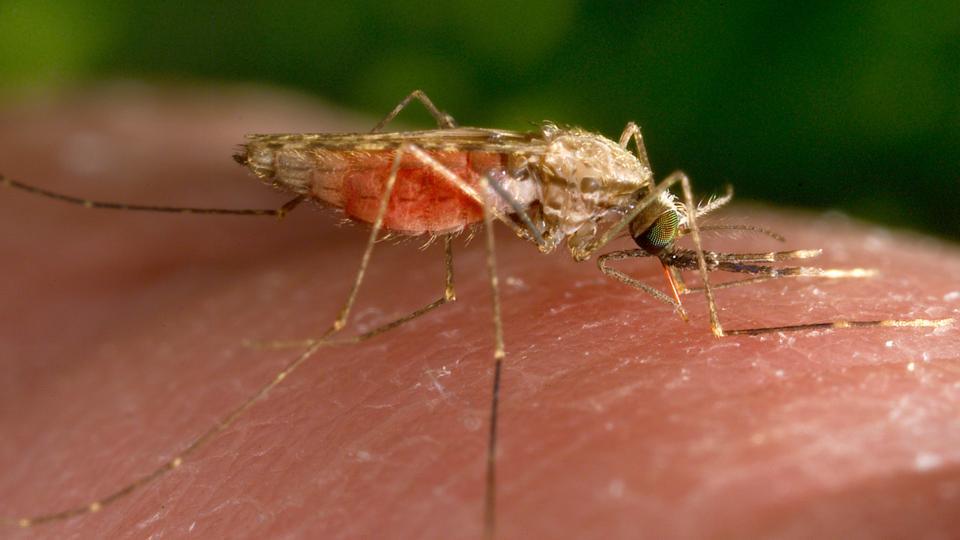
Officials in the state health department said while the state recorded 23,770 malaria cases in 2022, in 2023 the numbers shot up to 41,971. However, the number of deaths came down to four in 2023 compared to five casualties in 2022.
The NCVBDC figures showed that Odisha contributed around 18.7% of the country’s malaria tally. The state was followed by Chhattisgarh (31,713), Jharkhand (31,140), West Bengal (26,493), Tripura (22,412), Maharashtra (16,164) and Uttar Pradesh (13,585). The annual parasite index (API), which had come down to 0.52 in 2022, has gone up to 0.93.
Home to nearly 4% of India’s population, Odisha with its humid and hot climatic conditions is highly conducive to malaria transmission, 91.5% of which is caused by P. falciparum and 8.5% by non-falciparum species. The National Framework for Malaria Elimination (NFME) launched by the Centre in 2016 set the goal to eliminate malaria from the entire country by 2030.
After the state reported its highest ever number in 2016 with 4.44 lakh cases, the Odisha chapter of the National Vector-borne Disease Control Programme in 2017 launched a special drive named ‘Durgama Anchalare Malaria Nirakaran’ (malaria elimination in less accessible areas), or ‘DAMaN’.
DAMaN targets high-transmission, malaria ‘pockets’ that were identified in hard-to-reach areas of the state, spread over 23 districts. DAMaN comprised half-yearly malaria screening of populations living in villages and hamlets in inaccessible areas with historically high malaria burden. A major feature of the programme comprised distribution of long-lasting insecticidal nets (LLIN) to large sections of the state population.
Officials said in 2023, the districts of Rayagada, Kalahandi, Malkangiri, Koraput and Kandhamal have recorded maximum cases with Rayagada reporting 9,925 cases followed by 7,543 in Kalahandi.
State health department officials said the rise in malaria cases can be attributed to people’s negligence in using the insecticidal nets. “There have been reports from different parts of the state that people did not use the nets citing sweltering weather conditions. Many continue to sleep in the open without nets all through the summer,” said the official. Another reason that the officials cited was lowering of efficacy of the nets due to non-replacement of the nets after 3 years.
“The insecticide effect in LLINs lasts up to three years or 20 washes. The nets distributed in the malaria-prone districts in 2019 should have been replaced by the end of 2022. Though more than a year has lapsed, the nets are yet to be replaced. In many villages, the old nets have been damaged, and people last summer did not use the nets,” said the official.
Around 11.6 million nets were distributed in the state four years ago.