
 E-Paper



Residents flag poor upkeep of walkways along Dwarka E-way
During an inspection with NHAI officials, locals highlighted dust, potholes, broken guardrails and blind spots affecting pedestrian and cyclist safety.

 Prefer HTon Google


Residents of the new Gurugram have raised concerns about the poor upkeep of pedestrian zones, cycle tracks, and other walkways along the 29 km-long Dwarka Expressway, officials said on Monday.
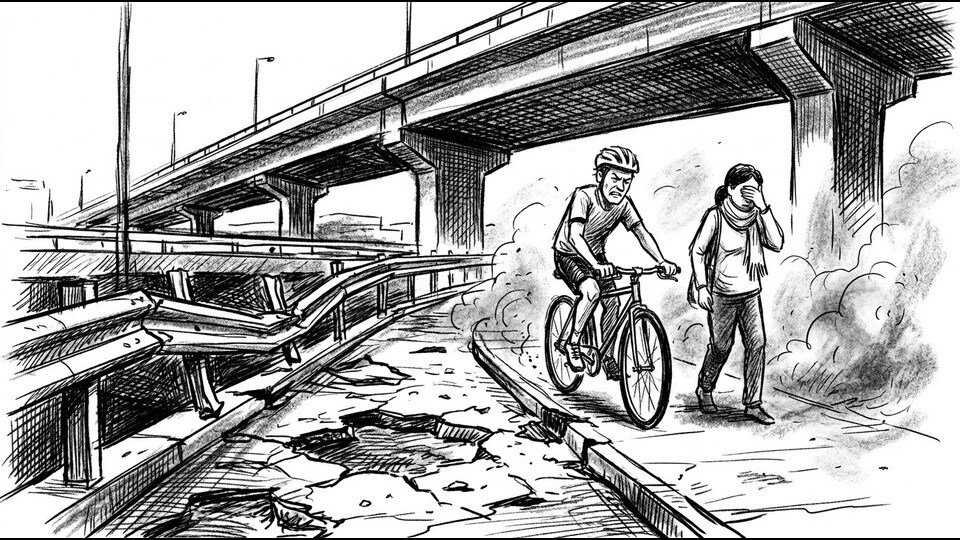
During a field visit by a team of the National Highway Authority of India (NHAI) and a private contractor on Saturday, the residents flagged a lack of dust-mitigation and surveillance measures, broken safety guardrails along the high-speed expressway, potholes on the walkways and illegal crossings at the carriageway.
The NHAI and the contractor inspected the cycle track between sectors 109 and 110, accident-prone locations in sectors 81-115, Palam Vihar, Manesar and Dwarka Sector 25, Delhi, and interacted with the residents.
Sunil Sareen, vice-president of Imperial Gardens’ resident welfare association (RWA) in Sector 102, said the urban-elevated corridor in new Gurugram lacks key safety features for pedestrians and cyclists. “Most of the walkable space along the carriageway is unusable. The authorities speaking to residents is a welcome step. The focus must be on reducing dust and repairing the broken patches,” said Sareen.
A senior NHAI official, requesting anonymity, said the visit was part of a routine exercise to address concerns raised by the residents. “Any discrepancies identified regarding safety along the expressway are being fixed. Our teams ensure that road and walkways are properly maintained through regular inspections,” the official said.
According to residents, their repeated complaints “went unheard” by the authorities, and walkways remain marred by dust and invisible signage, making it difficult for the public to access. “The teams were apprised of the blind spot, poor lighting and accident-prone locations,” said Bharat Nain, a member of the Dwarka Expressway Gurugram development association.
“Around 10 blind spots with a lack of CCTV surveillance leave commuters vulnerable and exposed to safety risks during the night were identified,” added Nain.


