
 E-Paper



Tamil Nadu moves Supreme Court over Vanniyar quota
Vanniyar quota: The government’s main grounds for an appeal in Supreme Court are three fold -- there is a prima facie case that it has acted diligently and that the entire admission would suffer hardship.

 Prefer HTon Google


Chennai: The Tamil Nadu government and BJP’s ally the Pattali Makkal Katchi (PMK) have filed separate petitions in the Supreme Court challenging the Madras high court order of November 1 that struck down the 10.5% internal reservation allotted for the Vanniyar community within the existing 20% quota for Most Backward Classes (MBCs).
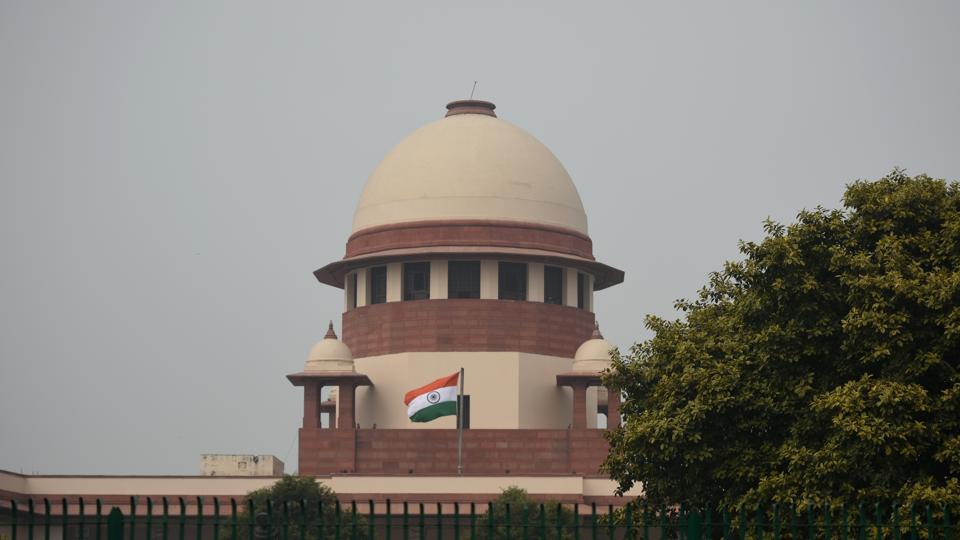
The government’s main grounds for an appeal are three fold -- there is a prima facie case that it has acted diligently and that the entire admission would suffer hardship. Secondly, the government’s petition says that the high court’s order is “erroneous, contrary to existing provisions of law and deserves interference” from the Supreme Court. Thirdly, the government states that the balance of convenience is in favour of the petitioner. HT has seen a copy of the 318-page petition.
The Tamil Nadu government’s special leave petition is represented by advocate D Kumanan who prayed to the Supreme Court to grant a special leave to appeal against the judgement of the Madras high court and pass appropriate orders based on the circumstances of the case. The petition also seeks interim relief such as a stay on the judgement.
The reservation for government employment and education was brought in by the previous AIADMK government just before the model code of conduct came into effect in February this year. The reservation was implemented after the DMK formed the government in May. The Madras high court’s November 1 order running 814-pages declared it as ultra vires the constitution. The court said that they find the impugned legislation is in violation of Articles 15, 16 and 29 of the Constitution of India as it treats one caste- Vanniayars--differently and discriminates others.
The petition argued that the government passed the enactment based on “adequate, authenticated” data on population of the MBCs and Denotified Communities (DCs) enumerated in 1983 by the Tamil Nadu Second Backward Classes Commission under retired IAS officer J A Ambasankar. The commission submitted its door-to-door enumeration of the entire state’s population to the government in 1985. “The caste-wise population data disclosed by Ambasankar Commission is the only authenticated data available as of now before the state and such data can be effectively used to plan for sub-classification within the backward classes,” the petition read. Carving out a quota from an existing reservation is called sub-categorisation.
The government also quoted the Supreme Court’s May 2021 judgement in the case of Jaishrilakshmirao Patil versus The Chief Minister and others which decided on the powers of the state to legislate for the identification of socially and economically backward classes. The judgment was also in favour of the existing powers for making special reservation and sub-classification within backward classes, the government said in its petition. In the majority of this judgement, the apex court held that the state’s power remains undisturbed to make reservation in favour of a particular community, caste, the quantum of reservations and the nature of benefits fall within the ambit of Article 15 and 16 (except for identification of SEBCs). This has been the observation in the Maratha case, too the petition said. The state also argued that there is no necessity to consult the National Commission for Backward Classes in respect of the state lists in this matter.
The petition further says that the high court referred to the 1992 Indra Sawhney versus Union of India case but did not follow an observation from it where the SC had held that caste if often a social class in the country. “As such, a caste, which is socially and educationally backward may be classified as Backward classes,” the petition said.
Meanwhile, the PMK filed two petitions with the Supreme Court challenging the same. “One if from the party and the other is filed independently by the party founder as both are respondents in the original case in the high court,” said PMK spokesperson and advocate K Balu. PMK founder S Ramadoss in his petition argued that internal reservation for Muslims and Arunthathiyars have been provided within the overall 69% reservation in place in Tamil Nadu which has been upheld by the courts.


