A tigress and her four cubs died in Madhya Pradesh’s Kanha Tiger Reserve (KTR), officials said on Thursday with forest officials suspecting the outbreak of Canine Distemper Virus (CDV).
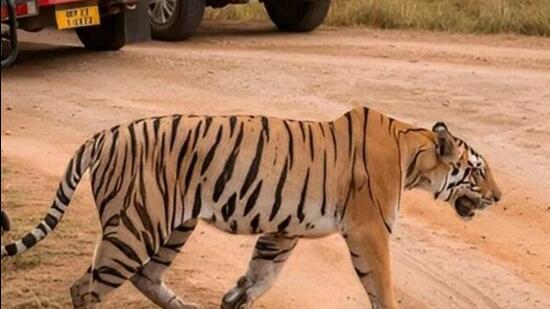
Officials have begun monitoring other tigers in the wild after the 10-year-old tigress T-141 and her four one-year-old cubs were found infected in the Sarhi range area.
Additional principal chief conservator of forest L Krishnamurthy said, “The cause of death of the tigress and her cubs was respiratory disorder and gastrointestinal infection, but we cannot rule out CDV. Samples have been sent for confirmation, and preventive measures are underway.”
According to local officials, the first cub died on April 21.
Also Read: 38 elephants, 9 tigers died in Chhattisgarh in last 26 months: State govt data
The carcass of a second cub was found in a decomposed state on April 24. Forest officials initially attributed the death to starvation, noting that cubs cannot hunt without their mother. However, on April 25, a third cub was discovered, prompting further investigation.
The post-mortem revealed the cub had died of a lung infection. This led officials to locate the tigress and her last surviving cub, both found ailing in the Sarhi area. They were tranquilized and shifted to the Mukki rescue centre on April 26.
{{/usCountry}}The post-mortem revealed the cub had died of a lung infection. This led officials to locate the tigress and her last surviving cub, both found ailing in the Sarhi area. They were tranquilized and shifted to the Mukki rescue centre on April 26.
{{/usCountry}}“Medical tests confirmed respiratory and gastrointestinal infections, raising suspicion of Canine Distemper Virus (CDV). Samples were sent for confirmation, but the tigress and cub died on Wednesday while undergoing treatment,” said the APCCF.
A team of forest officials and veterinarians from Bhopal has begun investigations. A local forest officer, requesting anonymity, said “Human-animal interaction has increased in recent months. Locals enter the forest with dogs for safety while collecting Mahua in March, Chironji in April, and Tendu leaves in May and June from the reserve. The possibility of tigers contracting CDV is very high.”
Monitoring teams with elephants are now tracking tigers in the Sarhi area and sanitising their surroundings.
Kanha Tiger Reserve field director Prakash Verma confirmed that samples of the tigress and cub have been preserved for further examination, and water samples are also being tested.
Wildlife activist Ajay Dubey called the deaths a wake-up call.
“Losing five tigers, possibly to CDV, is alarming. NTCA has clear instructions to vaccinate dogs, yet those roaming within 5 km of Kanha were not vaccinated. In 2015, Panna Tiger Reserve also reported tiger deaths due to CDV. Preventive action here was delayed as officials were busy translocating wild buffaloes from Assam”, he said.
Dubey demanded a fair probe and accountability from responsible officials.