
 E-Paper



Why insist on 100% attendance in schools, high court to Gujarat govt
The Gujarat high court said the government should not take risks amid pandemic and decision 100% in-person attendance in schools should best be left on the parents to decide.


AHMEDABAD: Questioning the rationale behind its decision to seek 100% attendance in schools, the Gujarat high court on Wednesday said the government should not take such risks amid pandemic and such decisions should best be left on the parents to decide.
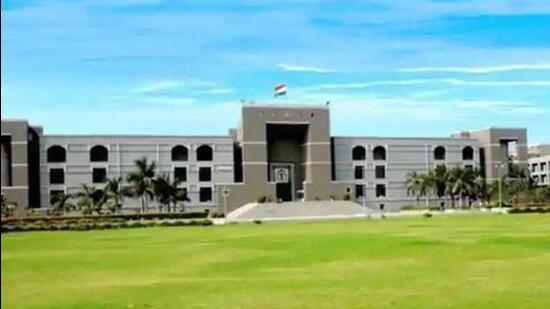
The court made these observations in a matter where a public interest litigation (PIL) was filed challenging the state government’s decision to commence in-person education in Gujarat Secondary and Higher Secondary Education Board (GSHSEB) schools and mandating 100% attendance. The government issued a notification on February 18 about this decision.
“Why are you insisting on 100% attendance in schools? Why can’t such decisions be left to the parents of students? Why are you taking such risks?” asked the bench of Chief Justice Aravind Kumar and Justice A J Shastri.
The bench also asked the government to rethink its decision over not issuing exam hall tickets to students who do not remain physically present in schools.
“If you have followed the news recently, in at least six states in India, delta and omicron recombinant (deltacron) has emerged with 66 in Maharashtra and 33 in Gujarat,” the court observed.
The Centre’s guideline prescribes for smooth transition from online education to formal schooling, according to the PIL.


