
 E-Paper



With wounds that never heal, Kashmir’s torture victims struggle for a normal life
Lost eye sight, dislocated joints, fractures, stomach ailments, nephrological problems, impotency and sexual problems, internal organ injury, cardiac problems, hypertension, urinary incontinence, complete/partial paralysis, amputations, deformity, nerve damage are some of the impacts on the health of 1,200 torture survivors from four districts of Kashmir


Khursheed, 45, from South Kashmir lives alone in his two- room house after his wife, his only family, left him on the pretext that he is “impotent” and “incapable of getting her pregnant”.
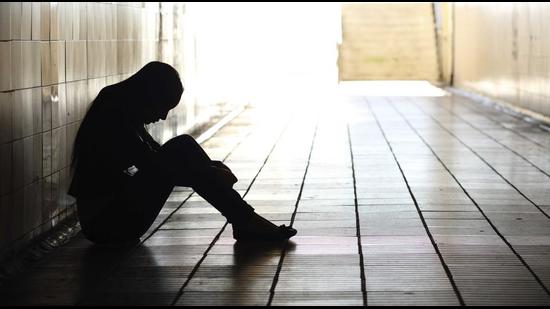
Khursheed, who had got married in his late 40s, is a victim of the forces’ torture. He had turned sterile after he was brutalised at a torture centre in Srinagar during an interrogation in 2002.
He is among thousands of Kashmiris left disabled post the torture by forces as well as militants.
Lost eye sight, dislocated joints, fractures, stomach ailments, nephrological problems, impotency and sexual problems, internal organ injury, cardiac problems, hypertension, urinary incontinence, complete/partial paralysis, amputations, deformity, nerve damage are some of the impacts on the health of 1,200 torture survivors from four districts of Kashmir, a study carried out by the Jammu Kashmir Coalition of Civil Society (JKCCS) found.
The report endorsed by former UN special rapporteur Juan E Mendez says “torture emerges as part of a routine (which is) intrinsic to the very existence of the Indian State in Kashmir.”
Among hundreds of case studies that it mentions, is Mohammad Syed of Maisuma in Srinagar. Twenty-four-year-old Syed was arrested in the 1990s for the first time and taken to an interrogation centre in Jammu, where he was kept for two-and-a-half months. This was followed by detention in Kathua Jail and then in Nainital Jail, Allahabad, where he was detained for 14 months before being finally brought to Satwari interrogation centre in Jammu.
Syed has said that interrogators there would “beat them with anything they could find”. He adds that he is “unaware as to what hit him in the eye due to which he lost complete vision in his left eye”. Syed has had six surgeries already, but infection spread to his other eye as well, leaving the carpet-weaver completely blind. He now depends on donations for survival.
The victims revealed to JKCCS that torture of Kashmiri prisoners was not limited to physical beating only.
Many victims have spoken about Srinagar’s infamous interrogation centre PAPA 2, where over 350 inmates were provided a single bathroom where they were allowed to go only once in 24 hours. The report includes accounts of people who said they would take medications “to induce constipation.”
Silence and the endless pursuit for help
Among 432 cases that JKCCS followed, only 27 had reached out to the State Human Rights Commission (SHRC) for help. This means not even 7% of torture victims muster courage to ask for justice in Kashmir.
Among them, just 20 people had got any recommendations of help from SHRC. Among those who got recommendations, most haven not been endorsed by the government. In 2017, as per JKCCS, 75% of these recommendations were rejected by the then state government.
Khurram Parvez, a human rights activist based in Kashmir, says India has “institutionalised” torture in Kashmir. “India signed the United Nations Convention against Torture and Other Cruel, Inhuman or Degrading Treatment or Punishment (UNCAT) in 1987. It has been 34 years, but it has still not ratified that convention,” he said, adding that India is among only four of 81 signatories to the convention to not ratify it. Other three include Brunei, Haiti, and Sudan.
In 2010, the Lok Sabha had passed the Prevention of Torture Bill but till date, there has been no nod to it.
Khurram adds that not passing such a bill reflects “Indian government’s commitment to torture.”
He adds that while parts in India have witnessed police brutality and torture at different instances, in Kashmir “torture is a never-ending process.”
Calling torture is an “institutional tool of Indian government” for state oppression, he says that not even once has Indian government made any effort to rehabilitate all these torture survivors.
Parvez adds that inaction towards torture in a community increases the acceptability of violence among its people. On legality of torture, Parvez says there is no law in India which allows torture. “But what allows perpetration of it at grassroots level is the absence of any law to criminalise it,” he adds.
He suggests that ratifying UN convention by criminalising torture would be a step towards preventing more persecution. “This should be done by bringing a law in the Parliament as well as in legislative assemblies across India,” he says, adding that recurring income and health support to disabled torture victims should be also provided, besides holding the torture criminals guilty.


