
 E-Paper



Action against 335 tankers after twin fatal accidents jolt Pune
On Thursday, 40 tanker vehicles were penalised while 20 were seized and taken to the office of the deputy commissioner of police (traffic) and various police stations. The remaining 275 tanker vehicles were booked for other Motor Vehicles Act-related violations.

 Prefer HTon Google


Pune:
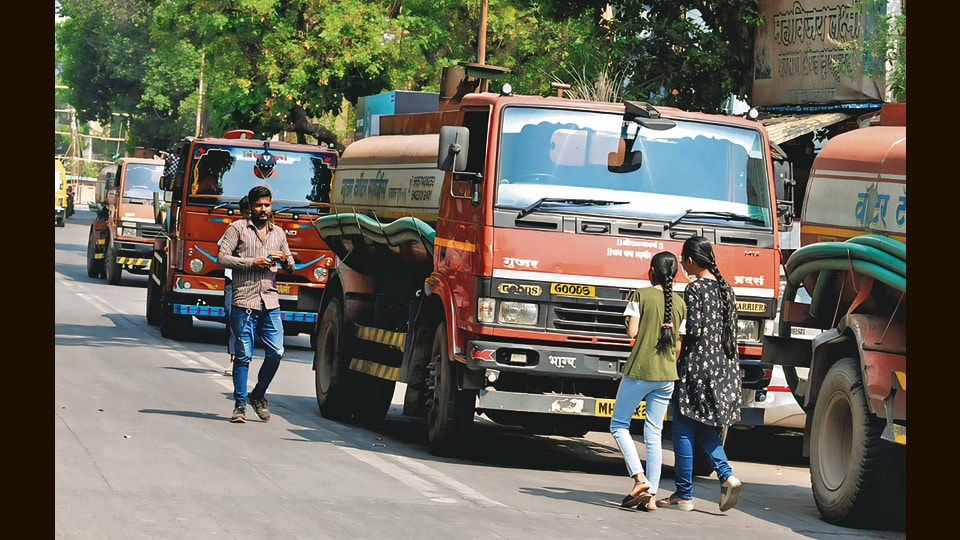
Following two fatal accidents involving water tankers in just three days, the Pune traffic police on Thursday took action against as many as 335 tanker vehicles across the city in the course of a single day.
On Thursday, 40 tanker vehicles were penalised while 20 were seized and taken to the office of the deputy commissioner of police (traffic) and various police stations. Officials said that the operation focused on violations by heavy vehicles, especially entry during peak-hour restrictions. Whereas the remaining 275 tanker vehicles were also penalised for other Motor Vehicles Act-related violations such as not having proper permits, expiry of annual vehicle testing, and so on.
The action follows the death of two citizens in two separate accidents that have once again brought road safety concerns into sharp focus. On April 8, 22-year-old engineer Gracia Daniel Issa died after a tanker rammed into her moped near Ganga Satellite Society in Wanowrie during the morning rush hour. Barely days before on April 5, 19-year-old Arij Ejaz Sheikh died in a similar accident near NIBM road wherein the tanker driver was found to be under the influence of alcohol.
Areas residents are in a state of shock following the twin fatalities. Sameer Waghchoure, a Wanowrie resident, said, “Every morning feels risky now. Tankers and trucks move at high speed even during peak hours. We keep hearing about restrictions but on the ground, enforcement doesn’t seem consistent. Parents are now scared to even let their children step out alone.”
Echoing similar concerns, Mohammad Farhan, a resident of Kondhwa near NIBM Road, said, “There have been accidents here before. Heavy vehicles frequently violate rules, and rash driving is common. Unless strict, visible enforcement and better road design are ensured, such tragedies will keep happening. People feel helpless because complaints don’t seem to bring long-term change.”
About the Wanowrie mishap, deputy commissioner of police (traffic) Himmat Jadhav, said, “The recent incident is deeply unfortunate, and we have personally inspected the location. However, it is not entirely correct to place the blame solely on the police. There is a critical need for large-scale engineering interventions and infrastructure improvements at such accident-prone spots. These include better road design, safer junction planning, proper signage, and traffic calming measures.”
Jadhav added that while the traffic police regularly suggest corrective measures, implementation rests with other agencies. “Road construction bodies have qualified engineers and multiple traffic consultants on board. Our personnel are trained primarily in traffic regulation and enforcement; not civil engineering. Despite this, we proactively suggest changes because public safety is at stake. Ideally, such measures should be integrated at the planning stage itself, rather than after accidents occur,” he said.
Significantly, over the past four months, the traffic police have registered cases against around 350 vehicles for violating peak hour restrictions; invoking stringent charges under section 110 (attempt to culpable homicide), underlining the seriousness with which such offences are being treated.


