
 E-Paper



After Moshi tragedy, PCMC plans shift to decentralised waste management
The move comes a week after nine staff were killed when a massive garbage mound collapsed onto the administrative building of the outsourced waste-to-energy plant at the Moshi garbage depot.

 Prefer HTon Google


PUNE: The Pimpri Chinchwad Municipal Corporation (PCMC) is set to overhaul its solid waste management strategy by adopting a decentralised garbage processing model after the Moshi garbage depot tragedy exposed the risks of concentrating the city’s entire waste at a single location, said municipal commissioner Vijay Suryawanshi on Wednesday.
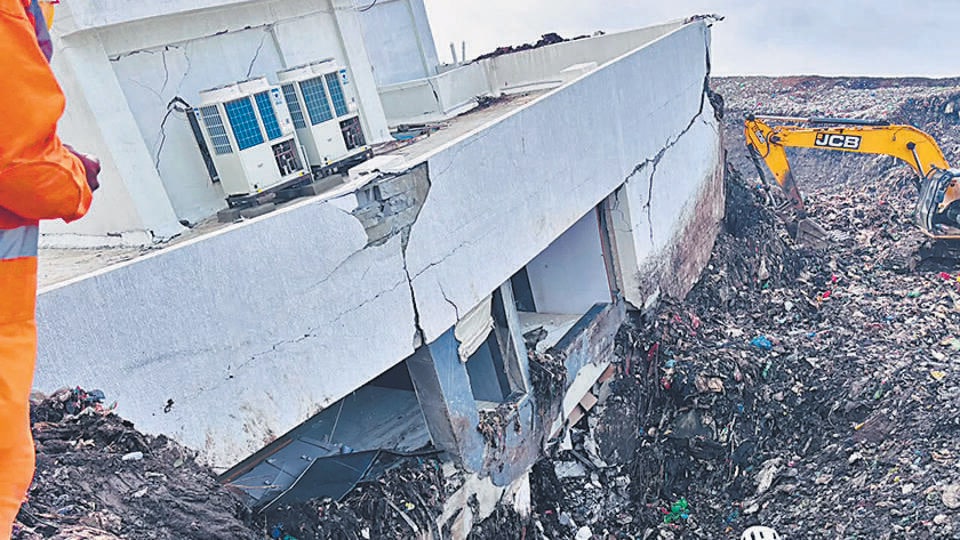
The move comes a week after nine staff were killed when a massive garbage mound collapsed onto the administrative building of the outsourced waste-to-energy plant at the Moshi garbage depot. The incident triggered an 84-hour rescue operation, suspension of civic officials, departmental inquiries, and a comprehensive review of the city’s waste management system.
“There is currently no other option but to decentralise waste management. The population of the twin city has increased rapidly. Collecting garbage from the entire PCMC area and transporting it to a single location at Moshi is no longer practical,” Suryawanshi said, adding that the twin city’s population of around 35 to 40 lakh, is expected to reach about 55 lakh by 2041, and by 2055 could touch one crore.
Moshi depot under pressure
The Moshi garbage depot, operational since 1991, currently receives more than 1,500 metric tonnes of municipal solid waste every day.
In 2008, PCMC had reserved 22 hectares at Survey Number 24 in Punawale, off the Katraj-Dehu Road bypass, for a new waste management facility. The civic body paid ₹3.5 crore to the forest department for the land in exchange for providing alternate land elsewhere. However, the project remained stalled for over 15 years. During this period, several residential projects, schools, and colleges came up around the proposed site. Following sustained opposition from residents, the state government scrapped the proposed project in December 2023. Following the accident, waste-handling operations at Moshi depot were disrupted, affecting door-to-door garbage collection in several parts of the city and forcing the civic body to identify temporary locations for storing daily waste.
New locations explored
The civic chief said PCMC would explore all available options, including vacant municipal land and sites owned by neighbouring planning authorities. “Waste management infrastructure has to grow in line with the city’s population,” he said.
According to PCMC officials, the sanitary landfill facility (SLF-2) has been accumulating waste since 2014-15 and currently contains an estimated 10 to 12 lakh cubic metres of garbage. The garbage mound had reached a height of around 25 to 30 metres, exceeding the prescribed limit. The Moshi depot currently holds nearly 34 lakh cubic metres of waste. Of this, around 12 lakh cubic metres has been biomined, nearly 28 lakh cubic metres comprises legacy waste and about 6 lakh cubic metres of fresh waste is accumulated after processing daily garbage, officials said.
Waste generation expected to rise
PCMC estimates that waste generation will increase sharply over the next two decades. Based on the current per capita waste generation of 500-600 grams per person per day, the city’s daily waste output is projected to rise from the present 1,500+ metric tonnes to 2,200 metric tonnes in five years, 3,300 metric tonnes in 10 years and nearly 5,800 metric tonnes in 20 years, a senior civic official said.
Legacy waste behind odour
Suryawanshi sought to dispel the perception that operational waste-processing plants are responsible for the foul odour around the Moshi depot. “People should understand that the foul smell at Moshi is not because of fresh waste or the processing plants. The existing plants are modern and use the latest technology. The smell mainly comes from the legacy waste that has accumulated over several years,” he said.
He added that public cooperation would be crucial for implementing the new decentralised waste management strategy.


