
 E-Paper



Astronomers discover ‘Elusive Dying Radio Galaxies’ using deep radio surveys
The discovery will help astronomers understand the factors that govern the evolution of radio galaxies in their final phase and assess the amount of energy that these dying sources feed back into their host galaxies and the intergalactic medium

 Prefer HTon Google


Pune: Ateam of astronomers from the National Centre of Radio Astrophysics (NCRA) Tata Institute of Fundamental Research (TIFR) Pune; Physical Research Laboratory (PRL) Ahmedabad; and University of Oxford has discovered several ‘elusive dying radio galaxies’ using some of the world’s most powerful radio telescopes, including the Giant Metrewave Radio Telescope (GMRT) located in Khodad, Pune.
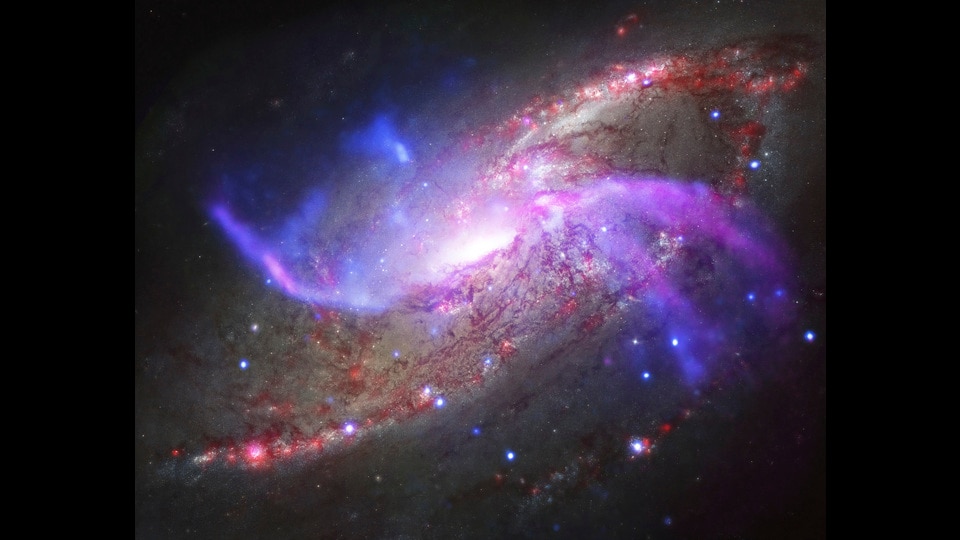
The discovery will help astronomers understand the factors that govern the evolution of radio galaxies in their final phase and assess the amount of energy that these dying sources feed back into their host galaxies and the intergalactic medium. The work underscores the importance of combining observations from large radio telescopes operating in different frequency domains. The researchers claim that their work will also serve as a test bed for future studies with the Square Kilometre Array (SKA) telescope, the largest radio interferometric array telescope to be built by an international consortium which includes India.
The research is part of the doctoral thesis of Sushant Dutta, who is the lead author of the discovery paper which has been accepted for publication in the Astrophysical Journal. The co-authors of the paper include Veeresh Singh from PRL; C H Ishwara-Chandra and Yogesh Wadadekar from NCRA-TIFR; Abhijit Kayal from PRL; and Ian Heywood from the University of Oxford.
Dutta said, “Dying or remnant, radio galaxies represent the final stage in a radio galaxy 39’s lifecycle and are considered elusive because they spend a relatively short time in this phase. Radio galaxies which can only be identified through radio observations emit copious amounts of radio radiation and have bipolar jets that originate from the centre of their host galaxy. These jets, made up of ionised plasma, travel millions of light-years into intergalactic space and form the largest individual structures in the universe. The jets are driven by the accretion of material onto the supermassive black hole located in the centre of the host galaxy, and indicate the presence of an active galactic nucleus (AGN). Once AGN activity stops, the jets are no longer supported but the lobes of plasma created by the jet activity can still be detected before they disappear due to radiative losses.”
While Wadadekar said, “To detect dying radio galaxies, researchers used deep multi-frequency radio surveys performed with the GMRT in India, the low frequency array (LOFAR) telescope in the Netherlands, and the very large array (VLA) in the USA. By studying the images and spectra of a large number of radio galaxies, they were able to identify nearly two dozen radio galaxies that showed relic emission from lobes with no AGN activity. These dying galaxies were searched for within a small sky area of 12 square degrees in the XMM-Newton Large Scale Structure (XMM-LSS) extragalactic field.”
“In contrast to previous studies, the sensitive observations enabled researchers to find a much higher number density of remnant sources than previously thought. The use of deep optical survey from the 8.5m Subaru telescope also helped them to identify host galaxies and large-scale environments in which remnant sources reside,” Wadadekar said.


