
 E-Paper



Bhakari over sweets: How food united protesters in 1930 Diwali
While planning the first act of civil disobedience against British Rule, Gandhi sought a symbol that could unify the entire country

 Prefer HTon Google


Food has a unique ability to bring people together. It breaks down barriers and builds a sense of belonging. It helps healing and building bridges, and forging solidarity.
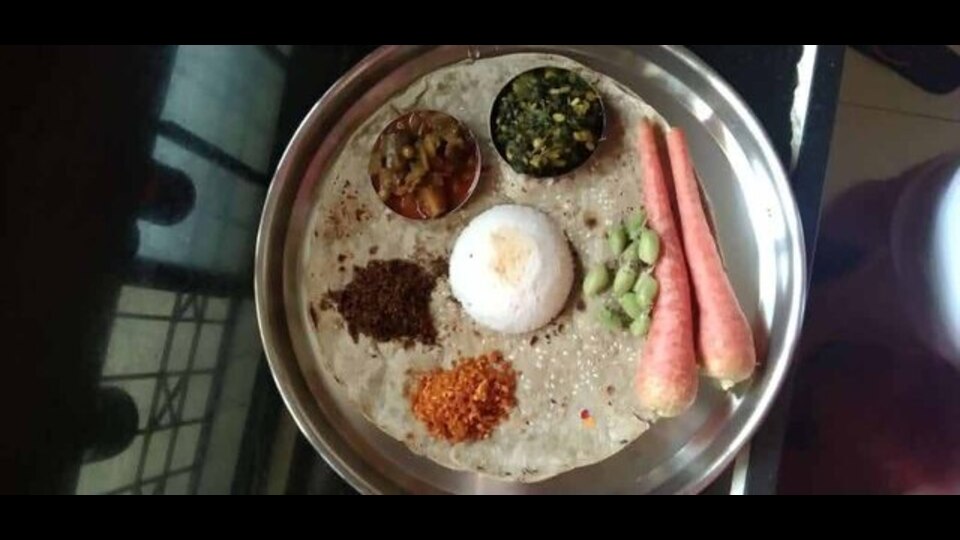
In the third week of October 1930, Trimbak Raghunath Deogirikar, a prominent Congress leader and author, convened a meeting of Congress leaders and citizens at the residence of Vinayak Sathaye in Sadashiv Peth. Eighty men and women were invited, and they had no prior knowledge of the agenda. They probably thought that Deogirikar wanted to share his experiences of imprisonment. He had been arrested for participating in the Salt Satyagraha in April 1930 and had been recently released from prison.
While planning the first act of civil disobedience against British Rule, Gandhi sought a symbol that could unify the entire country. He decided that salt, being a basic necessity, fit the cause. It was a powerful symbol of resistance. As a substance of common use, it cut across religious, caste, and class differences. It could make a deep emotional appeal.
On March 12, 1930, he began his march to Dandi, a village in Surat district, with seventy-eight Congress volunteers, where he aimed to violate the salt laws. The “Dandi March” had political, ethical, and moral dimensions. The march allowed Gandhi to rouse the people in the villages through which he passed.
When Gandhi broke the salt laws on April 6, 1930, it sparked large-scale acts of civil disobedience against the said laws by millions of Indians. British cloth and goods were boycotted. Mass civil disobedience spread throughout India as millions broke the salt laws in many ways, manufacturing salt, selling and buying it, and exhorting to buy and sell salt, were breaches of the salt law.
When Deogirikar convened the meeting, Diwali, the festival of lights, was a few days away. The usual excitement around the festival was replaced by mixed feelings of patriotism, anger, apathy, and grief. Mahatma Gandhi was imprisoned in the Yerwada Jail since April 1930, and so were more than sixty thousand satyagrahis in various prisons all over the country. But the disobedience movement had not ceased. Picketing of shops that sold liquor and foreign clothes was common. Several men had resigned from their government jobs, and students had stopped attending schools and colleges.
Deogirikar was aware of the sentiments of the people. He knew that they wanted to show solidarity with the freedom fighters who were out on the streets breaking laws and languishing in prisons. He came across the perfect way of involving a large population in the protests when he was invited to Wai, a village near Poona, to participate in a unique celebration of Diwali.
The people of Wai were not keen on celebrating Diwali that year. They were in no mood to enjoy special dishes like “puranpoli”, “ladoos”, and “karanji” while their imprisoned compatriots were eating dry “bhakaris” (bread of jowar) and leafy vegetables every day in jail.
Congress workers and leaders from the town, like Bhalchandra Gangadhar Nitsure, Mr Babar, Mr Bhide, the deputy editor of “Kesari”, SG Bhave, Gangadharshastri Sohoni, and MN Sathe, decided to organise people to protest against the government and show empathy to the prisoners and their families on the night of “Balipratipada”.
They held meetings with citizens in different parts of the village a couple of weeks in advance. The entire population wholeheartedly agreed to be a part of the “celebrations”.
That year, traders in Wai did not hold ceremonies like “pansupari”. They did not light lamps outside their shops.
On the evening of “Balipratipada”, the villagers took out a procession in the village where two and a half thousand men, women, and children of all castes participated. The procession chanted slogans honouring Gandhi and the satyagrahis.
The procession ended at the Siddheshwar Temple. The villagers sat quietly on the banks of the river Krishna. A prayer was chanted for the well-being of Gandhi and the satyagrahis. They had brought “bhakaris” and leafy vegetables with them.
Deogirikar and HM Joshi, the editor of the Marathi periodical “Chitramayjagat”, were in Wai to address the crowd. They applauded the villagers for their support and compassion.
Everybody then ate “bhaji-bhakari” in silence.
One powerful way to demonstrate solidarity with the satyagrahis was through the transformative power of food, which was successfully followed by the villagers of Wai.
Deogirikar had decided to emulate the same when he was invited to Wai. That day, during the meeting, he apprised the audience of his plan.
Few in the audience were sceptical about whether they would receive any support. Festivals were an integral feature of national life, and they had a peculiar human appeal. Diwali was the last great festival of the year and was celebrated with a round of worship, dinners, and the giving of gifts.
Poona had not celebrated the festival only once before that in 1795, when Nana Fadanavis had ordered the non-observance of Diwali illuminations and other festivities in the city in view of the death of the Peshwa Sawai Madhavrao II.
Incidentally, it was Peshwa Sawai Madhavrao II who had encouraged the large-scale celebrations of Diwali in the city. According to “Peshvyanchi Bakhar” by Krishnaji Vinayak Sohoni, Mahadji Scindia had informed the young Peshwa as follows - “The Diwali festival is celebrated for four days at Kota, when lacs of lamps are lighted. The Raja of Kota, during these four days, gives a display of fireworks outside the premises of his capital. It is called “Lanka of fireworks”. During this display, the image of Ravana is prepared and kept in the centre of the show.”
The Peshwa ordered Mahadji to give a similar display of fireworks for his entertainment. Mahadji made all the preparations within a fortnight, and the display was carried out on a night when Peshwa and his lieutenants were in attendance. They watched the spectacle from the Parvati temple. People from Poona, too, had gathered near the hill to look at the pyrotechnics.
But we digress. In 1930, Poona wholeheartedly followed the people of Wai and Deogirikar. Many households did not celebrate Diwali. There were no lights and no sweets. They ate “bhakari” and “bhaji”.
Food has a long history of being a weapon of protest. People eating “bhaji-bhakari” on Diwali night was an act of disobedience.
Food also inculcates empathy. True empathy is not placing yourself in the shoes of another, but to walk along their path; to feel their pain, their rage, their grief, their joy, and their hope.
This year, after the devastating floods in Marathwada and Southern Maharashtra, many individuals and organisations from the city sent Diwali “faral”, along with clothes and books for those who had lost everything in the deluge.
By doing so, they conformed to the incredible power of food to make one compassionate.


