
 E-Paper



Boost for air quality forecasting : Safar gets international recognition
Founder and project director of Safar (System of Air Quality and Weather Forecasting and Research) Dr Gufran Beig said that the framework is a one-stop solution for air quality management leading up to mitigation, and also helps formulate micro specific air action plans based on robust science


PUNE: In a significant boost for air quality forecasting across the country, Safar (System of Air Quality and Weather Forecasting and Research) - the first official indigenous framework to forecast air quality in the four megacities namely, Delhi, Mumbai, Pune and Ahmedabad as mandated under the National Clean Air Programme (NCAP) - has been accepted internationally.
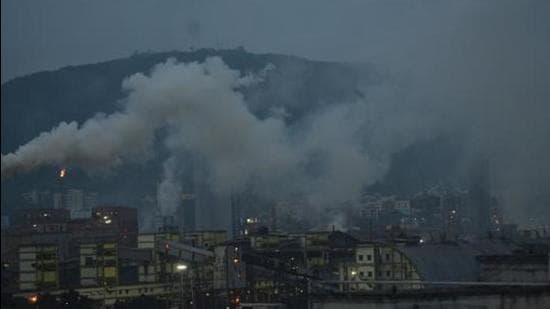
The findings of Safar were published in the form of a research paper titled, ‘India’s maiden air quality forecasting framework for megacities of divergent environments’ in the peer-reviewed international journal, ‘Environmental Modelling and Software’ on Tuesday. The Safar -project was led by the Indian Institute of Tropical Meteorology (IITM) Pune in association with the India Meteorological Department (IMD) and Utkal University, Bhubaneshwar.
Founder and project director Dr Gufran Beig said that the Safar framework is a one-stop solution for air quality management leading up to mitigation, and also helps formulate micro specific air action plans based on robust science. “Air pollutant forecasting is an important part of the air quality early warning framework reported in this work for Indian megacities of vivid micro-environments. But the chaotic nature and complexity of air pollution itself makes prediction a challenging task, particularly in a city which is highly influenced by meteorology due to its geographical location which is considered in this work,” Dr Beig said.
According to the research analysis in the peer-reviewed journal, the estimated total emissions of particulate matter (PM2.5) from all sources across the megacities were calculated as 77 gigagram per year (Gg/Yr) for Delhi; 57 Gg/Yr for Ahmedabad; 45 Gg/Yr for Mumbai; and 30 Gg/Yr for Pune. “High population density due to urbanisation is the main reason which directly or indirectly drives PM2.5 emissions in all four metropolises,” said Dr Beig.
The most predominant emission source of PM2.5 is transportation, whose share was found to be 41% in Delhi, followed by 40% in Pune, 35% in Ahmedabad, and 31% in Mumbai. The uncontrolled combustion pattern in the highly dense slum population was significantly high in Mumbai. The share of biofuel emissions was the highest in Mumbai (15.5%), followed by Pune (11.4%), Ahmedabad (10.2%), and Delhi (3%). Industrial emissions were found to be the highest in Mumbai (31.1%), followed by Pune (21.6%), Ahmedabad (18.8%), and Delhi (18.6%).
Dr Beig said, “Now that India has championed the capability to develop its own air quality framework, we need to take advantage of it and replicate in other cities as originally envisaged in the NCAP plan document rather than borrowing foreign framework at a cost. We need to upscale as per the NCAP plan.”
Safar chose to demonstrate its forecasting model in four different and contrasting micro-climates namely, Delhi, Mumbai, Pune and Ahmedabad. The prototype can be scaled up to the remaining 128 non-attainment cities (cities that do not meet the prescribed air quality standards set by the Union environment ministry of India) of the country as per the commitment to NCAP, Dr Beig said.
“Using this forecasting model, all urban local bodies (ULBs) can also issue timely health advisories publicly, to alert citizens on ‘bad air’ days, which will help save vulnerable groups from the severe health impact of air pollution,” he added.


