
 E-Paper



Building the backbone of India’s EV future
A Pune-based startup, GreenVoltz Batteries, founded by Sridhar Iyer and Mahesh Behra, is working to solve one of India’s key EV challenges, unreliable battery performance, through an engineering-led approach to design and manufacturing

 Prefer HTon Google


In Pune’s Chakan industrial belt, one of India’s biggest automotive manufacturing hubs, a young startup is quietly trying to solve one of the electric vehicle industry’s biggest problems: battery reliability.
While most conversations around electric mobility focus on charging infrastructure, vehicle launches, or government subsidies, GreenVoltz Batteries believes the real challenge lies much deeper inside the vehicle itself.
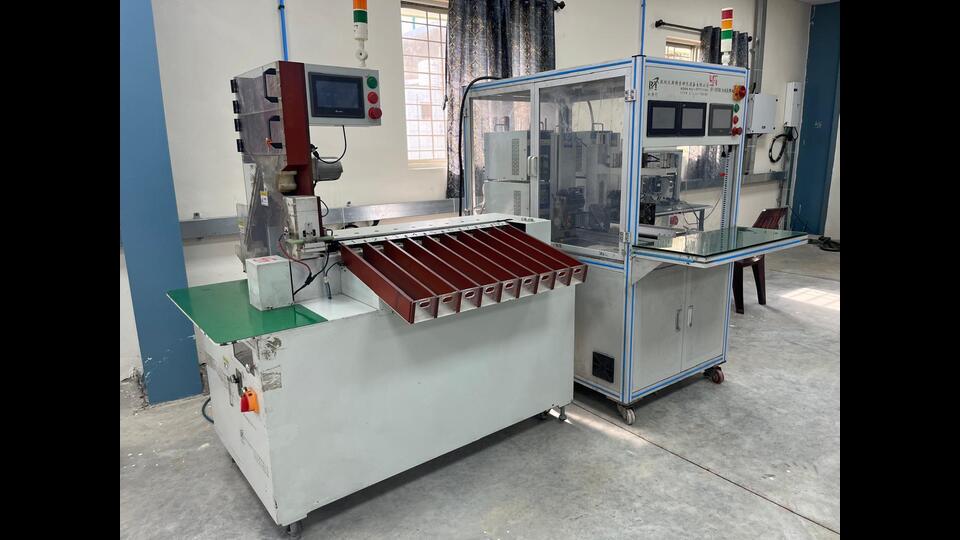
Founded by industry veterans Sridhar Iyer and Mahesh Behra, the company is building lithium-ion battery systems designed for Indian conditions, with a strong emphasis on safety, durability, and long-term performance. After launching operations with a small pilot unit in Noida, GreenVoltz scaled up by establishing a larger manufacturing facility in Chakan, Pune, in late 2024.
For Sridhar, the journey began nearly a decade ago when he drove one of India’s earliest electric cars, the Mahindra e2o. While he admired the promise of clean mobility, the experience exposed persistent problems, limited range, inconsistent battery performance, and reliability concerns.
That experience eventually led the founders to a larger realisation: in India’s EV ecosystem, the real differentiator would not be the vehicle, but the battery powering it.
The problem was never the vehicle
“When we started looking deeper into the EV ecosystem,” Sridhar explains, “we realised the real problem wasn’t the vehicle, it was the battery.”
India’s EV industry, still in its formative years, has created a fragmented and inconsistent battery ecosystem. While internal combustion engine vehicles rely on mature mechanical systems, EVs depend primarily on the motor, controller, and battery. That simplicity places enormous pressure on the battery system.
Unlike fuel in petrol vehicles, EV batteries are highly customised. Different two-wheelers require different configurations depending on motor capacity and usage patterns. Yet many manufacturers assembled batteries without fully understanding these requirements, leading to inconsistent performance and reliability issues.
A cottage industry with high stakes
What alarmed the founders was how battery assembly was being handled across the ecosystem.
“Battery assembly had become almost a cottage industry,” says Sridhar. “People were importing components and putting them together without understanding electrical engineering, chemical behaviour, or quality processes.”
At the core are lithium-ion cells arranged in series and parallel configurations. The way they are connected and managed determines not just performance but safety.
One small but critical component stood out: the busbar.
Mahesh explains that busbars are thin metal strips that connect battery cells and enable current flow. Most manufacturers used coated mild steel due to cost advantages. But in Indian conditions, moisture eventually leads to corrosion.
“Steel corrodes,” Mahesh says. “That increases resistance, reduces efficiency, and in extreme cases can cause sudden battery failure.”
Building for reliability, not just cost
To address this, GreenVoltz made a deliberate and expensive design choice: switching to pure nickel busbars instead of coated steel.
“The cost is nearly four times higher,” says Mahesh. “But we chose not to compromise on safety and reliability.”
The company also tackled another widespread issue — inconsistent cell quality. Even within the same batch, lithium-ion cells can vary in performance. Without proper matching, this leads to an imbalance during charge and discharge cycles.
“If one cell behaves differently, it affects the entire pack,” Mahesh explains. “You get reduced range and faster degradation.”
GreenVoltz now rigorously tests and groups cells within narrow performance bands to ensure consistency across each battery pack.
From EV dreams to battery reality
Interestingly, GreenVoltz did not begin as a battery company. The founders initially explored building electric two-wheelers before realising the deeper opportunity lay in energy storage.
“EV manufacturing is capital-intensive, and differentiation is limited,” says Sridhar. “Battery technology offered more impact and long-term potential.”
In 2023, Sridhar retired after a 32-year IT career, having worked with companies such as Tech Mahindra, Atos-Syntel, and Cognizant. Mahesh brought experience from Tata Motors and automotive manufacturing ventures.
They acquired a small lithium battery unit in Noida for ₹45 lakh and used it as a pilot plant to learn and refine their processes.
Within six months, they developed their first proof of concept, and by February 2024, GreenVoltz launched its first commercial battery.
From Noida to Pune
One of their early breakthroughs came when a frustrated three-wheeler owner in Noida approached them after repeated battery failures. The customised solution GreenVoltz developed has now been running successfully for over two years.
Encouraged by early traction, the company expanded and set up a larger manufacturing facility in Chakan, Pune, operational since December 2024.
Today, production capacity stands at around 500 batteries per month in Noida and 12,000–15,000 units per month in Pune.
The company now supplies OEMs, dealers, and retrofitters across Chennai, Noida, and other established EV markets.
A massive, fragmented market
While EVs remain central, GreenVoltz sees a larger opportunity in energy storage systems.
With rising rooftop solar adoption and grid instability, users are increasingly looking to store power rather than feed it back into the grid.
“People are asking, why give energy to the grid when I can store it myself?” says Sridhar.
The company is developing residential and industrial battery storage systems, including a 666V container-scale solution for an overseas client. It is also working on replacing diesel generators in backup power applications.
India’s lithium-ion battery market is expanding rapidly, driven by EV adoption, solar energy growth, data centres, and electrification across sectors.
Unlike the mature lead-acid battery market, lithium-ion remains fragmented, leaving room for newer players to scale.
Competing on quality, not price
Operating in a price-sensitive market, GreenVoltz initially had to educate customers on why its products cost more.
“We offered discounts initially so people could try,” says Sridhar. “Once they experienced the reliability, repeat orders followed.”
“You can market anything,” he adds. “But usage reveals the truth.”
Bootstrapped but ambitious
GreenVoltz has been entirely self-funded so far, with investments of around ₹6 crore. The company is now looking to raise ₹10 crore to expand R&D, working capital, and market reach.
With a team of 10 employees, it is targeting break-even by the end of the financial year.
The road ahead
The startup plans to expand across India and explore export markets in Southeast Asia and the Middle East. It is also entering inverter systems for residential and commercial use and scaling up solutions to replace VRLA batteries used in UPS systems and data centres.
At its core, GreenVoltz’s journey is about building trust in energy storage systems. “Even small improvements in reliability can create a big impact,” says Sridhar.
In an industry driven by speed and scale, the company is betting on engineering discipline and long-term reliability.
Because in the EV revolution, the real breakthrough is not just moving faster, it is making sure you do not stop halfway.


