
 E-Paper



Assessing Trump's Board of Peace Agreement on the disarmament of Gaza
This article is authored by Prabhu Dayal, former ambassador, New Delhi.

 Prefer HTon Google


US President Donald Trump announced on July 30, 2026 that his Board of Peace has reached a "historic agreement" for the "complete disarmament" of Hamas and other armed factions in the Gaza Strip. In a series of official statements on Truth Social, Trump hailed the development as a "monumental step toward lasting peace and security". Senior Hamas officials reportedly confirmed their acceptance of the roadmap—marking the first time the group has officially committed to an actionable disarmament plan—while Israel's government has expressed scepticism regarding the proposal's parameters.
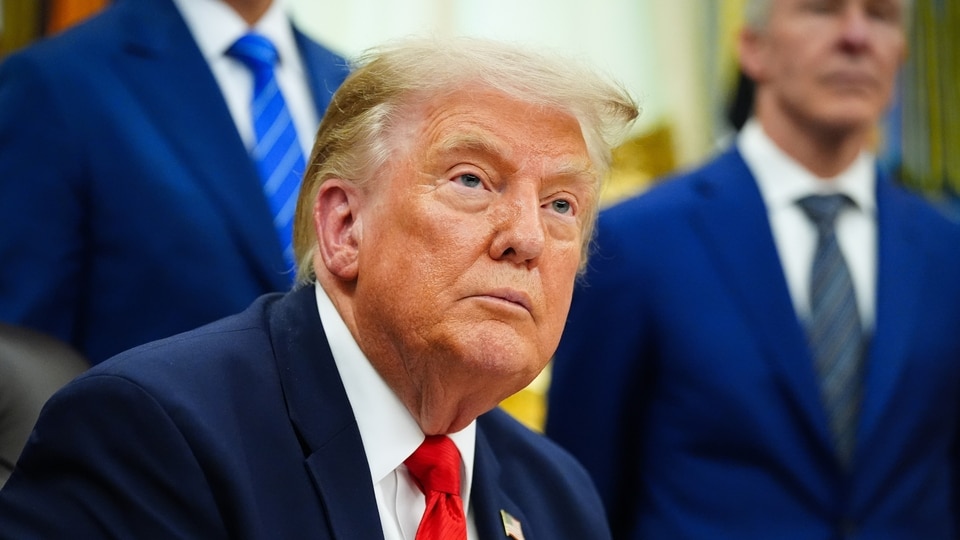
The Board of Peace is an international body set up by Trump and permanently chaired by himself with an executive board including Marco Rubio, Steve Witkoff, Jared Kushner and Tony Blair. It oversees the National Committee for the Administration of Gaza (NCAG) to manage local civil services. The Board of Peace includes the US, Saudi Arabia, and Turkey, alongside 24 other nations that have accepted Trump's invitation to join. Countries like India, Italy, Japan, South Korea, and the UK participate in meetings strictly as observers. Several nations, including France, Spain, and Sweden, have formally declined the invitations to join.
The architecture of the Trump peace plan deviates drastically from decades of traditional West Asian diplomacy. The plan replaces Hamas with a technocratic, apolitical National Committee of Palestinian administrators. This body governs under the strict oversight of the BoP and its High Representative for Gaza, Nickolay Mladenov. Security is backstopped by an International Stabilization Force authorized by the UN Security Council featuring major troop deployments, including up to 8,000 soldiers from nations like Indonesia. The plan intends to transform Gaza with skyscrapers, highways, and industrial zones, relying heavily on private international investment that is contingent on absolute security.
* Trump said that the disarmament process will be implemented in sequential stages. As Hamas decommissions its military infrastructure, Israeli forces will gradually withdraw from Gaza.
* Trump stated that the agreement serves as a "critical step towards Gaza finally being governed by a new Palestinian government" (specifically a group of technocrats known as the National Committee for the Administration of Gaza) that will work directly with the Board of Peace.
* He emphasised that under this roadmap, " Israel will have the security it deserves, with Gaza no longer used as a base for terror attacks". He vowed that the threat seen during the October 7 attacks will not be allowed to rebuild.
* Trump outlined that an International Stabilisation Force (ISF) will be deployed to collaborate with a newly-established Palestinian police force to maintain safety.
* He explicitly thanked his own administration team and regional mediators from Egypt, Qatar, and Turkey for securing the diplomatic breakthrough.
While Trump and the Board of Peace have heavily promoted the 15-point framework, the situation remains fluid on the ground. While senior Hamas officials confirmed to news outlets like the BBC and AFP that they have agreed to the broad plan to disarm, negotiators stress that they will not implement any disarmament measures unless Israel fully adheres to its obligations, including total military withdrawal and the initiation of Gaza's reconstruction. There are conflicting statements from Hamas officials regarding the exact scope and pace of surrendering heavy arms. Other regional factions have also shown scepticism regarding the prioritisation of disarmament over immediate humanitarian rebuilding.
Besides, Israel has not officially accepted or commented on Trump's declaration. According to media reports, some Israeli sources indicated that the current framework does not yet fully satisfy Israel's preconditions, which demand total demilitarisation before any phase of the withdrawal begins.
Board officials estimate that completely executing the disarmament phase—which involves dismantling heavy weaponry, rocket stockpiles, and tunnels—could take between 200 and 350 days once formally ratified by all active parties.
Unlike previous peace initiatives that stalled out in perpetual negotiations, the Board of Peace plan possesses unique geopolitical leverage.
First, it holds unprecedented multilateral enforcement mechanisms. Backed by UN Security Council Resolution 2803, the plan carries international legality, despite abstentions from Russia and China.
Second, the plan heavily leverages economic carrots and sticks. By tying massive infrastructure funding and reconstruction directly to demilitarisation, it creates intense economic pressure. For an exhausted Gazan population and regional stakeholders, the promise of rapid reconstruction and industrialisation provides a tangible path forward.
Third, the July 2026 concessions by Hamas indicate that the group’s political leadership, facing military decimation and immense pressure from Arab mediators, recognises the BoP as a realistic exit strategy to secure Israeli withdrawal.
Despite Trump's announcement, several systemic vulnerabilities could cause the plan to collapse during implementation.
* The viability of Donald Trump’s Board of Peace plan for Gaza hinges on whether the newly-achieved disarmament agreement can survive intense deep-seated scepticism on the ground and severe structural design flaws.
* The disarmament framework relies on a highly volatile sequencing of events. Hamas leadership has explicitly stated that they will halt implementation if Israel fails to fulfill its obligations. Because the plan was largely dictated from above rather than negotiated on an equal footing, a single violation—such as a delayed Israeli troop movement or a rogue militant rocket—could instantly trigger a return to open warfare.
* A fundamental flaw is the lack of authentic local representation. Palestinians on the ground remain highly sceptical of the plan's economic blueprint. Many view the top-down vision of skyscrapers and commercial developments as an externally imposed corporate restructuring that ignores local ownership and land rights. Without local buy-in, the BoP risks being perceived as an occupying corporate oligarchy rather than a liberating force.
* The institutional design of the BoP breeds intense geopolitical resistance. Trump acts as "chairman for life" with sweeping veto powers. Furthermore, investigative media reports by revealing that the BoP attempted to draft sweeping legal immunity for its personnel have stoked deep anxieties about a lack of international accountability.
Although Trump announced the agreement with Hamas for its complete disarmament and the dissolution of its governing structure in favour of a technocratic Palestinian committee, the long-term viability of the Peace Plan remains highly uncertain. Hamas negotiator Ghazi Hamad stated that the group will not implement the terms if Israel fails to withdraw its forces from Gaza. Israel continues to express deep scepticism, rejecting terms that do not strictly guarantee absolute, verified demilitarisation beforehand, while simultaneously extending its own military control across the territory. Furthermore, there are staggering logistical hurdles: the $7 billion currently pledged for reconstruction falls far short of the estimated $70 billion required, the mandatory ISF has yet to fully materialise, and controversial draft proposals seeking sweeping legal immunity and free land acquisition for the Board risk alienating local populations.
Ultimately, while the framework provides an unprecedented, US-backed channel for conditional de-escalation, its execution faces a perilous path due to deep-seated regional mistrust, profound funding deficits, and the asymmetric security demands of the warring parties. In the short term, the plan may "work" to freeze active hostilities and initiate rapid economic reconstruction, driven by sheer American executive will and international financial backing. However, for the plan to work permanently, it must evolve. If it remains an undemocratic, top-down real estate venture that grants itself legal immunity while ignoring the political self-determination of the Palestinian people, it will merely act as a temporary lid on a boiling pot. Long-term success will ultimately depend on whether the BoP can transition from an authoritarian administrative body into an inclusive framework that respects local dignity and ensures equal security for both Israelis and Palestinians.
(The views expressed are personal)
This article is authored by Prabhu Dayal, former ambassador, New Delhi.


